“A wise woman who was travelling in the mountains found a precious stone in a stream. The next day she met another traveller who was hungry, and the wise woman opened her bag to share her food. The hungry traveller saw the precious stone and asked the woman to give it to him. She did so without hesitation. The traveller left, rejoicing in his good fortune. He knew the stone was worth enough to give him security for a lifetime. But a few days later he came back to return the stone to the wise woman. ‘I’ve been thinking,’ he said, ‘I know how valuable the stone is, but I give it back in the hope that you can give me something even more precious. Give me what you have within you that enabled you to give me the stone.’” — The Wise Woman’s Stone, Author Unknown
“Only strength can cooperate. Weakness can only beg.” — Dwight D. Eisenhower
“The wise woman builds her house, but with her own hands the foolish one tears hers down.” — Proverbs 14:1
The Beauty of Strength and Vulnerability
In this article, we explore the complexities of womanhood through the lens of both light and struggle. From the moment of creation, women have been seen through varying cultural and theological filters, often simplified into roles that either elevate or confine. But the true story of womanhood is layered, woven with threads of strength, vulnerability, triumph, and challenge.
Here, we unravel the diverse experiences and deep struggles women face in light of their design, their faith, and their woundedness. Through the intersection of cultural expectations, religious roles, and personal trauma, this article aims to shed light on the multifaceted nature of women’s journeys, offering a vision of womanhood that acknowledges both the beauty and the pain, the joy and the struggle, that make her whole. As we reflect on God’s redemptive purpose for women, we begin to see how His love has the power to transform each layer, healing and calling forth the fullness of who she is.
The Vow
My brother hated Christmas. Even after becoming a father to three young children, he would volunteer to work the shift nobody wanted on Christmas Day. The memories of our parents’ brutal fights during the holidays were too much for him to bear. So, he chose distraction instead. But in attempting to escape his pain, he unknowingly passed it on.
Richard Rohr (2016) wisely said, “Pain that is not transformed is transmitted.” That was true for me, too. I grew up in the shadows of chaos, where violence and volatility masqueraded as family life. As a child, I often retreated into an inner world of fantasy, seeking escape from what I couldn’t control. By the time I met the man who would become my husband at fifteen, I wasn’t drawn to him as much as I was captivated by the dream of marriage itself, the hope that love could fix what had broken inside me.
But how could I understand love when I’d never seen it thrive?
I carried my shrivelled heart and unhealed wounds into our marriage, unconsciously expecting my husband to rescue me from myself. That unrealistic hope nearly destroyed us. I used every manipulative tactic I could think of to draw him into my emotional world, nagging, withdrawing, pleading, but nothing worked. So, I escalated. I demanded that he fill the aching void in my soul, and when he couldn’t, I punished him with bitterness and rejection.
Then one morning, after yet another fruitless conversation, he walked away. Something inside me broke. In that moment, I made a vow: I will never need him again. I was done exposing my heart only to have it crushed. Armoured and resolved, I marched down to the garage where he had gone, mostly to avoid me, and delivered my verdict: We will stay together for the kids, but as far as I’m concerned, we’re done. I wanted to hurt him as deeply as I was hurting.
It worked.
But when I finally stopped and looked at the woman I had become, I saw a bitter, needy shell, void of hope, desperate for love but drowning in shame. That’s when I knew I couldn’t do this on my own anymore. I needed help. Real help. So, I began counselling.
Destructive Patterns
God desires wholeness and healing for us. But it is often in our closest relationships that our brokenness reveals itself most clearly. Where does this come from?
Part of the answer lies in how we’ve been shaped, socially, emotionally, spiritually, from infancy. Long before we are conscious of our identity, we’re immersed in cultural definitions of masculinity and femininity. The Fall damaged the essence of our God-given design, leaving us disconnected from our deepest desires. We grow up learning to perform, to hide, to survive. And in that disconnection, we often mistake our longing for God as a craving for another person to complete us.
Most of us live out relational patterns we were never meant to carry. I know I have. The result? A sea of fractured relationships, unfulfilled longings, and aching hearts. Historically, being female has been especially dangerous in patriarchal systems that diminish women’s voices, needs, and value.
So, the question becomes: how do we move toward healing? What does it mean, as complex women and men, to hope again, for intimacy, identity, and freedom? How do we shed our cultural conditioning and return to the original design of connection with God and each other?
How Do Men and Women Reach for Help?
Reaching out for counselling requires courage. When my life began to unravel, I didn’t just pursue therapy, I started studying counselling itself. I needed answers.
Years later, as a clinical counsellor, I became curious about what motivates others to seek help. I began asking colleagues two informal questions:
- What most often motivates women to seek counselling?
- What most often motivates men?
Again and again, two reasons emerged for women: depression and low self-esteem. Many women feel trapped, hopeless, and invisible.
Men, by contrast, often seek counselling for vaguer reasons. Their pain tends to surface in crisis: a failing relationship, a work implosion, or an ultimatum from their spouse. While women often seek healing from within, men tend to respond to external pressure.
These aren’t hard and fast rules. They’re general trends with plenty of exceptions. But the patterns are worth noticing, especially as we begin exploring the deeper identity of men and women in the coming chapters, not to stereotype, but to understand and seek truth from the beginning, in the Garden.
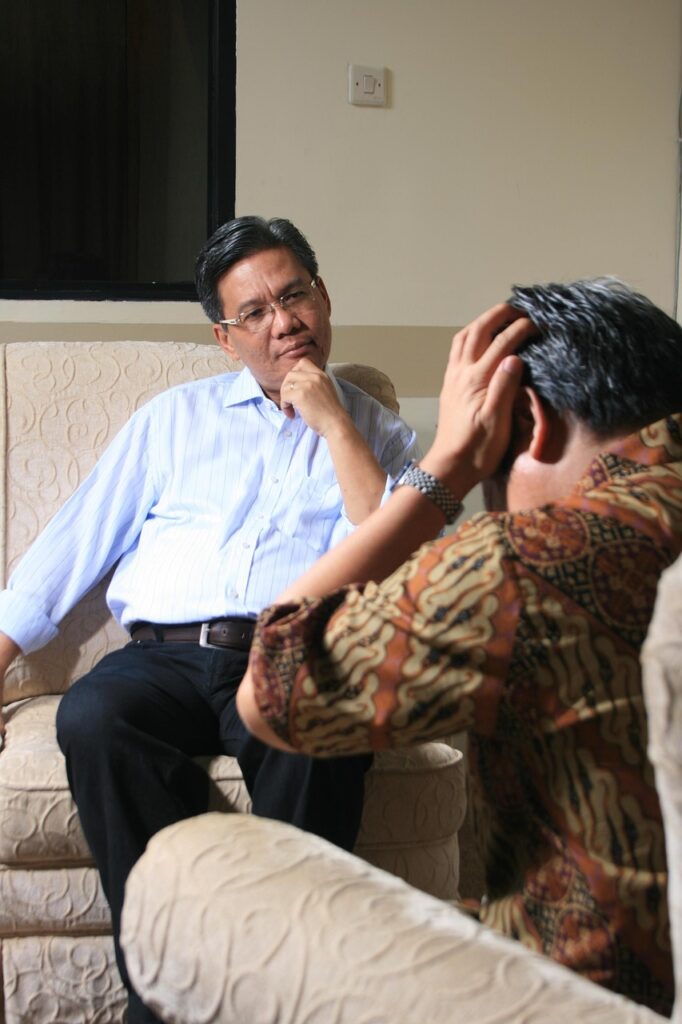
Image by Tiyo Prasetyo from Pixabay
What is Femaleness?
If you were handed a blank page and asked to write FEMALENESS across the top, what would you jot down? Tender? Fierce? Nurturing? Intuitive? What is it about being female that resonates deeply, biologically and beyond?
Here are just a few stark realities facing women today:
Women are more likely to attempt suicide; men are more likely to die by it (Vijayakumar, 2015).
Domestic and family violence hospitalised 4,620 women in a single year in Australia (ABS, 2023).
One in five women has experienced sexual violence since age 15 (ABS, 2023).
Depression affects one in six Australian women in their lifetime, compared to one in ten men (ABS, 2012).
Marriage, while protective for men, does not significantly shield women from suicide risk (Vijayakumar, 2015).
Eating disorders, often linked with shame and control, disproportionately affect women.
Intimate partner violence is nearly three times more likely to affect women than men (ABS, 2023).
Women with disabilities experience significantly higher rates of violence (ABS, 2023).
Stalking, fear, and emotional abuse are far more likely to impact women (ABS, 2023).
Young women (18–24) face the highest rates of sexual and physical violence (ABS, 2023).
Many women report their children witnessed the abuse (ABS, 2023).
These statistics paint a sobering picture. In a world marred by sin and injustice, being female can be dangerous. This is not what God intended.
How Do Women Struggle?
When I asked my colleagues about women’s struggles in counselling, here’s what emerged:
I struggle with low self-esteem.
I feel anxious and depressed.
There’s no communication in my marriage.
I don’t feel loved by my husband.
I have a toxic relationship with food.
He’s having an affair.
I’ve lost interest in sex.
We fight about sex, or my inability to enjoy it.
He’s thinking of leaving me.
I’m thinking of leaving him.
I’m grieving our separation.
He hits me, sometimes.
I’m lonely, starved for romance.
His mother and I are constantly at odds.
My children are out of control.
I feel guilty for my affair, should I tell him?
Most of these struggles, orbit around relationships: feeling unloved, unwanted, unseen. Beneath them all lie two key themes: depression and low self-worth.
The Inner Ache
Why do so many women feel so little of their worth?
Perhaps it’s the relentless internalised pressure to be everything for everyone. Perhaps it’s the deep soul-ache of living under systems that silence and shame. Or perhaps it’s because, somewhere deep within, we’ve come to believe the lie that we are not enough.
But that’s not the voice of God.
This chapter isn’t about victimhood. It’s about naming pain so that healing can begin. It’s about wrestling with the question: What did God intend when He made women in His image? The ache for love, wholeness, and truth is not weakness, it’s holy longing.
And perhaps, as we move through the rubble of our relationships and the wreckage of our self-perceptions, we’ll begin to hear again the whisper we were made to believe:
“You are altogether beautiful, my darling; there is no flaw in you.” (Song of Songs 4:7)
Depression and Low Self-Esteem
The epidemic of depression and low self-esteem among women may, in part, stem from powerful, unspoken societal rules that have long constrained their authentic self-expression. Historically, women’s voices have often been silenced, their presence diminished. In her 1965 book Always Ask a Man: Arlene Dahl’s Guide to Femininity, actress Arlene Dahl captures this narrative with unsettling clarity:
“NEVER upstage a man. Don’t top his joke, even if you have to bite your tongue… Never launch loudly into your own opinions… Let your mate do the ordering… even if it tastes like shampoo… Be subtle… Let his job, his hobbies, his interests come first… nothing is more important than keeping your husband happy, interested and in love with you.”
Married five times, Dahl certainly had experience to draw on. But her advice overlooked a deeper truth: domestic violence remains the leading cause of injury to women. For many, home is not a refuge, it is a battleground. Her words prompt a sobering question: is this really God’s design for women, one that safeguards both their dignity and their safety?
Even today, many women are socialised into a narrow version of femininity, shaped by centuries of cultural expectations. They are often deeply attuned to their emotions, yet unsure how to express or manage them in life-giving ways. Meanwhile, many men, cut off from their own emotional worlds, feel helpless in the face of female emotion, unsure how to respond to what they cannot “fix.”
At the heart of a woman’s being lies a longing, to be loved, delighted in, and safe. This yearning, rooted in creation itself, reflects her God-given design. But when these core needs go unmet, women often try to find worth in roles, relationships, or performance. A woman may believe she must hold her family together, anticipate everyone’s needs, and suppress her own emotions to maintain harmony.
How often do women hear those inner whispers: I’m too much… I’m not enough…? These messages echo not only in homes but in workplaces and churches. Over time, many women begin to hide. They relinquish their uniqueness, silence their convictions, and become defined by others’ expectations.
I know this path. When I married, I unconsciously stepped into my husband’s shadow, believing his life and work mattered more than mine. Later, I found status in academia, hoping my title would affirm my worth. But beneath it all, I was parched, desperate for water to quench a thirst I couldn’t name.
Lacking tools to engage my inner world, I didn’t know how to tend to my longings. Instead, I poured myself into family and career. But this only deepened the disconnection, with my husband, my children, and even my own parents.
Overloaded Relationships
The cost of low self-esteem was high. I carried the emotional load of others while ignoring my own needs. In my marriage, my husband became the mirror for my self-worth. He bore the weight of trying to fill my emptiness, while I exhausted myself trying to change him.
It’s a familiar dynamic. In the Garden, Eve grasped for control. Rebekah, too, resorted to manipulation to shape outcomes in a world where women held little power. Though she loved her son Jacob, her scheming shattered her family. She never saw him again.
Why do so many women rely on indirectness, subtlety, even deceit, to have their needs met? Perhaps because we’ve been taught to suppress desire, to make ourselves smaller, and to depend on others for affirmation. When emotional intimacy with our husbands is lacking, we over-invest, in children, in ministry, in work, trying to feel needed, seen, and safe.
Yet something within us resists disappearing entirely. Even in our fragmentation, we cling to a remnant of self. James 4:1 asks, “What causes fights and quarrels among you? Don’t they come from your desires that battle within you?” These desires are not sinful. They are holy longings, placed in us by God. But when unacknowledged, they emerge as driven, demanding behaviours. Integration begins not with striving, but with listening, to God, to ourselves, to the truth that we are deeply loved.
Movements Crafted by the Enemy
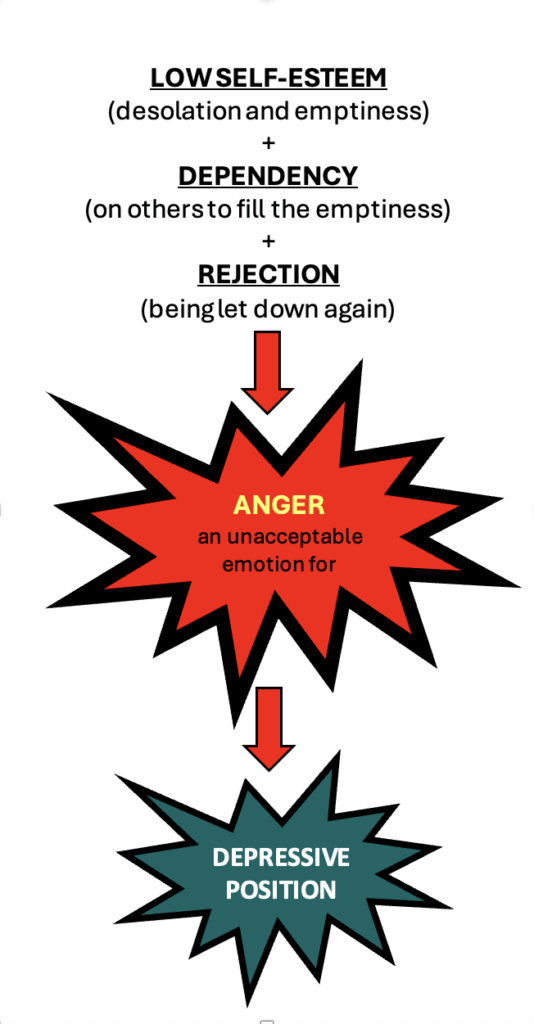
There are two subtle movements the enemy uses to keep women bound. The first is inward: I can’t get what I want… It must be my fault… I’ll give up and settle for less. This quiet resignation distorts a woman’s identity and weakens her hope.
The second is outward: this internal ache spills into behaviour. A woman may withdraw, or she may express her pain through nagging, complaint, or indirect pleas for connection, often misread as poor communication. Lacking clear boundaries, she becomes vulnerable to unfairness, injustice, and even abuse. Living under such pressures exacts a profound toll, triggering a cascade of emotional and relational consequences (see Figure 1. Cascade of Low Self-Esteem).
The enemy thrives in this despair. But God’s desire is freedom. He longs to quench her thirst with Living Water and anchor her identity in His unwavering love.
In the journey to healing, naming the lies and replacing them with truth is essential. She is not defined by her past, her pain, or the rejection of others. She is defined by God’s love, by her identity as His beloved daughter, and by His promise to restore what has been lost.
Two Thirsty Women
During our humanitarian work in East Africa, I met many women who walked miles to fetch water from wells, essential for survival, yet dangerous to collect. Women travelled in groups, knowing predators might be waiting. Their unity brought strength and safety.
In contrast, John 4 tells of a woman who came to the well alone. The Samaritan woman bore the shame of broken relationships and societal scorn. She was excluded, her loneliness palpable. Yet Jesus, full of compassion, met her there. He, a Jewish man, defied cultural barriers to offer her what no one else could: Living Water.
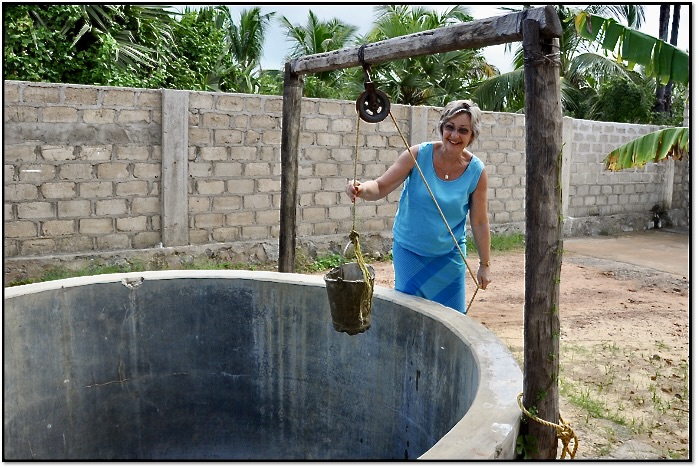
Her story echoes my own. Though I’ve known God’s grace, I too have chased empty wells, relationships, performance, status, approval, hoping to satisfy the ache. But those wells left me emptier. It was in my lowest moments that grace began to flow.
Even now, I remember the years I lived hidden, shrouded in shame. Like the Samaritan woman, I didn’t believe I deserved God’s love. My pain distorted my perception of Him. I could not receive the hope He offered; it didn’t fit the image of God I’d internalised. My heart was thirsty, but I didn’t know how to drink.
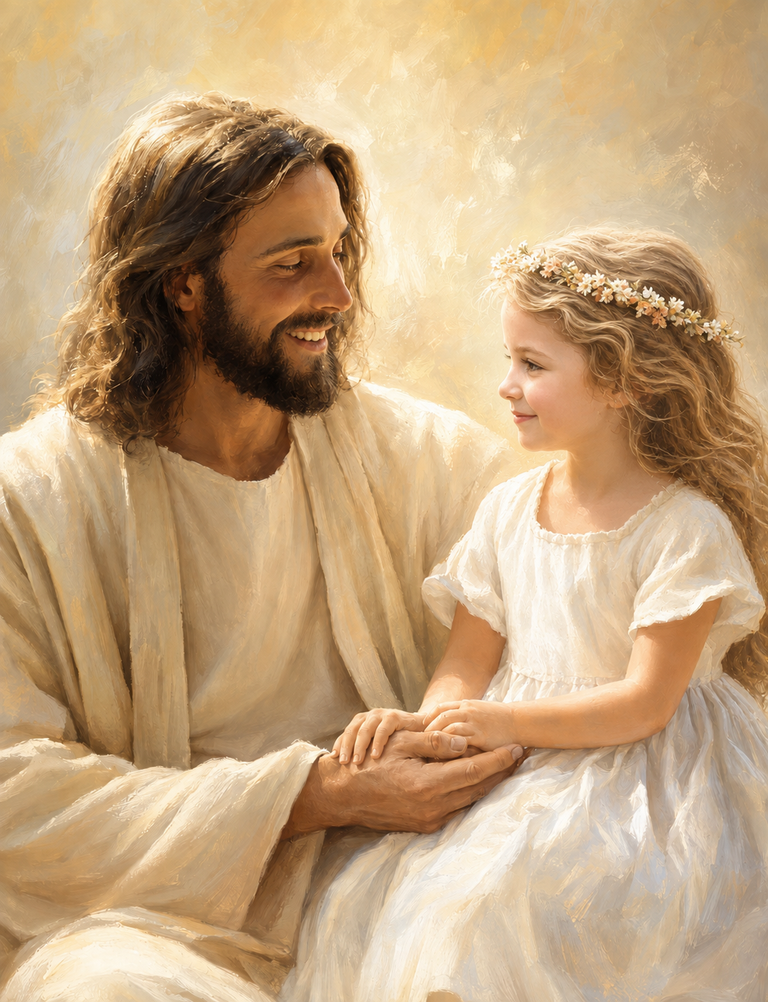
Jesus didn’t scold her, or me. He didn’t offer advice or correction. He offered presence. He gently awakened longings buried beneath layers of sorrow. He invited her, and me, to receive grace, not because we had earned it, but because we were loved.
He doesn’t ask us to come healed. He meets us in our brokenness, offering water that revives the soul. That grace continues to change me. It reaches even the driest places.
Closing Thoughts
Patriarchal systems have long stripped women of their voice, agency, and safety. These systems, reinforced by religion and culture, have fostered low self-esteem and over-dependence on others for validation. When rejection is added to the weight women carry, anger, a natural and necessary emotion, often gets buried and morphs into depression.
But Jesus does not leave women in this place.
He seeks them.
He sees them.
He invites them to drink deeply of His Living Water, to reclaim their voice, and to step into a life rooted not in shame or striving, but in love, truth, and sacred worth. He actively pursues them, offering an invitation to come, not to religion, but to restoration. He meets women at the well, in the temple, in their homes, and in their brokenness. He sees them, calls them, and restores their dignity.
But what does He call them into? What does it mean to embody the identity He offers? Does Jesus define what a Biblical woman looks like? The next chapter will delve into this question, exploring the essence of a Biblical woman and the transformative power of living in alignment with God’s design.
Declarations for Women
I declare that I am the daughter of the King of all kings. Because of Jesus, I lack nothing. God has given me everything I need to do what He’s called me to do. I declare that I will speak encouraging, life-giving words that build others up. The joy of the Lord is my strength (Nehemiah 8:10). I declare I will not compare myself to other women. God made us all beautifully unique. I will hold myself to God’s standards and measure myself with grace. I declare that I will love and laugh rather than fight and complain. I refuse to waste my life on meaningless things. I will act justly, love mercy, and walk humbly with my God (Micah 6:8). I declare that through Christ I am strong, gentle, fierce, and compassionate. I will fight the good fight for what matters most (2 Timothy 4:7). (Adapted from Daily Declarations for Women, Life Church Carlyle)
Prayer
Dear God, with all our souls and all that is within us, we bless Your Holy Name. It is You, who draws us with loving kindness and tender mercies, and You satisfy our mouths with good things… Righteous Father, we ask You to bless all women; single, married, mothers, separated or divorced and widowed. We ask You to supply all our needs according to Your riches in glory by Christ Jesus. Holy Spirit, please instruct us in our relationships, ministries, careers, and finances. Strengthen our hearts so that we may walk in holiness before our God and Father at the coming of our Lord Jesus Christ with all His saints. By the authority of Jesus Christ, Amen. (A Prayer for God’s Women of Power, TPI, The Prayer Institute, 2012)
Reflection and Discussion
How has your image of God been shaped by the messages you received about womanhood, from your family, church, or culture?
When you think about your identity as a woman, what voices have had the most influence, and how do those compare with the voice of Jesus?
Have there been times when you felt dismissed, unseen, or silenced because of your gender? What do you sense Jesus might want to say to you in those moments?
What would it look like to allow Jesus to restore your dignity and reframe your identity, not through worldly definitions, but through His eyes?
Are there lies you’ve believed about your worth or your role as a woman that God may be inviting you to surrender?
About the Author
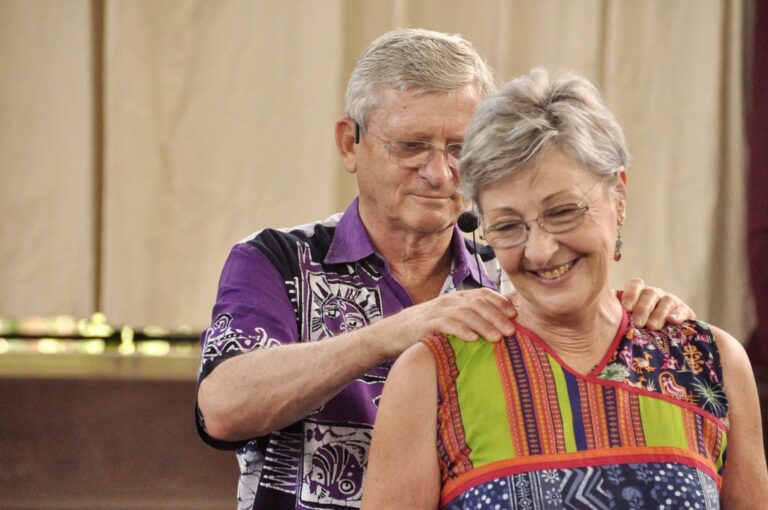
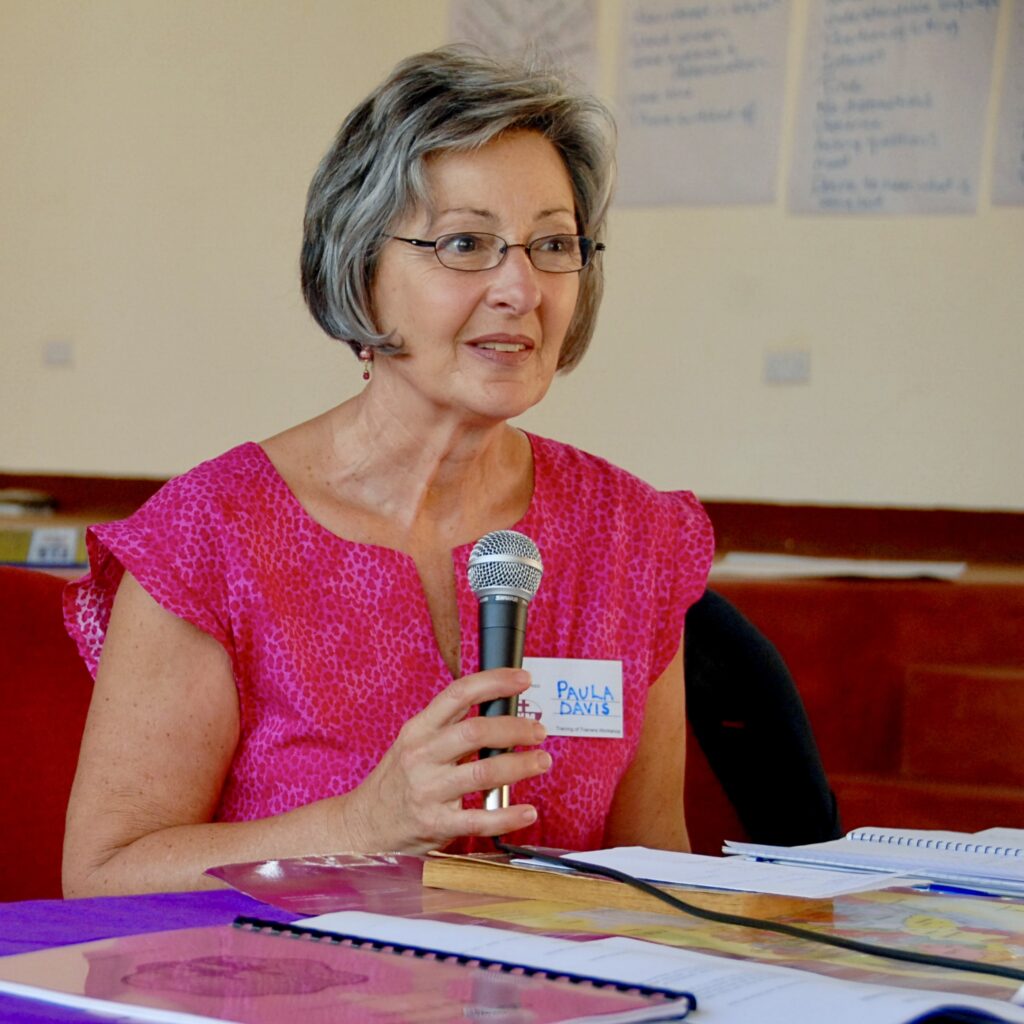
Dr. Paula Davis, a clinical counsellor, supervisor and educator with three advanced degrees, specialises in trauma counselling, and before she retired, was a senior lecturer in counselling, designing and delivering curricula. Her book, “Eating Water, Drinking Soup: Finding Nourishment in the Deepest Pain” is available on request. With her husband, she delivers marriage programs internationally. In 2021, they published “A Safe Place: A Marriage Enrichment Resource Manual” available on online bookstores. While she derives fulfilment from making a positive impact, she also appreciates the simple pleasures of life, such as spending time with her husband over coffee or engaging in outdoor adventures. Never one to be deterred by challenges, she has undertaken skydiving, cage-diving with great white sharks in South Africa, walking with African lions, and zip-lining across the Victoria Falls gorge.