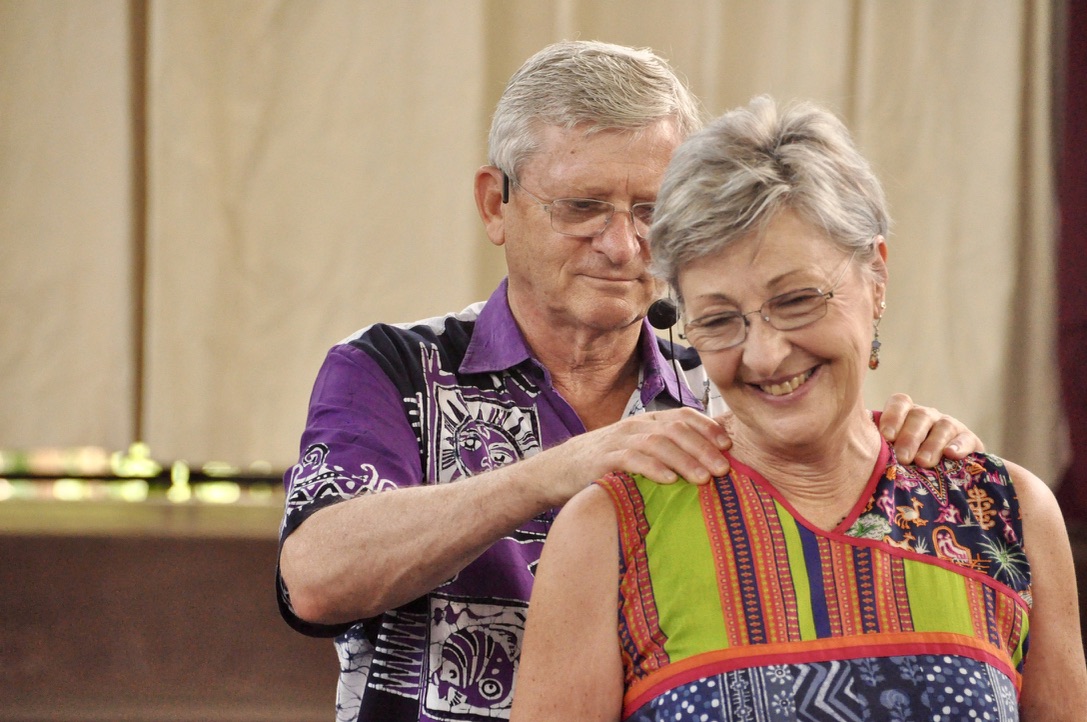
“There is little character or loveliness in the face of someone who has shunned risk, avoided suffering and rejected life.” — Madeleine L’Engle
“We need to learn to love in a way that asks nothing in return because, in giving it, we have already gained… It will cost us – as it cost God. But now we know that there is more to us than we once believed.” — Phyllis Hobe
“So God created mankind in his own image, in the image of God he created them; male and female he created them.” — Genesis 1:27

Reclaiming God’s Original Design for Intimacy and Relationship
In this article, we return to the beginning, Genesis, where God’s original design for humanity was established in the beauty and harmony of the garden. Through the lens of trauma and human brokenness, we explore how the fall distorted our understanding of intimacy, relationship, and identity. Yet, even amidst the fractures, the echoes of God’s perfect design still call to us. This chapter invites us to reconnect with those primal longings for connection, as we seek healing and restoration in God’s redemptive work through Christ.
Returning Again and Again
His quiet, sensitive demeanour masks the slow death of his passion, long buried under the weight of responsibility. He has lost heart. Shut down his desires. His wife is weary of living with an absent man. After a workshop in India, he asks to speak with us. The fan hums overhead as the three of us sit facing each other on rickety plastic chairs. Outside the window, dogs scuffle for scraps. Across the road, the crazy old “Aunty” smashes a car window.
But sometimes, something deeper happens. Sometimes, we break free from our surroundings, from ourselves, and step into the sacred space of another. And sometimes, God breaks in, unbidden but unmistakable, pouring His love into a heart on the verge of collapse. In the middle of this man’s darkest night, love comes for him. And we witness it. A soul set free. Our hearts leap with deep joy.
The next morning, we are collected early from our lodging for a full-day workshop with twenty-seven team members ministering in the slums. We climb a narrow, grimy staircase into a drab little room, where a few musical instruments are scattered across the floor. Three wooden crates with cushions serve as our seats. The slum workers sit on the concrete floor. The scarcity of resources is stark.
Why do I keep returning to places that confront my Western, middle-class sensibilities? On the way here, I watched two women squatting in the harsh midday sun, their hands calloused, and faces set like stone, pressing cow dung into patties for firewood. Last night, in the darkness, I saw a drug-addicted, naked man step in front of a moving car. A man defecating in the street. A makeshift hovel of blue tarp held up by sticks. And yet, I know these people dream. How do dreams survive in such filth, desolation, and what looks like hopelessness?
Maybe I keep coming back because, in witnessing poverty and pain in the faces of strangers, I am undone. It strips away my illusions and deepens my awareness that all is gift. And the deeper my gratitude, the more compelled I am to reach for those on the margins. And the more I reach, the closer they lead me to the Gift-Giver.
To minister to those whose very essence has been shut down just to survive, I must give from a grateful heart. I give because I have been given to, abundantly, extravagantly. And I am reminded, “What we have done for ourselves alone dies with us; what we have done for others and the world remains and is immortal” (Pike, n.d.).
The Burden of Passion
Nithin is vibrant, alive with purpose. His team adores him, not because he holds power over them, but because he gives so freely. His time, his limited resources, himself. He pours it all out for the poor in the slums. He dreams of a paediatric hospital. Today, he sits cross-legged on the floor of a meagre meeting room, surrounded by precious faces that look to us for inspiration, for some “bread” to sustain them. I feel the weight of their hope.
I lead workshops on attachment, how the quality of our early relationships shapes the rest of our lives. But what I really want them to grasp, what I know from painful experience, is this: if we try to help others without doing our own inner work, we are giving from emptiness. And eventually, we burn out.
Learning to love well is painful. I see it in their faces as they wrestle with truth, as I challenge and facilitate their healing. But I can’t shake my own discomfort. I have not handled my overwhelm well on this trip, and painful honesty is required. I have to stop blaming circumstances and deal with myself. I need to look in the mirror.
Jesus said in Matthew 7:14, “But small is the gate and narrow the road that leads to life, and only a few find it.” The road to abundant life is not an easy one, it calls for reshaping, refining, surrendering. It demands that I trust myself wholly to Jesus. It is not selfish to prioritise inner growth. If I truly want to love well, I must start there.
Relationships matter to me. Loving well matters to me. And in the process of learning, I cling to this: Jesus sees me, truly sees me. He sees these precious Indian souls, too. And He loves us all, just as we are. That is the kind of love I long to carry. The kind of love I want to live.
The Battle for Hope
Photo by Artem Shuba on Unsplash
Other people’s stories remain hidden at first, lingering in the shadows, tentative, ashamed, unsure of what will happen if they step into the Light. It is also true of Nithin and his wife (used with permission). His relentless smile had fooled me. But now, as pain etches itself across his face, something inside me unhinges. Over our week in Lucknow, he has allowed his heart to soften, to come undone. When we invite him and his wife to stay overnight in our hotel for intensive counselling, they come ready to face their pain.
The weight of Nithin’s past is profound. His voice heaves as he recalls failing to achieve the school marks his father expected. Stripped naked, beaten black and blue, he was forced to balance his schoolbooks on his head and walk, exposed, through the village. What does a boy learn from this about being a man? Is this what God designed men for?
My heart bleeds as I imagine the humiliation he suffered at the hands of those meant to love him. His face contorts in grief and fear as he tells me his father was “only disciplining him.” I name it for what it is, horrific abuse. And he lets the sobs escape.
We all weep as long-buried memories surface. He speaks of being small. Of his brother excelling at everything while he failed at anything he attempted. When he struggled to complete a task with tools his father had taught him to use, the poison poured from his father’s mouth: “You are not born to me. You will never be a real man.”
Seared into his soul, these words became a stronghold the enemy has nurtured ever since. Feelings of failure have shaped his life, his marriage, his very identity. So, like many men, he hides, under work, under duty, under distraction. But now, he and his wife are fighting for repair and restoration, for the tearing down of the wall between them. It will not fall easily. There is relational despair. The painful temptation to settle for less.
I ask Nithin to choose a picture card from a stack to represent himself. He selects an image of a small figure hiding in a dark cave. “I feel safe there,” he says. From the corner of my eye, I see his wife’s tears. His hiddenness is a deep wound to her. Then, I ask him to choose a card for his father. He picks a massive hammer, shattering a rock with violent force.
We place the cards on the floor, some distance apart. I invite him to speak between them, to have a conversation. The moment is intense, profound. He wants to flee from the images, from the pain they carry. He longs to be the man God designed him to be, but hopelessness looms.
So, I ask him to choose another card, one that represents God. He hesitates, then selects an image that radiates joy. Abruptly, he reaches for the cave card and places it under the God card. A massive coup. The integration of his wounded, small self into who he truly is: A man designed by God. Nithin risks hope.
His eyes shine as he turns to his wife, takes her hand, and looks into her tear-stained eyes. For the first time in ten years, he tells her he loves her. The sacredness of the moment breaks us open. Our collective tears fall freely as God’s presence floods the room. We know, without words, that something eternal has bound us together.
He takes her hands and prays, no longer willing to carry the destructive lies that kept him imprisoned in loneliness. He declares himself a man. A good man. He asks Jesus for healing and grace.
And as he lifts his head, his eyes shine with light. A new beginning. A new freedom.
His broken heart is being healed. A former captive is released. And his mess will now become his message.
Father Wounds
Father wounds run deep in India. His wife tells us how, each morning, her father would lie in bed, swollen with the power inherent in his maleness, demanding his wife dress him from head to toe. What does a daughter learn about femaleness from witnessing this daily ritual? Did God design women for this?
The wounds to her womanhood run just as deep. The unspoken message she carried from childhood into adulthood was clear: Your good will never be enough. Hide yourself so no one sees your shame. Unable to offer her soft, inviting beauty to her husband, she does what many women do, she shuts down her desire and resigns herself to quiet despair.
But in our sacred time together, she, too, is freed from years of bondage. For the first time, she offers her heart to her husband. And in that moment, we know deep in our spirits that we came to this country for them.
Joy eclipses my deep weariness of body, soul, and spirit.
I return home full. My worldview stretched; my heart expanded. I am more convinced than ever that deep healing comes when I surrender to co-creating with God in His work of restoration. Amazingly, as I continue to serve as a wounded healer, I heal too.
After this trip, I believe more than ever in things unseen, in things that seem impossible, in things that cannot be controlled. And within these very mysteries, I remember how to risk hope.
If I give in to my primal instinct to avoid pain, I see that I also forfeit opportunities for renewal and growth, moments like the ones I have just lived in India.
I long to keep my hope alive.
New Beginnings
Photo by Artem Shuba on Unsplash
Amid the many experiences and countless ministries over the past five weeks in India, this one rises to the surface, both in the quiet of the night and in the busyness of the day. Unbidden tears still catch me by surprise. I find myself returning to this story again and again, not just because of what happened for them, but because something deep stirred in me as well.
The couple had been courageous and open during our intensive counselling. A week later, while on a mission trip to Nepal, Nithin sent us this message:
“I have to tell you this: things have changed for me so much, as if I have transformed into another person. I could not wait till I came back… I just had to meet my wife and kids. [My wife] too has changed a lot… She knows that she’s loved, and I can see that life in her again. She is so understanding and as if she now knows my needs. It all seems so strange to me. But I think I can get used to this. It is amazing…
I rarely called her if I had gone out of town… but now, I just had to call her every morning and evening… Ha Ha Ha… When I say this… it all seems so strange to me. I think it was not just emotional healing, but I had some spiritual affectation too… which I can’t deny.
Anyway, I and the boys [the team in Nepal] had a good time too. I had enough time to think about everything and ponder about my life and ministry. It was perfect timing, this trip…
But I need to thank both of you for impacting our life… The things impacting our lives are in a way impacting many other lives. There are so many couples who look up to us for advice and as a model. Earlier I used to get so suffocated, and I would say to myself: “You have no clue.” Now it’s different. I don’t want to hide our lives anymore. I want to be frank, telling them our failures and struggles… Thank you…”
When I read his message, tears welled up, not only because of the transformation in their marriage, but because I recognised something holy and unmistakably divine had taken place. His mention of “spiritual affectation” stayed with me. It wasn’t just a shift in emotion, it was a spiritual breakthrough, a softening of heart, a reorientation of the soul. God had reached into a hardened place and poured in mercy.
Their testimony reminds me how, in a fallen world where dreams can fracture and relationships grow cold, the redemptive work of Christ can open doors we thought were forever shut. As Saint Benedict wrote, “Always we begin again.” That’s exactly what this couple has done. And I am humbled, and quietly thrilled, to have been a witness.
Lisa Bevere (2018) writes, “God is a redeemer, and His redemptive nature extends into the profound depths of our regrets and failures.” When we confront our shame and sorrow instead of hiding it, something beautiful begins to unfold. In Nithin’s words, I hear the faint echo of resurrection.
Only broken ground yields. And in their lives, and mine, God is yielding beauty for ashes.
The Hound of Heaven continues to pursue me, offering grace upon grace. A tender, brazen joy wells up within me again and again. And I know, deep in my bones, that I was created for this.
Men and Women Derailed
Maleness and femaleness, as we see them today, are far removed from what God originally intended. We were created in His image, designed to reflect His nature through our masculinity and femininity, woven into a larger story, a love story set in a world at war (Eldredge, 2007). But at the Fall, that reflection was shattered. Hiddenness became our default. We began hiding from God, from each other, and even from ourselves, covering our wounds with fig leaves. And behind every fig leaf is a broken heart (Eldredge, 2007).
True freedom begins when we know our own story, when we name our wounds and begin to enter God’s healing and restoration. Our hearts must come out of hiding if we are to join Jesus in His mission: learning to love ourselves and others well. Because we are wounded in relationship, and we are healed in relationship.
Restoring the effects of the Fall requires rediscovering the reflection of God within us. Perhaps the way forward means looking back, tracing where things went wrong, so we can move from the ache of unsatisfying relationships toward the hope of true restoration.
Enter Shame

Before sin entered the world, Adam and Eve lived in a state of innocence and mutual delight. They were “naked and unashamed” (Genesis 2:25). This is the first emotional state described in Scripture, and it was profoundly good. There was nothing to hide, no shame, no fear. They could meet each other’s gaze with joy and openness. But shame changed everything. It made them want to hide, not only from God, but also from each other.
God created the distinction between the sexes with intentionality. Even our physical design reflects His purpose. The masculine was meant to move toward the feminine with strength and confidence, not with aggression, but with love. And the feminine was designed to receive, nurture, and delight, to give and be delighted in. In the beginning, Adam and Eve drew their resources from God, secure in their identity and relationship with Him. From this deep well of security, they could offer themselves freely to each other, without fear, without manipulation, without grasping. Their love was other-cantered.
Then came the Fall. In Genesis 3, the serpent twisted God’s one restriction into a seed of doubt (Genesis 3:1–5). Sin entered, and with it, fear, brokenness, and shame. The full enjoyment of one another was corrupted. Where intimacy had once been safe, now it carried the possibility of deep pain. “If I give you my heart, what will you do with it? If I let you in, will you break me?” The realization of their nakedness was not just physical, it was spiritual, relational, and emotional. Shame entered like a haemorrhage of the human soul. They sewed fig leaves together, trying to cover themselves. But their deepest wound was not the loss of innocence, it was the ache of new loneliness in their most intimate connection.
As a result of the Fall, the serpent was cursed, the ground was cursed, and the order of creation was fractured. God declared that the son of the woman would crush the serpent’s head, offering a future hope. But in the meantime, Adam and Eve bore the consequences of their disobedience. Marriage, once a picture of mutual delight, became marked by struggle, power struggles, and a desire for control. The word “helpmeet,” once meant to reflect partnership and mutuality, became misunderstood and misused.
Yet even in this unravelling, God was already writing a story of redemption.
“I Did It, I Was Wrong”
Many focus on Adam’s failure in terms of what he did, eating the forbidden fruit. But his deeper failure was one of omission, his silence in the face of temptation. When he finally spoke, it was not in repentance but in blame: “The woman you gave me…” (Genesis 3:12). His words dripped with deflection and contempt.
In that moment, Adam rejected the very role God had given him. His failure to step up, to protect, to speak truth, ushered confusion and chaos into a previously ordered world. And ever since, men and women have wrestled with the temptation to live independently of God’s design. The conflicts of marriage are best understood against this backdrop.
What if Adam had responded differently? What if he had stepped forward, owned his failure, and said, “I did it. It’s me. I was wrong”?
As a counsellor, I rarely hear a man say, “I want to admit what I’m responsible for.” Yet in many struggling marriages, including my own, I’ve seen a pattern: transformation almost always begins when a husband moves toward his wife. When he initiates the conversations that matter. When he steps into his God-given role, not as a controller, but as a loving initiator. The fabric of the relationship begins to shift.
But instead, like Adam, many men respond with blame. When God questioned him, Adam didn’t repent. He deflected: “The world would work better if only she cooperated.” The lie continues today: If I can shift the blame, I won’t have to change. I won’t have to be the man God calls me to be. It’s too hard.
But real manhood begins with these simple, difficult words: “I did it. I was wrong.”
What Were Adam’s Judgments?
Eve was deceived, but God came first to Adam (Genesis 3:7–13). There seems to be a unique responsibility placed on him, one that holds him accountable in a way Eve was not. God had given Adam the command directly. He was meant to lead with love, speak with creativity, and protect the garden. Instead, he abdicated his role. His response to God was blame: “It’s not my fault.” In that moment, Adam denied his maleness, his God-given call to take responsibility.
Adam’s judgment was severe. Because he listened to his wife instead of God and disobeyed, the ground was cursed. His calling to provide and lead would now come with toil, sweat, and frustration. “Cursed is the ground because of you; through painful toil you will eat of it” (Genesis 3:17). His work would resist him, reminding him of his limitations. No matter how hard he tried, it would never be enough. The ache of inadequacy entered the male soul.
A man longs to feel powerful, to know that his life matters. Little boys dream of being Superman. Deep down, a man wants to protect, to provide, to fight for what’s good. But after the Fall, the role of initiator became laced with uncertainty. Men began to feel threatened, unsure if they had what it takes. They pulled back or exploded. They sought validation through achievement or affirmation, but the fig leaf remained.
When I ask women where they feel their men back away, they often say: in conflict, finances, emotional engagement, or sickness. Some men shut down. Others turn passive. Still others use anger or aggression to hide their shame. Behind the “tough guy” exterior is often a wounded boy, aching for worth, terrified of failure. Sometimes, pornography numbs that wound.
What Were Eve’s Judgments?

Photo by Thirdman : https://www.pexels.com/photo/a-woman-in-a-black-dress-covering-her-face-with-her-hands-8011887/
Eve’s judgment for stepping outside of God’s design was both profound and deeply personal. First, it touched her womanhood, her physicality and unique capacity to bring forth life. Pain would now mark the very process of childbirth. Second, it affected her relational role, her emotional world would bear the weight of increased sorrow and longing.
When questioned by God, Eve responded, “The serpent deceived me.” It was a partial truth, but it revealed a deeper evasion. Rather than fully owning her choice, she blamed the serpent. Her failure to take responsibility struck at the heart of her feminine design, the sacred role of vulnerable responder, called to receive and reflect God’s love in relationship. That role was now disordered.
Instead of living from the security of God’s love, Eve would now seek that security from her husband. Her God-given role as ezer kenegdo, a strong helper and life-giver, was distorted. The noble strength of being a relational warrior shifted into a compulsive dependence and a drive for control. God’s words reveal this painful dynamic: “Your desire will be for your husband, and he will rule over you” (Genesis 3:16). The word “desire” here implies more than longing; it speaks to a desire to master or control, the same word used to describe sin crouching at the door in Genesis 4:7.
This is the sorrow of Eve: her hunger for connection, once met in perfect intimacy with God and her husband, now becomes a bottomless ache. And when a woman looks to a man to fill what only God can satisfy, she unintentionally sends the message: You’re not enough. Men instinctively sense this. They pull away, thinking: No matter how much I give, I’ll never be enough. And the cycle of disappointment deepens.
Now out of alignment with God, Eve’s sense of safety is fractured. The void she feels in her relationships is meant to draw her back to the One who truly sees her. But in her wounded state, she often grasps instead of trusts, controls instead of invites.
A little girl growing up may ask her father: “Am I loved? Am I worth protecting?” These are soul-deep questions. At the core of a woman’s heart is a longing to be seen, cherished, and fought for. And when that longing is unmet, shame can take root, accompanied by a haunting sense of being invisible, voiceless, or abandoned.
When women fall, it is often in response to this deep vulnerability, the very gift God gave her as a bearer of life and love. Women were created to fight for the hearts of others. Femininity is meant to awaken masculinity, not diminish it. Inspiring women speak words of belief: “I believe in you. Your strength matters.” When a woman is soft, inviting, and emotionally present, she offers affirmation rather than correction. She becomes a safe place, a refuge. But when she conveys, even unintentionally, that a man is unnecessary, he will often retreat.
Men long to know they are needed, that they can make a difference in their wife’s life. A woman’s vulnerability is not weakness; it is a holy invitation. She is designed to call forth strength in her man. And this, too, carries risk. Real love always does.
Closing Thoughts
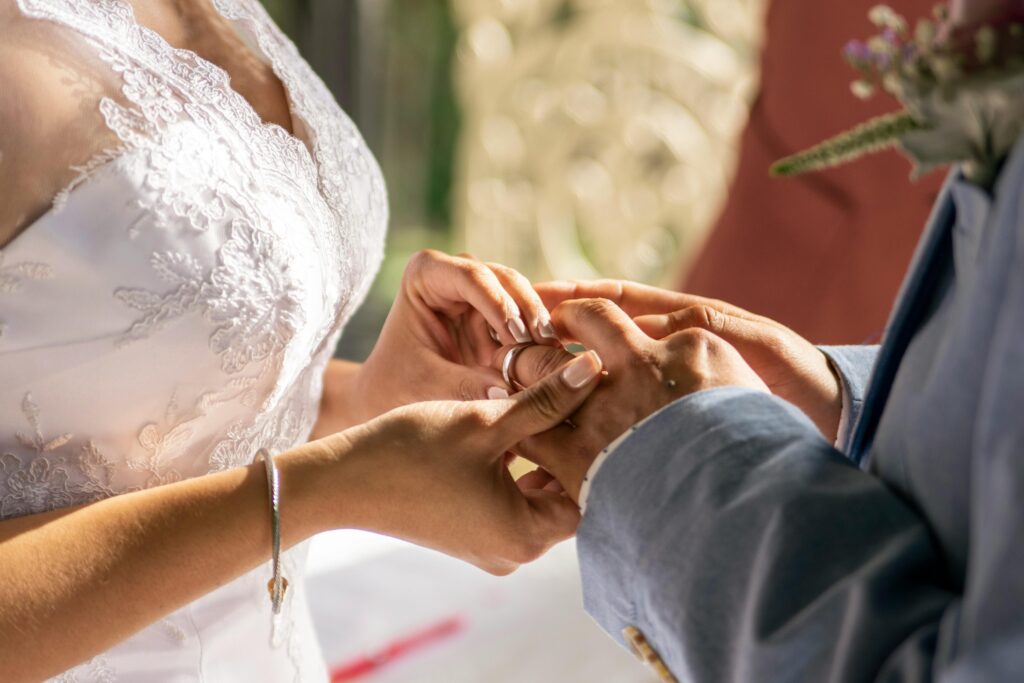
Photo by Leonel Caicedo: https://www.pexels.com/photo/a-wearing-ring-to-her-husband-7107861/
There is a quiet mystery in marriage, where joy and sorrow mingle, and our deepest desires are laid bare. We come with our hands full of hope and leave with hearts shaped by grace. In the ordinary moments of pain and tenderness, God invites us to see each other anew, not as fixers or saviours, but as fellow pilgrims learning how to love.
At creation, God intended the man and woman to live unhidden from each other, without shame, in open and unhindered communion with Him. But with their choice to turn from God came a deep fracture. Shame entered the relationship, and they began to hide, first from God, then from one another. They covered their unacceptability with fig leaves, yet behind every fig leaf lies a broken heart. Since the Fall, woman often reaches for control while man tends to withdraw. We were never meant to carry the weight of being everything to one another, and in that gap, relationships inevitably hold both longing and loss.
Still, God’s desire for us remains wholeness in marriage. He relentlessly pursues our hearts as a tender Lover, longing for restoration and redemption. In His presence, our maleness and femaleness begin to find their full expression, meant not to compete, but to complement. It takes courage for a man to offer his strength, and vulnerability for a woman to offer her softness. This is not about roles as power plays, but about mutual, voluntary submission to God’s transforming love, a submission Jesus embodied on the cross.
The union of male and female was designed to reflect a sacred oneness that touches the spiritual, emotional, and physical essence of our being. To truly know and be known is the longing beneath all our striving. The next chapter will explore those places where love both binds and breaks, and how we might walk toward healing and wholeness in the relationships God has entrusted to us.
Declarations
(Complete as a couple if you can.)
We declare that our marriage is a gift from You, Lord, a sacred union made by Your hands.
We declare that the enemy has no place in our hearts, in our marriage, or in our family. We are protected by Your power, and we stand firm in Your truth.
We declare that we are one, spiritually, emotionally, and physically, and that no force can separate us. Together, we are stronger, bound by Your love and purpose.
We declare that the blessings of this marriage will shape us into better people than we could ever be alone. We cherish each other and honour the gift of our relationship.
We declare that this marriage will fulfill the purpose You have intended for it, drawing others to the love and hope of Jesus.
We declare peace in our relationship because we trust in You, the Prince of Peace, who reigns in our hearts and guides us.
We declare that our home will be a sanctuary of peace and rest to all who enter, a place where Your love dwells and welcomes.
We declare ourselves bonded together, Lord, in the love of Jesus. Our foundation is built on You, and our commitment is rooted in Your grace.
We declare that our relationship will reflect Your grace and love, as we abide in You, Lord Jesus, now and always.
Prayer
Lord,
We deeply believe that You have given us each other to love and to hold for all our days. Your Word says that a threefold cord is not quickly broken. Open the eyes of our hearts and reveal anything in us that is not of You. Come and dwell with us, Lord, for only You can teach two broken people to truly love and understand each other.
You are the King of Peace, and we trust that You can change any situation, no matter how hopeless it seems. Let Your love fill every corner of our lives, bringing healing and restoration. What the enemy intends for evil, we pray that You will turn for good, making our story a testimony of Your power and grace to a hurting world.
Thank You, God, for giving us the strength to love well. Thank You that You fight for us and for our relationship. Help us to be kind and tender-hearted, forgiving one another as You have forgiven us. Set a guard over our mouths and keep watch over our words. May we stand together as one, united in You, always having each other’s backs. Fill our marriage with truth, cover it with Your blessings, and let our love bear all things, believe all things, hope all things, and endure all things. May our love never fail. In Jesus’ name, Amen.
Reflection Questions
- Where have I experienced love as both a binding force and a breaking point in my relationships? Reflect on moments where love held you together, and where it strained or snapped. What was revealed in those experiences?
- What fig leaves do I reach for when I feel emotionally exposed or relationally inadequate? Consider how you hide, protect, or self-manage when shame or vulnerability surfaces.
- How have unspoken grief or unmet needs shaped how I relate to those closest to me? Explore whether lingering wounds influence your expectations, communication, or emotional availability.
- In what ways am I resisting or welcoming God’s invitation to deeper healing in my marriage (or close relationships)? Pay attention to where your heart feels tender, guarded, or drawn toward restoration.
- What would it look like for me to live more unhidden, with God, with myself, and with another? Imagine a space where mutual knowing and being known is safe, sacred, and life-giving. What step might God be inviting you to take?
About the Author

Dr Paula Davis is a retired clinical counsellor, supervisor, and educator specialising in psychological trauma. She has lectured and supervised counselling students in university higher-degree programs in Australia and overseas. Her doctoral research explored the application of Western trauma models in collective societies, informing her work in Uganda, Kenya, India, and Sri Lanka.
Together with her husband Barry, she co-authored A Safe Place: A Marriage Enrichment Resource Manual (2021) and has delivered marriage programs internationally. She is also the author of Eating Water, Drinking Soup: Finding Nourishment in the Deepest Pain and Exploring the Roots of Heartache: The Stories Our Pain Is Trying to Tell. Her forthcoming book, After the Breaking: Psychological Trauma and Collective Healing, continues her work of integrating trauma theory with culturally responsive approaches to recovery.
Paula’s work is marked by cultural sensitivity, relational depth, and a compassionate commitment to healing. She also delights in life’s simple pleasures, sharing coffee with her husband, swimming in the surf near her home, and spending time outdoors.