
“There are two questions a man must ask himself: The first is ‘Where am I going?’ and the second is ‘Who will go with me?’ If you ever get these questions in the wrong order, you are in trouble.” — Sam Keen, Fire in the Belly: On Being a Man
“Years ago, manhood was an opportunity for achievement, and now it is a problem to be overcome.” — Garrison Keillor
“When Jesus saw her sobbing and the Jews with her sobbing, a deep anger welled up within him.” — John 11:35

Embracing Vulnerability as Strength
In a world that often values strength over vulnerability, and independence over emotional connection, many men find themselves locked in an armour of self-reliance, proud of their stoic exterior but aching with the weight of unexpressed emotions. This chapter invites men into a deeper exploration of their identity, one that challenges the cultural and spiritual expectations that demand they hide their true selves behind walls of toughness. It is a call to peel back the layers of armour and explore the heart beneath, the tender, compassionate, and powerful core of their true being.
By examining how God designed men with a capacity for both strength and sensitivity, this chapter offers a reimagined vision of masculinity, one that embraces vulnerability as a strength and emotional authenticity as a pathway to healing and true connection. In doing so, it highlights the beauty of emotional honesty and the deep joy that comes from living out a life where strength is balanced with tenderness, and the heart is no longer hidden but celebrated.
An Appalling Dilemma
An encounter in Uganda finds me teaching an adult university class on Crisis and Trauma Counselling. The classroom, about an hour’s drive from Kampala, is filled with students from all corners of Uganda, cities, towns, and villages alike. After a session on crisis assessment, I decide to demonstrate an assessment interview and ask for a volunteer. What follows is more than I could have anticipated.
The problem presented is devastating. As my student speaks, nausea rises in my stomach. She recounts a tragedy that is tragically common in her line of work: Her client, an eleven-year-old girl, desperately wants to attend school. Each day, she watches her friends pass by in their uniforms, and a deep sense of shame burns within her. But for her, school is not an option. A few months ago, her younger sibling, a child she had been close to, was born with a deformity and murdered by their father. He tied the child to a tree, called her a “no-good cripple,” refused her food, and beat her to death.

Photo by Built By King: https://www.pexels.com/photo/a-girl-in-a-gray-shirt-5261394/
The mother, consumed with grief and hatred toward her husband, sought the help of a local witchdoctor. As the story goes, the witchdoctor placed a curse on the father, and within days, he died of a mysterious illness.
Now, this eleven-year-old girl has witnessed both the murder of her sister and the death of her father at the hands of her mother. Her mother, unable to cope, often leaves for long stretches, seeking out money, returning only sporadically. The child is left to care for her younger siblings with almost no resources.
Where do you even begin? How can one not feel overwhelmed by such suffering? What, in the face of this horror, is the solution? I am at a loss for words. Turning to the students, I ask for their thoughts. The previously composed class erupts. Opinions fly, voices overlap, and the discussion grows heated. Fear flickers across faces as talk of “bewitching” intensifies. I sense the shift, this is no longer a theoretical discussion. Several students are visibly triggered, their own memories resurfacing, their bodies responding with panic, anxiety, and unease.
This is unlike anything I’ve encountered while teaching adults in Australia. I watch as the belief in bewitching takes hold of the room, a force as real as the trauma we’re discussing. And then, something shifts within me. I, too, am triggered. My heartbeat quickens, sweat beads on my skin, and an unmistakable urge rises in my chest: Run. Escape. Get out of here.
Two Men, Two Responses
There are two men in this story, and both respond to life in very different ways. One tortures and kills his child, only to be killed by his wife. The other practices as a witchdoctor, seduced by money and power to invoke or manipulate alleged supernatural forces to control others. He seeks to wield dark powers, even to the point of murder. Is this how God designed men?
Both of these men reflect a distortion of what God intended. Instead of being protectors, providers, and image-bearers of God’s love, they have become agents of destruction. One is consumed by rage, using his strength to harm, not nurture. The other is enslaved by power, manipulating and controlling rather than serving. Both have lost sight of their true identity.
God designed men to reflect His character, walking in love, righteousness, and strength that builds rather than destroys. In the beginning, Adam was created to cultivate, protect, and lead in partnership with God. Jesus, the perfect image of manhood, did not take life; He laid His down. He used His power to heal, restore, and bring freedom rather than enslavement.
What we see in this story is the enemy’s corruption of masculinity. Men who were meant to create life now bring death. Instead of standing as fathers, protectors, and truth-bearers, they fall prey to violence, control, and fear. But this is not the final word. God’s design for men is not lost. It can be redeemed. The orphan spirit that drives men to power, anger, and destruction can be cast out when they encounter the Father’s love and step into their true identity as sons of God.
So, the question is not just: Is this how God designed men?
How do Men Return to the Identity God Designed for Them?
What is a biblical man? What does it mean to embody true manhood? The Oxford English Dictionary (2004) defines manhood as “the state or period of being a man rather than a child; boys in the process of growing to manhood.” Yet, beyond biological and societal definitions, what does it mean to be a man in a way that honours both strength and tenderness?
What I value most in men is the blend of strength and gentleness, true meekness. Yet, in my experience, many men are deeply afraid of tenderness. They fear that vulnerability will lead to abandonment or that expressing their inner world will expose them to rejection or attack. To protect themselves, they often turn to anger. But tenderness, defined as “gentleness and kindness; sensitivity to pain”, is not weakness. If men could see that their presence sustains and gives life to those they love, I wonder if that realization would unlock a strength that leads to compassion and deeper involvement in the lives of those around them.
Biblical Models of Manhood

freepik.com%2fpremium-photo%2fking-david-biblical-portrait-old-testament-character-from-bible_1100151-86.jpg&exph=417&expw=626&q=free+pictures+king+david&FORM=IRPRST&ck=8294B3AA9E8C36043F23565DE00325CE&selectedIndex=0&itb=0&idpp=overlayview&ajaxhist=0&ajaxserp=0
King David was a man who fully embraced his emotions, and God made his experiences part of His inspired Word. David embodied courage, humility, passion, fierceness, and inner strength, qualities that could be observed and felt. He knew the heights of uninhibited praise and the depths of grief. He openly mourned the loss of his closest friend, Jonathan, and later, his son. He burned with anger against wickedness, wrestled with depression (“Why, my soul, are you downcast? Why so disturbed within me?” Psalm 42), and showed deep compassion (caring for Jonathan’s son, Mephibosheth, to “show the kindness of God to him” 2 Samuel 9:3).
David also demonstrated repentance, confessing his sin with sorrow and returning to God with a contrite heart. God honoured this, calling him “a man after My own heart” (1 Samuel 13:14, Acts 13:22). David’s life was not one of perfection, but of deep engagement, with God, with others, and with his own heart.
Jesus, the ultimate example of manhood, embraced His emotions as an expression of His heart and mission. He demonstrated love, compassion, and joy. He marvelled at faith, celebrated at a wedding, wept over Jerusalem, and mourned the death of His friend. He was unafraid to express righteous anger, overturning tables in the temple and confronting hypocrisy. He experienced distress, loneliness, and betrayal. He bore the title Man of Sorrows (Isaiah 53:3), not because He was weak, but because He carried the burdens of the world.
God reveals Himself not only in word and truth but also in His heart, His passion, and His longing for relationship with us. He calls Himself the Bridegroom, a wounded lover pursuing His people (Hosea). He sent Jesus to live among us, to experience life as we do, and to show us what it truly means to be human and fully alive.
The Bible offers examples of men who walked with God, wrestled with their own humanity, and displayed strength through both action and surrender. In the chapters ahead, we will explore what it means to be a biblical man, one who leads, loves, and lives with both strength and tenderness.
Jesus’ Counter-Cultural Model
I find myself unsettled by the portrayal of Jesus in the media, often depicted as a long-haired, overly effeminate figure. This image couldn’t be further from the truth. Jesus was anything but weak. He was counter-cultural in the most radical ways. Wittwer (2017) highlights Mark 10 as a powerful example of how Jesus defied cultural norms:
- Marriage and Divorce: In a time when men could divorce their wives for nearly any reason, Jesus upheld the sanctity of marriage, declaring that what God has joined together, no one should separate.
- Children’s Worth: While children were seen as insignificant and unworthy of adult attention, Jesus rebuked His disciples for dismissing them and invited the children to come to Him.
- Wealth and Status: In a culture that viewed wealth as a sign of God’s blessing, Jesus turned the notion on its head, saying it’s difficult for the rich to enter the kingdom of God. He challenged the rich young ruler to give away his wealth and follow Him.
- Power and Authority: In a world that glorified domination, Jesus said, “Not so with you.” True greatness, He taught, is found in humble service.
- The Outcast and Unseen: When a blind beggar cried out to Him and the crowd tried to silence him, Jesus stopped, acknowledged him, and healed him.
At every turn, Jesus defied cultural expectations and upheld the values of God’s kingdom. He demonstrated that true masculinity is not about dominance, wealth, or status but about humble servant leadership, sacrificial love, and meekness, strength under control.
Several key attributes stand out in Jesus’ example. In the following sections, we’ll explore how they shape a biblical model of manhood.
pngtree.com
1. Jesus was meek.
Our culture elevates strength, power, independence, intelligence, boldness, and control. We admire those who take charge, stand their ground, and make their voices heard. But in the third beatitude, Jesus presents a radically different way of being: “Blessed are the meek, for they will inherit the earth” (Matthew 5:5).
At first glance, “meek” might seem like a word for the weak or passive, but it’s far from that. The Greek word prauscarries deeper layers, gentle, humble, submissive, modest, mild, unpretentious. Meekness is not weakness. It literally means “strength under control” (Thayer, 2011).
In ancient Greece, war horses were trained to be meek, not weak, but strong, fast, and powerful, yet completely surrendered to their rider’s command. They were disciplined, harnessed, and ready. That’s the kind of meekness Jesus embodied.
Think of Him in the Garden of Gethsemane. As the soldiers came to arrest Him, Peter, ever the fighter, drew his sword. But Jesus stopped him:
“Put your sword back in its place,” Jesus said to him. “For all who draw the sword will die by the sword. Are you not aware that I can call on My Father, and He will at once put at My disposal more than twelve legions of angels? But how then would the Scriptures be fulfilled that say it must happen this way?” (Matthew 26:52-54)
Jesus had unimaginable power at His fingertips, power to wipe out His enemies in an instant. Yet, He restrained Himself, choosing obedience over force. As He said in Matthew 11:29, “I am gentle and lowly in heart.”
His meekness wasn’t about passivity; it was about power submitted to God’s authority. In His upside-down kingdom, true strength is found not in domination, but in surrender. Meekness is strength harnessed for God’s purposes.
2. Jesus invested in relationships.
Jesus understood the deep value of relationships. The stereotype of the “real man” as an independent loner doesn’t reflect the truth of His life. Jesus was deeply connected to His heavenly Father, pouring into that relationship day after day (Matthew 11:27). He didn’t isolate Himself but chose to invest in close friendships, selecting Peter, James, and John as His closest companions, knowing them intimately and sharing moments of deep connection (Matthew 17:1-3).
But His relationships weren’t limited to a select few. These three were part of a larger group, His twelve disciples, with whom He journeyed daily, teaching and living life side by side (Luke 6:13). Jesus also poured Himself out for the crowds that followed Him, seeking to draw near to them and communicate His message (Luke 9:11; Matthew 9:2).
In His life, we see that true strength isn’t found in isolation but in the power of intimate, shared relationships. Jesus was fully connected to His Father and fully engaged with those He walked alongside. That’s the kind of relationship we are called to cultivate, one that deeply values connection and invests in the people around us.
3. Jesus was not afraid to display His emotions.
Jesus lived with a rich and full emotional life, and His example shows us that it’s not only okay to feel deeply, but essential to express and manage those emotions in a healthy way. He didn’t shy away from laughter, heartache, or even fierce anger. He demonstrated how to navigate those feelings with wisdom and purpose.
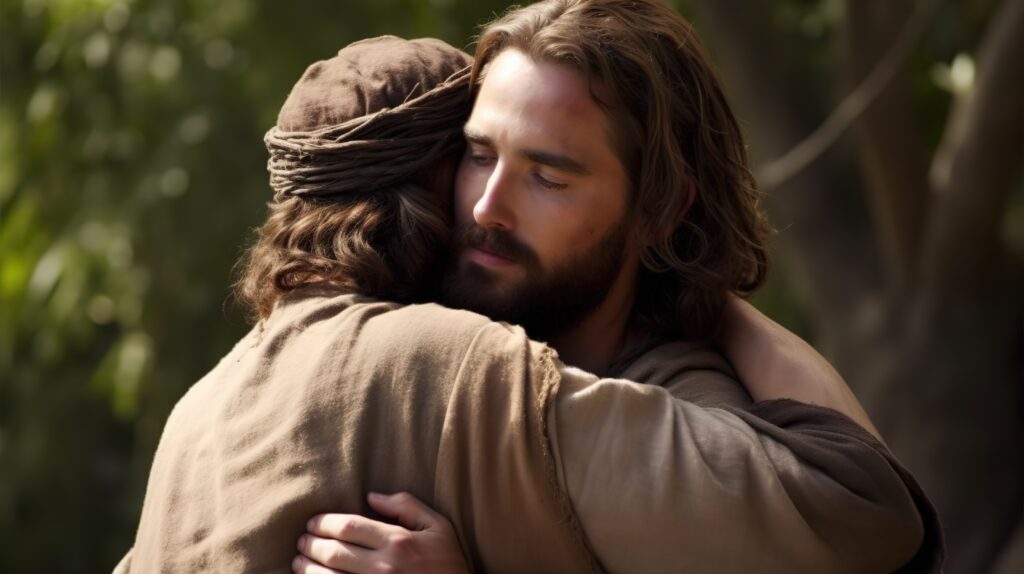
We see Jesus’s tenderness in John 11:35, when He wept at the death of His close friend Lazarus. It wasn’t just sadness over loss; it was a powerful display of compassion, a moment of fully embracing His humanity in the face of pain. Jesus didn’t suppress His emotions; He embraced them, showing us that it’s okay to feel deeply and express vulnerability.
Perhaps the most profound moment of emotional agony came just before His arrest in the Garden of Gethsemane. Knowing He was about to bear the weight of the world’s sin, He felt such anguish that He sweat blood. Jesus knew sorrow like no one else, yet He surrendered His emotions to God’s will.
Jesus teaches us that emotional health isn’t about avoiding feelings but about embracing them and allowing God to guide our responses. He shows us how to live with emotional depth and integrity, rooted in God’s strength.
4. Jesus had a strong work ethic.
Jesus demonstrated a strong work ethic throughout His life. From His early years as a carpenter (Matthew 13:55; Mark 6:3) to His transition into His public ministry, He showed unwavering commitment to His work. His life was marked by productivity and purpose, each moment dedicated to fulfilling God’s plan.
John 21:25 tells us that His life was so full that not even all of it could be contained in the Gospels. Jesus worked tirelessly, serving, teaching, healing, and pouring Himself out for others. He worked hard but also knew when to rest, always seeking to do the Father’s will with all His strength.
5. Jesus respected women.
In a culture that often marginalized women, Jesus demonstrated profound respect for them. He never used derogatory language toward women but engaged with them in ways that were radical for His time. He spoke to women publicly, even when societal norms forbade it, like in His encounter with the Samaritan woman at the well (John 4:7-9) and with the woman caught in adultery (John 8:10-11).
Jesus also honoured His mother, loving her deeply, both in His childhood (Luke 2:51) and at the cross, where He entrusted her to the care of His disciple, John (John 19:26-27).
He highlighted women’s actions as examples of faith, courage, and devotion, such as the widow who gave all she had (Mark 12:41-44) and the woman who anointed Him with perfume (Mark 14:8-9). He showed incredible empathy and compassion, offering healing and hope to women like the one who suffered from bleeding for years (Mark 5:25-34) and the woman bent over with a disabling spirit (Luke 13:10-12).
In His life, Jesus not only defied cultural norms but set a powerful example of how to honour, value, and respect women, seeing them as equal partners in His mission, deserving of love and care.
6. Jesus loved children.
Jesus deeply loved children and welcomed them with open arms. Parents brought their children to Him, knowing He valued and cared for them (Mark 10:13-16; Luke 18:15-17). Far from seeing them as insignificant, Jesus used them as examples of humility and purity, reminding us that the kingdom of God belongs to those with childlike faith.
In His interactions with children, Jesus demonstrated tenderness and respect, affirming their worth and showing us that they are not only seen but cherished in His eyes.
7. Jesus exercised self-control.
Jesus exemplified profound self-control throughout His life, especially during His time in the wilderness when He was vulnerable and physically weak (Matthew 4:1-11). Yet, He resisted temptation with unwavering strength, relying on Scripture He had internalized (Hebrews 4:15).
His self-control wasn’t just about resisting temptation; it was a fruit of the Holy Spirit (Galatians 5:23). He lived fully surrendered to the Father’s will, demonstrating that true strength lies in controlling our impulses and aligning our hearts with God’s purposes.
8. Jesus was relaxed.
Dallas Willard once described Jesus in one word: relaxed. This might seem surprising, but it captures something profound about His nature. Despite the weight of His mission, Jesus was never hurried or frantic. He made time for rest, joy with friends, and simple pleasures like attending parties and going fishing. He wasn’t busier than most pastors, yet He accomplished more in three years than most could in a lifetime (Grieg, 2023).
Jesus modelled a rhythm of work and rest, recreation and reflection. He showed us that true peace and productivity come from surrendering to God’s pace.
9. Jesus was fierce.
Revelation 19:11-16 presents a powerful, fierce portrait of Jesus. The Rider on the white horse, named Faithful and True, embodies unrelenting justice and righteousness. His eyes blaze with fire, and from His mouth comes a sharp sword, symbolizing His authority to judge and make war against evil.
While Jesus was humble, He was not passive. He was willing to confront evil head-on, to stand firm in the face of injustice. He was fiercely committed to the Kingdom of God, willing to lay down His life for its sake. He shows us that strength is not about passivity but about fighting for what is right.
Eshet Chayil’s Husband
In Proverbs 31, the eshet Chayil, the woman of strength and virtue, is celebrated for her wisdom, diligence, and hard work. Yet, her success is not solely her own; her husband plays a pivotal role in nurturing and supporting her. He is not a passive observer but an active partner, encouraging her growth emotionally, spiritually, and financially. His role is one of mutual partnership, not competition.

freepik.com
1. He Treasures Her (v. 10)
A significant aspect of the man behind the eshet chayil is that he treasures her (Proverbs 31:10). His admiration for her is evident in the way he speaks of her, saying, “She is far more precious than jewels.” This declaration is more than a casual compliment; he sees the incomparable value of the woman beside him. He acknowledges her worth, comparing her not only to other women but to precious gemstones, with the understanding that in his eyes, she surpasses them all (v. 29).
His admiration goes deeper than mere appreciation; he regards her as one of “the wisest of women” (Proverbs 14:1). Rather than feeling threatened by her strength or accomplishments, he honours her for who she is and supports her in all she endeavours to do. This creates a dynamic of mutual respect where both partners grow in love and trust. His goal is to help her flourish, not to claim the spotlight for himself. He sees her as a strong, capable, and equal partner.
2. He Trusts Her (v. 11)
The Proverbs 31 husband is characterized by trust in his wife (Proverbs 31:11). In a world where power dynamics often lead to manipulation, the eshet chayil’s husband stands in stark contrast. He trusts her completely, knowing she is capable and reliable. “The heart of her husband trusts in her” (v. 11) reflects a deep, unwavering belief in her abilities and character.
This trust isn’t limited to practical matters; it extends to their spiritual partnership. The eshet chayil fears the Lord, and her faithfulness to God earns her husband’s full trust. He does not view her as inferior or subordinate, but as a true partner. He supports her relationship with God, and together they grow spiritually, strengthening one another. Through this trust, he empowers her to become all that God has created her to be.
3. He Values Her Strength (v. 17)
The third characteristic of the Proverbs 31 husband is that he values his wife’s strength (Proverbs 31:17). He does not feel threatened by her abilities but rather takes pleasure in them. Whether she is managing their home, making business decisions, or planning for the future, he respects and admires her strength. She is a woman of wisdom and foresight, and he honors these qualities.
The Proverbs 31 man does not seek to dominate or control. Instead, he recognizes that his wife’s strength complements his own, and he respects her independence and decisions. As a servant leader, he encourages her to thrive, giving her the space and support she needs to fulfill her calling. This allows them to function as a team, each supporting the other with mutual respect.
4. He Praises, Encourages, and Enables Her to Flourish (v. 28)
The fourth attribute of the Proverbs 31 man is his active role in praising, encouraging, and enabling his wife to flourish (Proverbs 31:28). He does not keep his admiration private but lifts her up publicly, affirming her godly character and the invaluable role she plays in their lives. By doing so, he creates a safe, nurturing environment where she can thrive. He calls her an eshet chayil, a woman of valour, bravery, and strength, because, in his eyes, she truly is.
This support is not limited to simple compliments; it creates a culture of encouragement within their home, where their children rise up and call her blessed (v. 28). His praise reflects a deep respect for her, and this validation empowers her to walk confidently in her calling, knowing she is seen, cherished, and upheld.
Proverbs 31 paints a picture not only of a virtuous wife but also of a godly husband, one who knows how to love, honour, and support his wife. These teachings, passed down from King Lemuel’s mother, remind us that a husband’s role is not merely to admire but to actively cultivate and celebrate his wife’s inner beauty. A godly husband fosters an atmosphere where his wife’s gifts and character can flourish, allowing her to live out her fullest potential.
Closing Thoughts
True Biblical manhood is about carrying strength with restraint, exercising authority with humility, and wielding power with self-sacrificing love, the kind of manhood embodied perfectly by Jesus. He exemplified strength under control, grounded in gentleness. Jesus didn’t simply wield authority; He invested deeply in relationships, offering His time, attention, and love to those around Him. He wasn’t afraid to show His softer side, He wept, showed compassion, and expressed tenderness, especially toward those who were suffering.
Jesus worked tirelessly, not only providing for His earthly family but also dedicating Himself fully to the work of His Father. In a time when women’s worth was often overlooked, He loved and respected them, seeing them as equals, worthy of dignity and honour. He also took the time to be with children, showing them tenderness and teaching His followers to do the same.
Yet, Jesus didn’t shy away from confrontation when it was necessary. He was fiercely passionate about righteousness and justice, willing to call out wrongdoing and even overturn the tables when the temple was dishonoured. His role as both redeemer and judge reflects a perfect balance of qualities, gentle yet strong, compassionate yet firm, loving yet uncompromising. Jesus didn’t just teach us how to be men; He showed us, leading by example in every aspect of His life.
As we look to Jesus, the ultimate example of true manhood, we are drawn back to the heart of God’s original design for both men and women. Long before cultural definitions or distorted perceptions shaped our understanding of masculinity and femininity, God intended a relationship marked by mutual love, respect, and partnership. As we grow in our understanding of this sacred design, we are invited into the covenant where these identities converge: marriage. What follows is not a discussion of roles to be performed, but an invitation into a journey of becoming, together.
Declarations For Men
I declare that I embrace the responsibility and strength of being a man, acknowledging the call to lead with courage, wisdom, and integrity.
I declare that my marriage is ordained by God, and I commit to making it a success, prioritising Him in every aspect of our relationship. I will put God first, seeking His guidance, strength, and grace as the foundation of our union.
I declare that I will stay faithful in our marriage, honouring the vows I made before God, and remaining steadfast in my commitment to my wife.
I declare that I will love and honour my wife, treating her with respect, tenderness, and selfless love, as Christ loves the church.
I declare that no weapon formed against our marriage will be able to prosper. We are shielded by God’s protection, and His peace reigns in our relationship.
I declare that wicked patterns and cycles of failed marriages in my bloodline are over. The generational strongholds are broken in the name of Jesus, and our marriage will stand as a testimony of God’s faithfulness.
I declare that I will turn away from everything in my life and around me that gives Satan the power and legality to attack my marriage. I stand in the authority of Jesus and renounce any open doors to the enemy’s schemes.
I declare that I will stand against the spirit of adultery in the name of Jesus. I reject any temptation, lie, or influence that seeks to disrupt the purity and sanctity of our union, and I declare my marriage secure in the love and power of Christ.
Prayer
Lord,
I lift up the men You have placed in my life. I thank You for them, their presence, their roles, and the impact they have on those around them. Father, these men are precious in Your sight. You have called them for such a time as this. The destiny and influence on their lives are vital to Your Kingdom purposes on this earth. Because of their importance, I come before You, asking that You bless them and breathe courage over them.
Father, according to Your word in Genesis 12, You made a promise to Abraham that You would bless him and his descendants, making them into a great nation. Through Christ Jesus, we have entered into that same covenant. Lord, You promised Abraham that he would not only be blessed but that he would be a blessing to others. So today, I declare this same blessing over the men in my life.
Lord, cause them to be both blessed and a blessing.
Strengthen them in their faith, their calling, and their purpose.
Meet their needs as they pour into the lives of others.
Fill them with wisdom, integrity, and courage.
Draw them into deeper relationship with You, shaping them into men of honour and strength.
May they know their worth, not by the world’s standards, but by Your truth. May they walk in confidence, lead with humility, love with faithfulness, and stand firm in their identity as sons of the Most High. In Jesus’ name, Amen.
Reflective Questions
- How does the example of Jesus’ strength under control challenge my understanding of true manhood?
- In what areas of my life am I being called to embrace both tenderness and strength, as Jesus did?
- What impact does recognizing Jesus’ respect and love for women have on the way I relate to the women in my life?
- How can I embody a balanced approach to authority, humility, and love in my own relationships and responsibilities?
- What does God’s original design for man and woman reveal about the way I am to view myself and others in the context of partnership and mutual respect?
About the Author
Dr Paula Davis is a retired clinical counsellor, supervisor, and educator specialising in psychological trauma. She has lectured and supervised counselling students in university higher-degree programs in Australia and overseas. Her doctoral research explored the application of Western trauma models in collective societies, informing her work in Uganda, Kenya, India, and Sri Lanka.
Together with her husband Barry, she co-authored A Safe Place: A Marriage Enrichment Resource Manual (2021) and has delivered marriage programs internationally. She is also the author of Eating Water, Drinking Soup: Finding Nourishment in the Deepest Pain and Exploring the Roots of Heartache: The Stories Our Pain Is Trying to Tell. Her forthcoming book, After the Breaking: Psychological Trauma and Collective Healing, continues her work of integrating trauma theory with culturally responsive approaches to recovery.
Paula’s work is marked by cultural sensitivity, relational depth, and a compassionate commitment to healing. She also delights in life’s simple pleasures, sharing coffee with her husband, swimming in the surf near her home, and spending time outdoors.