By Dr Paula Davis
“The husband is the head of the wife not by virtue of being better, but by virtue of being called by God to bear the responsibility of leadership.” ~ John Piper, This Momentary Marriage: A Parable of Permanence
“Husbands, go all out in your love for your wives, exactly as Christ did for the church – a love marked by giving, not getting. Christ’s love makes the church whole. His words evoke her beauty. Everything he does and says is designed to bring the best out of her, dressing her in dazzling white silk, radiant with holiness. And that is how husbands ought to love their wives. They’re really doing themselves a favor – since they’re already “one” in marriage.” ~ Ephesians 5:25-28 (MSG)
“I want you to know that the head of every man is Christ, the head of woman is man, and the head of Christ is God.” ~ 1 Corinthians 11:3
The Dance of Strength and Tenderness in Leadership
Love, when truly embodied, is not passive or weak. It is a force that holds and heals, guides and shapes, leading with both tenderness and strength. Yet in a world that often equates love with submission or passivity, we are invited to explore the deeper, more complex dynamic between power and tenderness in relationships.
When love leads, it doesn’t demand or manipulate; it draws people into a space of mutual respect and deep understanding. In this chapter, we’ll uncover the layers of how love, when rightly understood, invites us to lead with humility, while not relinquishing our God-given authority and voice. We’ll also delve into the delicate balance between leading with strength and holding space with tenderness, acknowledging the challenges that arise when both are present.
By unpacking the biblical and psychological insights surrounding love, leadership, and power, we’ll reflect on how our understanding of love can transform our relationships, creating spaces where both vulnerability and strength are honoured. The invitation is to love in such a way that it heals, empowers, and leads with grace.
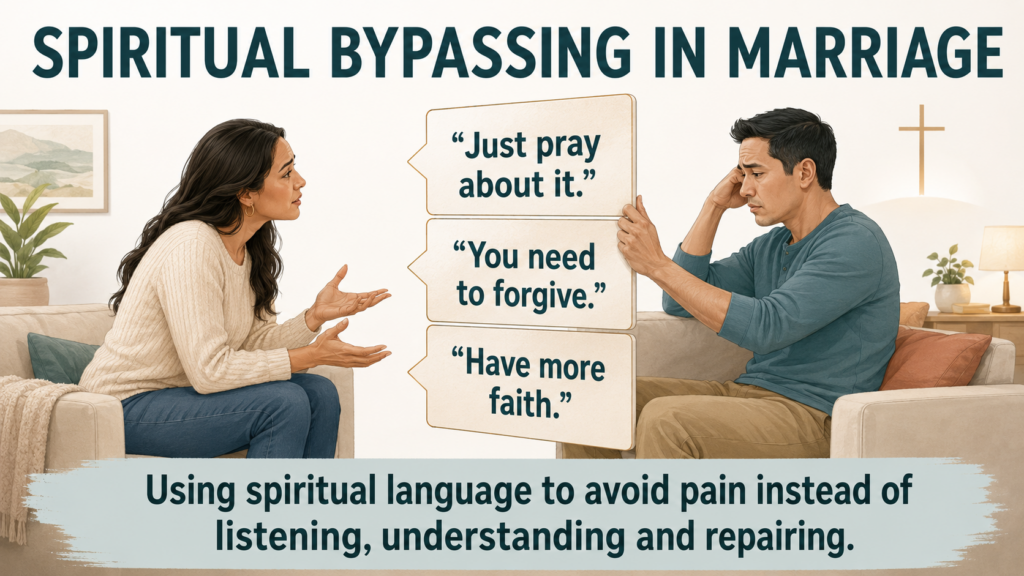
Spiritual Bypassing in Marriage
Jim often quotes Scriptures about submission, using spiritual language to validate his position while sidestepping the deeper emotional and relational work that true biblical leadership requires. This is a form of spiritual bypassing, using doctrine to avoid discomfort, rather than engage in transformation.
Rather than seeking to understand Jane’s growing distance, Jim uses Scripture as a shield to deflect self-examination. He assumes the problem lies in Jane’s lack of submission, rather than asking the more vulnerable questions:
- Am I loving her as Christ loves the Church (Eph. 5:25)?
- Am I creating a space where she feels safe, cherished, and heard?
In doing so, Jim absolves himself of responsibility, distorts Scripture, and misses the heart of biblical leadership. Christ-like headship never demands submission, it invites it. Love always leads. True spiritual authority is not rooted in control, but in the willingness to serve, to listen, and to lay oneself down.
Jesus never coerced. He led through sacrificial love (John 13:14-15), not entitlement. But Jim remains fixated on what Jane owes him, rather than how he is called to love her.
From Defensiveness to Self-Examination
The turning point for Jim begins not with Jane’s change, but with his own. He must stop looking outward and start looking inward. Here are four questions that could open his heart:
- Am I a husband Jane can joyfully trust and follow?
- Do I foster an environment where she feels safe and valued, or am I pushing her into reluctant compliance?
- Do I use Scripture to justify my control, or to reflect Christ’s love?
- Am I focused more on my rights as a husband than on my responsibility to love unconditionally?
This isn’t merely a marriage issue; it’s a heart issue. Until Jim embraces the courage of honest self-reflection, he will continue creating distance instead of cultivating intimacy. A skilled counsellor could help him explore why emotional vulnerability feels threatening, and how he can move from control to love, from entitlement to servanthood.
What is Biblical Headship?
Biblical headship is not about domination, it’s about devotion. It is a sacred calling rooted in Christ’s example:
- Self-sacrificing love – A husband is called to love as Christ loved the Church, laying down his life for her. This is not passive acquiescence but active, humble, courageous leadership.
- Nurturing holiness – True headship seeks a wife’s flourishing. Leadership is not about ruling, it’s about cultivating an atmosphere where she thrives emotionally, spiritually, and relationally.
Biblical headship is not a claim to superiority. It is a daily surrender to love first, to serve first, to sacrifice first.

Self-Sacrifice vs Control
A Christ-like husband doesn’t avoid conflict, silence his spouse, or demand peace at the expense of connection. He enters into the mess of real relationship. He listens, engages, repents, and grows. This means:
- Sacrificing comfort to stay emotionally present in hard conversations.
- Investing deeply in his wife’s inner world—her longings, fears, and wounds—not to fix her, but to walk alongside her in love.
- Risking rejection to pursue intimacy, not just physical closeness, but emotional safety.
When Jim reflects on Jane’s struggles, is he seeing her pain or just his own inconvenience? If he asked, “What would I like to see change in my wife?” would his answer reflect deep knowing or shallow frustration?
A deeper question still: Is there anything Jane could say that would make me pull away in disgust? Christ-like love leans in even when it’s hard. It listens instead of reacting. It embraces discomfort for the sake of transformation.
C.S. Lewis warned of the temptation to use a spouse’s faults to excuse one’s own. True headship calls a wife toward wholeness not for the husband’s comfort, but for her healing.
Love Gives. Power Takes.
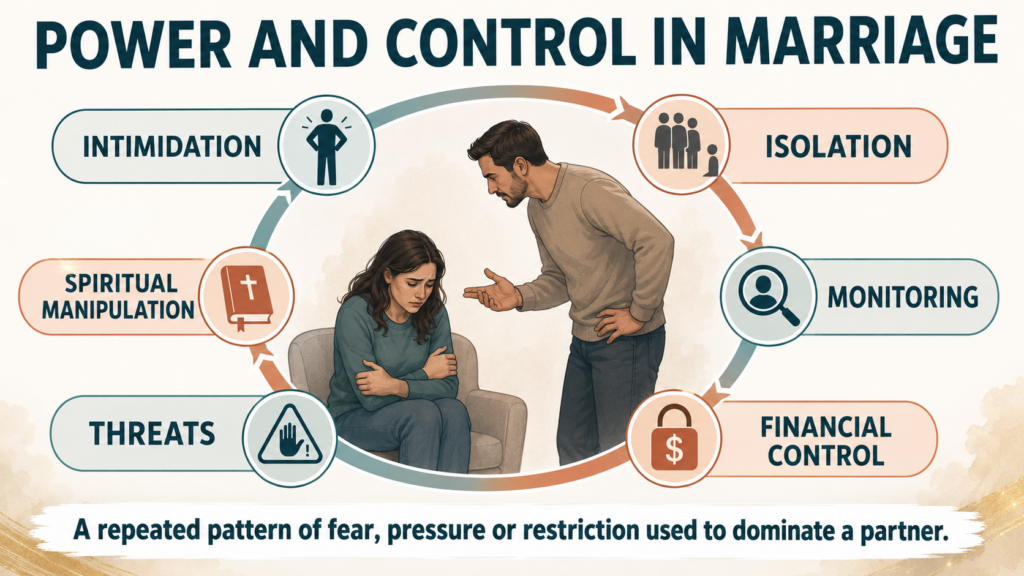
Where control increases, love disappears. Power shows up subtly, in silent treatments, in sexual withholding, in passive aggression, in escalating pressure when a wife resists. True authority doesn’t force. It invites.
“Everything is governed by a will to power, and… we see great minds trying to impose their will on the world by persuading others to see the world as they see it” (Arokiya, 2018).
Coercion is never love. Rape, for example, is not about sex but about power. There is an inverse relationship between love and power: when love grows, power diminishes; when power dominates, love recedes.
Jesus modelled kenosis, self-emptying love (Philippians 2). He did not grasp for power, but gave it up, becoming a servant. “If I be lifted up, I will draw all people to myself” (John 12:32). Love draws. Power compels. “Husbands, love your wives and do not be harsh with them” (Col. 3:19). The KJV renders harsh as bitter, a warning against resentment and cruelty, the very opposites of Christ-like tenderness (see Table 4. The Contrast Between Power and Control and Love).
Jim must ask: Am I leading in a way that makes my wife more radiant in Christ? Or am I using leadership to serve myself?
| POWER AND CONTROL | LOVE |
| “feels threatened and tries to lead by force and coercion” | “agape” “a self-sacrificing, caring commitment which shows itself in seeking the highest good of the one loved” |
| When a wife resists her husband’s will, or does not obey, he turns up the pressure. | The highest form of love, that unites and heals. |
| BITTER/HARSH | GENTLENESS/KINDNESS |
| “unpleasantly rough or jarring; cruel or severe” “feeling or showing anger, hurt, or resentment because of bad experiences or a sense of unjust treatment” | “compassionate, kind, humble, gentle, patient, forbearing, and forgiving” “even-tempered; considerate; honourable, strength under control” |
| Harsh, domineering behaviour in response to disappointment or resistance and refusal to obey the rules. | Not giving in but mastery of power that is respectful and persuasive. |
Table 4. The Contrast Between Power and Control and Love
Authority Through Sacrificial Love
True authority is never grasped, it is given. Not through control, but through consistent love. Power compels; love compels trust.
In a Christ-cantered marriage, leadership is not about “being in charge.” It’s about being the first to serve. First to listen. First to repent. First to lay down pride. Paul calls husbands to a fierce, sacrificial love that mirrors Christ (Eph. 5). Not once does he say, “Rule over her.” He says, “Love her.” A love that nourishes, cherishes, and serves (Eph. 5:29).
Leadership is Servanthood and Vulnerability
God’s vision for Jim is not about making him more authoritative, it’s about making him more like Christ. As a leader, Jim is called to responsibility without control. To bear weight with wisdom. To lead with attentiveness and honour, not domination. As a lover, he is called to vulnerability. To give of himself, emotionally and spiritually. To nourish, protect, and pursue Jane with tenderness and truth.
This kind of leadership doesn’t avoid emotion; it embraces it. It doesn’t silence pain; it listens for it. It doesn’t weaponise Scripture; it lives the Word in flesh and blood.
The Power of Cultural Norms
In the Greco-Roman world of the first century, adultery wasn’t just tolerated, it was expected. Most men participated in it. It was so deeply ingrained in the culture that it went unquestioned. So, when Paul commanded husbands to love their wives as Christ loved the church (Eph. 5:25), his words weren’t just surprising, they were revolutionary. To suggest monogamy was already countercultural. But to demand that a husband lay down his life for his wife? That was scandalous. In a world where divorce was easy and marriage often transactional, Paul’s words disrupted the moral logic of the day.

The Gospel has always challenged cultural norms. It cuts across the grain of man-made morality. In Paul’s view, Christian marriage was to be a living portrait of the Gospel, a visible testimony to those outside the church. At the heart of that witness? Husbands taking the lead in sacrificial love (Holloway, 2023).
A Radical Shift in Marriage
In that world, women had clear obligations to their husbands, but husbands had virtually none to their wives. Christianity introduced something entirely new: a marriage based not on hierarchy alone, but on mutual love and sacred responsibility. Precept Austin commentary (2021) puts it succinctly: “One word summed up the role of the wife – ‘submit.’ One word does the same for the husband – ‘love.’” And not just any love; the highest, most Christ-like form.
For many men in the Ephesian church, this was completely foreign. They’d come to faith out of raw paganism. Some had worshiped at the Temple of Diana, where ritual prostitution was the norm (hence Paul’s warnings in Ephesians 5:3–12). Many were in arranged marriages and had never been taught how to love their wives.
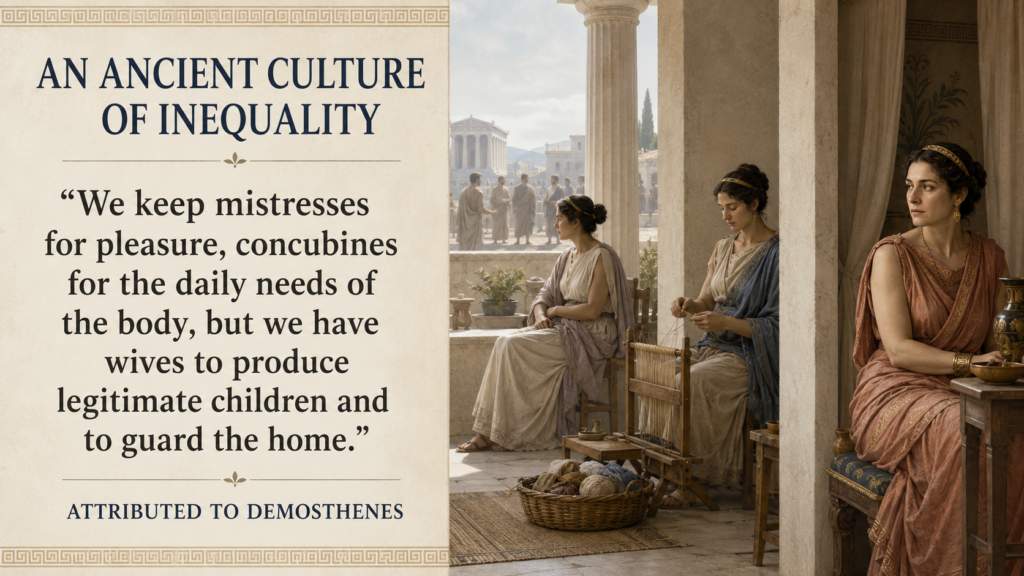
The Greek writer Demosthenes captured the cultural attitude: “We keep mistresses for pleasure, concubines for the daily needs of the body, but we have wives to produce legitimate children and to guard the home” (Disciple Christian MC, n.d.). Into this backdrop, Paul’s teaching was not just radical, it was redemptive. He didn’t just affirm a wife’s worth; he called men to cherish their wives exclusively. Christianity elevated marriage to something sacred, something almost unrecognizable to the pagan world.
Still Just as Radical Today
Perhaps Paul’s vision for marriage is just as radical now. Like Adam, who bore the primary responsibility for the Fall, men are called to initiate and take responsibility for the health of their marriage. Yet in many Christian circles, we still emphasize a wife’s submission while softening the weight of leadership that Scripture places on husbands.
As I study these texts, I’m struck, and grieved, by the weight of sacred responsibility laid on a husband’s shoulders. And I grieve for my sisters, and for myself, who were taught that if our marriages were struggling, we just weren’t submissive enough. We’ve been misled. But the truth? The truth is freeing.
An Impossibly High Standard
For Jim, the call to lead his family isn’t about making decisions or being “in charge.” It’s about loving Jane sacrificially, unconditionally, even to the point of giving up his life. That’s an impossibly high standard. It’s not convenient. It’s costly. Jesus loved His bride, the Church, all the way to the cross. That’s the model.
One commentator puts it this way:
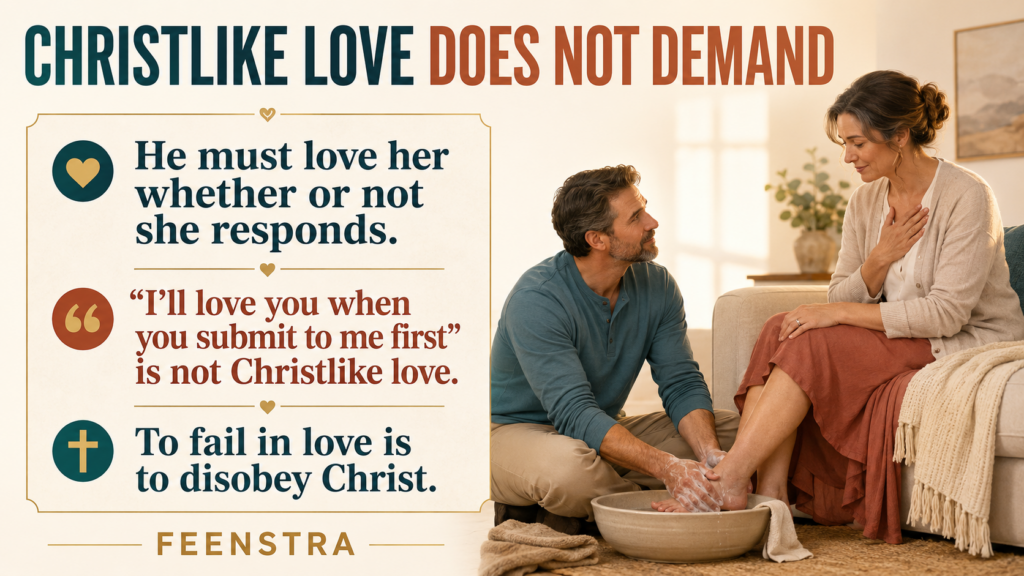
“A believing husband may not put himself first. He must ask, ‘How can I mirror the unity between Christ and His Church in my marriage?’ He must be the lesser. He must love her whether or not she responds. He must never say, ‘I’ll love you when you submit to me first.’ To fail in love is to disobey Christ” (Feenstra, n.d.).
This love is not reciprocal. It’s not about Jane meeting Jim halfway. It’s a love that gives without demand, that initiates without guarantee.
A Love That’s Not Humanly Possible
When Paul writes, “Husbands, love your wives” in Ephesians 5:25, he doesn’t use the Greek words philia (friendship) or eros (romantic love). He uses agape, God’s divine, selfless love. Agape seeks the highest good of the other, even when it is not noticed, received, or returned. “God is love,” John writes, “and whoever abides in love abides in God, and God abides in him” (1 John 4:16).
Jim cannot love Jane this way in his own strength. If he tries, he will fail. Wayne Barber (Precept Austin, 2021) explains: Agape love is not a response to affection. It’s a command. It’s a willingness to pay any price for the beloved’s spiritual flourishing. It is unconditional, selfless, and redemptive.
This is biblical headship, not control, not entitlement, but cruciform love.
Love My Body
Paul continues: “In the same way, husbands ought to love their wives as their own bodies… no one ever hated his own body, but he feeds and cares for it, just as Christ does the church” (Eph. 5:28-29). Jesus describes marriage as a mysterious union: “The two shall become one flesh… they are no longer two, but one” (Mark 10:6–8).
Jim is called to love Jane not just because she’s his wife, but because she is one flesh with him. Her well-being is inseparable from his. Just as Jim tends to his own needs, what will keep me healthy, grounded, able to serve? he must tend to hers. What does Jane need? What will help her flourish in body, soul, and spirit? This is not poetic metaphor. It is divine mystery and reality.
Making Her Radiant with Holiness
Ephesians 5:26 expands this vision: Jim is to “make her holy, cleansing her by the washing with water through the word.” To “sanctify” her means to set her apart, to cherish her in a visible, exclusive, elevating love.
Warren Wiersbe (1989) writes that a husband’s love should purify both partners, shaping them into Christlikeness. Even their physical intimacy, shaped by God’s values (1 Cor. 7:3–5), becomes a place of spiritual nourishment, not self-gratification, but mutual holiness. Love expands and deepens; selfishness shrinks and hardens.
The true aim of headship isn’t control, it’s godliness in the one loved. Jim’s role is to create an environment where Jane can flourish as a woman of God. The right question isn’t: Does my wife submit to me? The real question is: Is my wife more like Christ because she’s married to me?
And Jim can’t begin to fulfill that calling unless he’s first living it out himself.

Closing Thoughts
A husband’s love is meant to be a lifelong commitment that prioritises his wife’s well-being above his own. It’s not about fulfilling his own needs but about giving, loving in a way that draws out her beauty and helps her flourish. True headship isn’t about control but about movement, movement of the heart in humility and sacrificial love, and movement toward one’s wife in deliberate pursuit and care.
Internally, it is an unwavering resolve to love as Christ loves, faithfully, selflessly, and without condition. Externally, it’s a posture of pursuit: stepping into her world to know her, to cherish her, and to protect what is precious. To love is “to delight in with exclusive affection.” To cherish is “to hold as dear; to treat with tenderness and affection; to nurture, foster, and harbor lovingly” (Dictionary.com, n.d.). Christ’s love for the Church always seeks her highest good, and husbands are called to reflect that same self-giving, redemptive love.
When a husband leads in this kind of love, his wife is free to step into her God-ordained role. Biblical headship is never about dominance, it’s about a love that makes space for trust, growth, and deep connection. When both husband and wife move toward each other in love and mutual surrender, marriage becomes a living picture of Christ and His Church.
But when that love is absent or unseen, the ache can be profound. Years ago, my daughter wrote a poem that captured the sorrow of unreciprocated love, of being unseen in the very place where one longs to be most known:
I danced in front of you last night,
but you were not able to see it.
You cannot know the pain of unrecognised beauty,
the sorrow of having so much song.
Of having lived exquisite steps
and then standing before you now.
— rjd
May this be a call to every husband: to open his eyes, to soften his heart, and to see the beauty standing before him. And may he respond not with indifference, but with the delight, reverence, and grace that reflect the love of Christ.
Yet what happens when love feels unseen, unreciprocated, or unsafe? When a husband’s heart closes, or a wife’s ache goes unspoken, something deeper often stirs beneath the surface. It’s easy to focus on the words exchanged, or withheld, but what if our emotions are pointing to something sacred beneath the tension?
In the hidden places of the soul, emotions often rise like waves, sometimes gentle, sometimes overwhelming. But rather than dismissing them as irrational or inconvenient, what if we listened to them as messengers? What if anger, sorrow, or longing are not enemies of faith, but sacred clues whispering, Pay attention. There’s something deeper here…
Declarations for Husbands
I declare that I will embrace the call to lead with courage and humility.
I declare that I will not harm women with power, control, or harshness but will nurture the qualities of sacrificial love, gentleness, and kindness.
I declare that I will not allow shifting cultural movements to strip me of my God-given manhood, but I will stand firm in the identity and purpose You have given me as a husband and leader.
Prayer
For husbands:
Father, I come before You struggling to lead in the way You have called me. You see my heart, my burdens, and my doubts. I feel inadequate, unsure of how to lead. I am weary, overwhelmed by the pressures of work, family, and life’s demands. I’ve been wounded by my past and don’t know how to love and lead well. But Lord, You are a God of grace, redemption, and restoration.
Remind me continually that leadership is not about control, but about servanthood. That authority in marriage is not about power, but about love. That my strength is not found in myself, but in You. Lord, give me wisdom to navigate challenges, patience to listen before I speak, and humility to admit when I am wrong. Help me to see my wife, not as an opponent, but as a partner, a co-heir of Your grace.
Father, break any strongholds of fear, pride, or passivity that keep me from stepping into my role with confidence and love. Where there is hardness of heart, soften it. Where there is confusion, bring clarity. Where there is discouragement, renew my hope in You. Let me lead with the same love, self-sacrifice, and tenderness that Christ showed to His bride, the Church.
Lord, when I fail in leadership, remind me that Your mercies are new every morning. They are not beyond Your grace. Give me the courage to start again, to seek forgiveness where needed, and to build trust through consistent love and faithfulness.
Above all, may my leadership reflect You. May my home be a place of peace, not strife. May my marriage reflect Christ’s love. And may I find my ultimate strength, identity, and purpose in You alone. In Jesus’ name, Amen.
Reflection Questions
- Where have I misunderstood or misapplied the idea of headship or submission?
- Have I ever felt unsafe in love, or made another feel unsafe, because of how I interpreted this passage?
- What might it look like for me (or for us) to follow Christ’s example of sacrificial love in our closest relationships?
- How have my past experiences, family, culture, or church, shaped the way I view love, authority, and mutual submission?
- In what ways might God be inviting me to grow in tenderness, humility, or courage within my role, whether as husband, wife, or friend?
About the Author
Paula has spent the last three decades of her life sitting with people in some of their darkest moments, and somehow still believes deeply in hope. A clinical counsellor, supervisor, educator, and self-confessed lifelong student of trauma, Paula has taught, researched, and worked alongside counsellors and communities across Australia and overseas. Her doctoral research explored how Western trauma approaches can be adapted for collective cultures, a passion that continues to shape everything she writes and teaches.
Together with her husband Barry (of over five decades), she has travelled the world helping couples strengthen their relationships and co-authored A Safe Place: A Marriage Enrichment Resource Manual. She is also the author of Eating Water, Drinking Soup: Finding Nourishment in the Deepest Pain, Exploring the Roots of Heartache: The Stories Our Pain Is Trying to Tell, and After the Breaking: Psychological Trauma and Collective Healing.
These days, Paula is officially “retired,” although nobody seems to have told her calendar. She still writes, teaches, mentors, and is forever collecting stories, books, and ideas that help people heal. When she’s not immersed in trauma theory or rewriting chapters for the twentieth time, you’ll probably find her walking along the beach near her home on the east coast of Australia, swimming in the surf, sharing coffee with Barry, or plotting her next overseas adventure. She firmly believes that good conversations, beautiful sunsets, and God’s grace have remarkable healing properties.