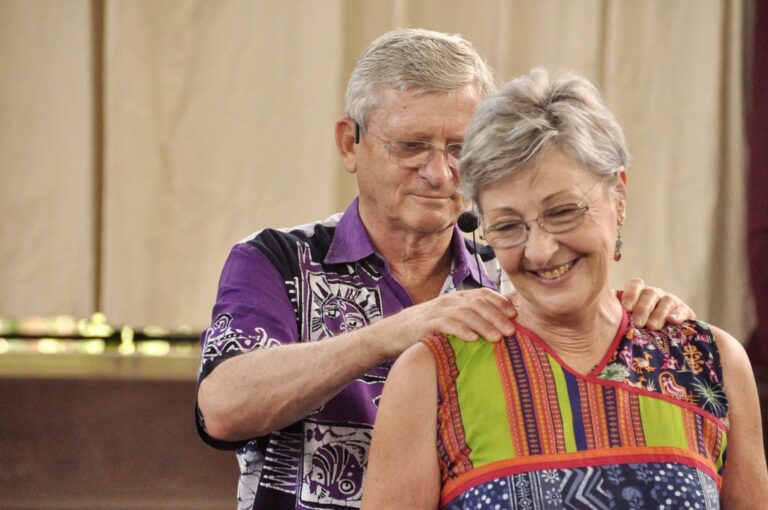
“To love at all is to be vulnerable. Love anything, and your heart will be wrung and possibly broken. If you want to make sure of keeping it intact you must give it to no one, not even an animal. Wrap it carefully round with hobbies and little luxuries; avoid all entanglements. Lock it up safe in the casket or coffin of your selfishness. But in that casket, safe, dark, motionless, airless, it will change. It will not be broken; it will become unbreakable, impenetrable, irredeemable. To love is to be vulnerable.” ~ C.S. Lewis
“There are only two emotions: love and fear. All positive emotions come from love, all negative emotions from fear. From love flows happiness, contentment, peace, and joy. From fear comes anger, hate, anxiety and guilt. It’s true that there are only two primary emotions, love and fear. But it’s more accurate to say that there is only love or fear, for we cannot feel these two emotions together, at exactly the same time. They’re opposites. If we’re in fear, we are not in a place of love. When we’re in a place of love, we cannot be in a place of fear.” ~ Elisabeth Kubler Ros
“There is no fear in love. But perfect love drives out fear, because fear has to do with punishment. The one who fears is not made perfect in love.” ~ 1 John 4:18

Understanding Our Emotional Landscape
Emotions often wash over us in waves, intense, complex, and sometimes contradictory. We may initially react to a situation with one emotion, only to later discover that it doesn’t fully capture the depth of what we’re feeling. This is where understanding the difference between primary and secondary emotions becomes crucial.
Primary emotions are our raw, instinctual responses, unfiltered and immediate, revealing what we truly value or need. Secondary emotions, on the other hand, are reactions shaped by our thoughts, past experiences, or a desire to protect ourselves. They often mask the deeper, more vulnerable feelings beneath. For example, when faced with hurt or rejection, we might respond with anger, an emotion that’s easier to express and often more socially acceptable. Yet, beneath that anger may lie sadness or fear, emotions that are harder to confront.
By recognizing and naming our primary emotions, we gain emotional clarity, move past surface-level reactions, and begin to understand our true emotional needs. This understanding is essential for building deeper, more authentic connections with others.
From Struggle to Connection: Rediscovering Intimacy
Seven years into our marriage, we found ourselves at a breaking point. Our relationship had reached an impasse, and it felt like we were barely holding on. Barry, in his typical way, responded by throwing himself into work, cleaning out the garage, hoping that the tension between us would somehow disappear along with the clutter. But no amount of work could ease the deep ache I carried inside.
At that moment, my heart was heavy with despair. Years of silent suffering had built up to this breaking point. In a rush of anger, hurt, and exhaustion, I walked into the garage and told Barry I was done; our marriage was over. But I said I would stay only for the sake of our children. Deep down, I was still hoping for some kind of reaction, some glimmer of hope that we could find a way forward. Instead of inviting him to truly see me, I lashed out, pushing him to a crisis point that demanded a response. How had we ended up here? This wasn’t what we had imagined when we entered marriage, filled with hope and strong convictions. And yet, there we were, broken, confused, and teetering on the brink of what felt like the end.
Fast forward to celebrating our twenty-fifth wedding anniversary, not just marking the years, but celebrating the deep love, intimacy, and connection that has blossomed between us. We stood together at the altar again, renewing our vows, not just honouring the past, but stepping forward into the future with fresh commitment and profound gratitude. It was a sacred moment, a reminder of the grace that had brought us through the darkness and into the light.
What changed? How did we move from the edge of despair to the joy of intimate connection? If you’ve been married, you know that marriage holds both incredible love and the potential for deep pain. As Mike Mason (2005) writes in The Mystery of Marriage:
“There is no hurt like the hurt that happens in the place where we love… There is a secret resentment of the demands of marriage; a reluctance to give way any more than is absolutely necessary. There is a constant temptation to pull back from the full intensity of the relationship, to get along on only the basic requirements. But set against this is the constant challenge to give more and more of oneself, at deeper and deeper levels, and to see in one’s partner a most abundant and perfect channel for the outpouring of the grace of God into one’s life.”
Marriage is a paradox of longing and fear, a yearning for intimacy, the ache of vulnerability, and the call to give ourselves fully to another. As Allender and Longman (2007) say:
“The desire for relationship is not ugly. It is not a sign of weakness, but an important part of who God made us to be. In fact, fear or avoidance of relationship is an indication that something is wrong with us. All psychological pathology can be linked to the urge to flee or dominate relationships. And the person who is closed to relationships is equally closed to God.”
Marriage is meant to be more than just a covenant between two people. It is a picture of God’s grace, a dynamic, living reflection of the relationship between Christ and the Church. In the messy, beautiful story of marriage, God reveals His redemptive love. It is here, in the brokenness and the healing, that we see glimpses of His transforming power.
Our journey has been one of discovery, failure, grace, and transformation. We give thanks for the lessons learned and the love that has deepened over the years. We are humbled by how far we’ve come and are eager to see how God will continue to shape us in the years ahead.

The Volcano: A Metaphor for Emotional Reactions
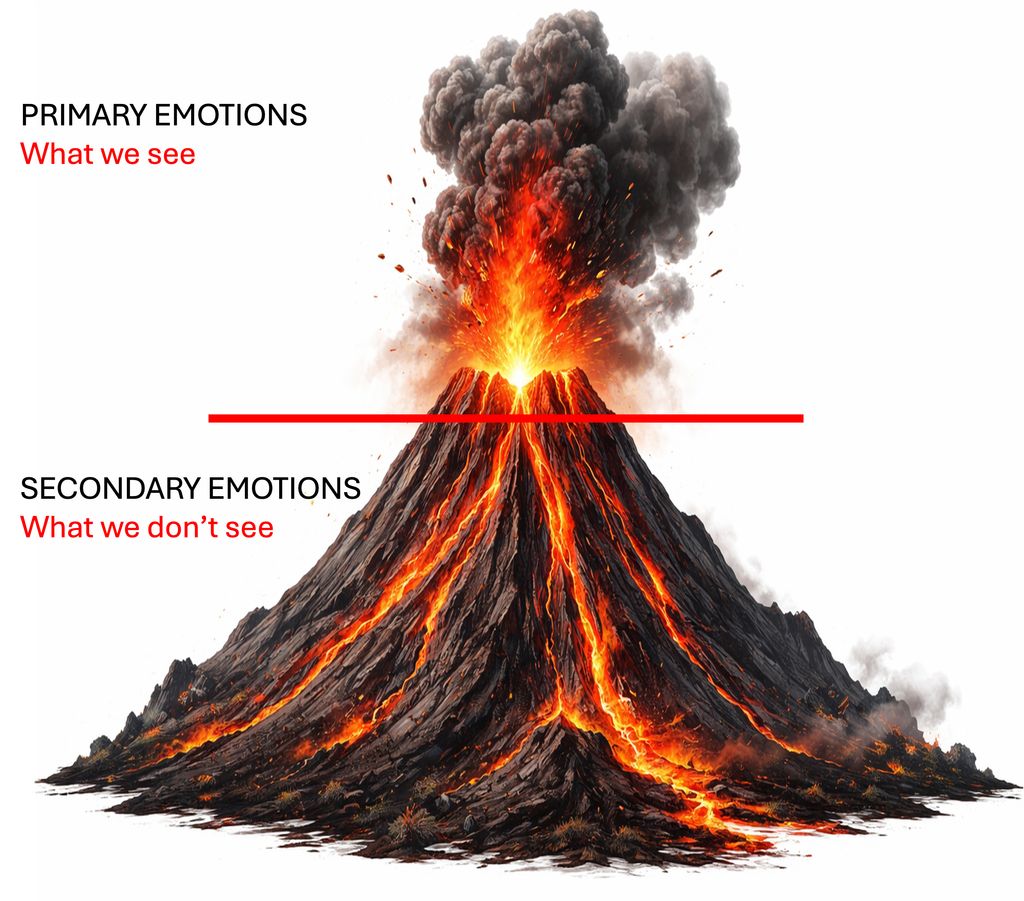
Emotions are powerful forces. Often, we experience them like a volcano, secondary emotions erupting above the surface, masking the deeper, primary emotions beneath. In our work with couples, we have found that the metaphor of the volcano helps many people understand their emotional dynamics.
Secondary emotions, like anger, frustration, or sarcasm, tend to be the first to surface. These are the emotions that we recognize and express quickly. But beneath them, deeper emotions, hurt, loneliness, fear, or shame, lie hidden, often unspoken.
The danger of focusing only on the secondary emotions is that we miss the true source of the pain. For example, jealousy might seem like a simple reaction to someone else’s success, but if we dig deeper, we may find that the underlying emotion is fear of being left behind or fear of inadequacy. When we learn to recognize and validate these primary emotions, we can break free from the destructive patterns and move toward real connection.
What Does the Brain Have to Do with It?
1. Recognising a Hit
Let’s say I tell Barry, my husband, I’m not happy with how he washes the dishes. A predictable chain reaction unfolds. It starts with a subtle shift in his face, a tightening of the jaw, a flicker of irritation in his eyes. Even if it vanishes in seconds, my brain has already picked it up.
Our brains are wired for this. Research shows the right hemisphere registers facial emotions in as little as 30 milliseconds (Schore, 2003). That’s faster than conscious thought. While facial expressions might fade quickly, the emotional residue can linger, sometimes for hours, days, even weeks. When the right brain detects an angry face, it sends a flood of stress hormones like cortisol through the body. The left brain, in contrast, stays mostly unfazed.
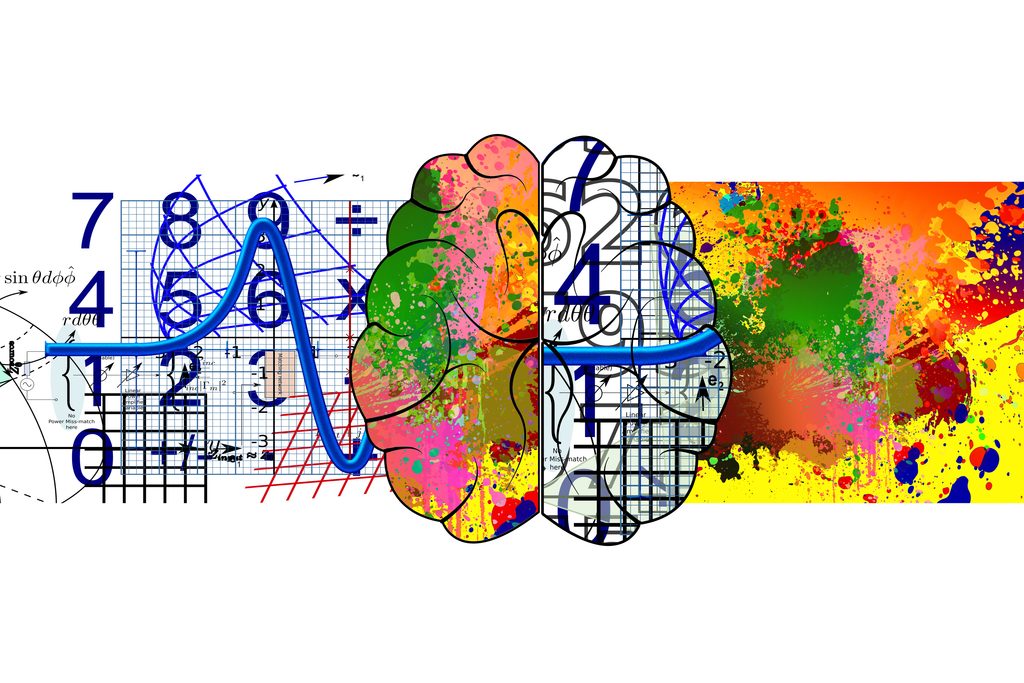
Image by Gerd Altmann from Pixabay
So, when I see Barry’s expression, my right brain rings the alarm: This isn’t safe. I feel hurt, uneasy, defensive. Without even realising it, I begin broadcasting my own nonverbal cues, which Barry picks up on. Now he’s bracing, trying to figure out what’s happening. Before we know it, my frustration spills into criticism, and Barry, feeling attacked, withdraws. He thinks I’m overreacting. I think I’m responding reasonably.
2. What’s Happening Underneath?
In that moment, my left brain, the calm, logical part, has taken a back seat. When we’re emotionally regulated, our left brain helps us reason and communicate. But when we sense danger, even emotional danger, the right brain takes over.
From the beginning of life, our right brain is wired for connection. A distressed baby doesn’t talk through their feelings, they cry for comfort. And as adults, we’re no different. We need someone who can read our cues and respond with care. If we don’t get that sense of safety, old emotional wounds stir, and we react from deeper, often unconscious places.
This is why Barry and I can’t just “talk it out” logically in the heat of the moment. The reasoning part of the brain isn’t fully online. If we don’t pause to recognise what’s going on beneath the surface, we default to old, reactive patterns, what I sometimes call “volcanic eruptions” of emotion.
3. Our Defensive Dance
Dr. John Gottman (Gottman & Silver, 2015) refers to these emotional patterns as The Four Horsemen of the Apocalypse, the strongest predictors of relationship breakdown:
- Criticism – Often a protest, trying to draw connection.
- Contempt – The most corrosive, conveying disgust or superiority.
- Defensiveness – Protecting the self by deflecting blame.
- Stonewalling – Shutting down or withdrawing to avoid escalation.

In our pattern, my anger becomes a pounding on Barry’s emotional door: “Engage with me! Don’t shut me out!” But Barry hears danger and bolts the door: “I have to shut this down before it gets worse.” The more I pursue, the more he withdraws. The more he withdraws, the more I panic.
Barry thinks he’s protecting the relationship by avoiding conflict. But what I feel is abandonment. That triggers my attachment fears, I feel desperate, even invisible. Meanwhile, Barry is overwhelmed by my emotion. He may see me as too sensitive, too much. But my emotions are doing exactly what they’re meant to do, alerting me to a perceived threat and prompting me to act.
4. The Moment We Get Triggered
All it takes is a look, a sigh, a turning away. Barry sees my critical glance. I hear his dismissive tone. He reaches for me, and I pull away. These micro-moments carry enormous emotional weight.
Even without a word, our bodies respond. Our stomachs twist. Our breathing shifts. Muscles tense. The right brain registers it all before the left brain even knows what’s happening. In that split second, our brain asks: Is this relationship safe? If the answer is no, we react, fight, flee, freeze, or collapse into sadness and detachment. And once detachment sets in, reconnecting becomes harder and harder. That’s why it’s crucial to recognise the signs early, before they spiral out of reach.
What’s Really Going On?
Research shows that ongoing conflict in a marriage increases the risk of depression, while a secure bond offers powerful protection against it (Johnson, 2019). The key isn’t avoiding conflict, it’s learning to identify and express our deeper emotions.
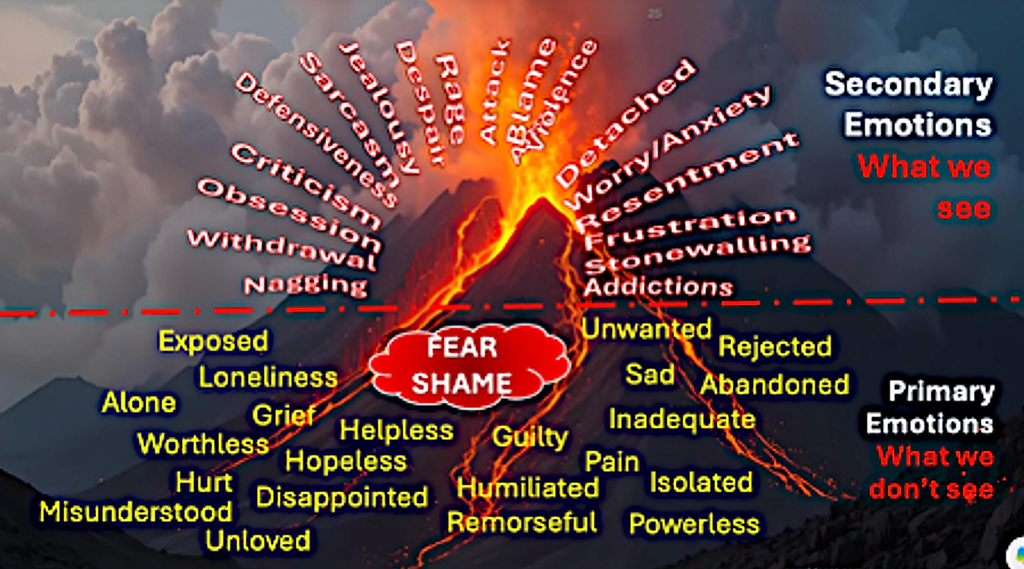
- Secondary emotions (above the line) are our quick-fire responses, anger, sarcasm, defensiveness. They guard the heart.
- Primary emotions (below the line) are the tender ones underneath, hurt, fear, shame, sadness.
When I criticise Barry, it’s not really about dishes. It’s about feeling unseen, unappreciated, disconnected. When Barry withdraws, it’s not just about escaping conflict, it’s about feeling helpless, like he’s failing. Deep down, we’re both hurting. Both longing for connection.
If we don’t slow down and attune to those deeper layers, our emotions will hijack our connection. But if we can name what’s really happening, “I feel invisible” instead of attacking, or “I feel overwhelmed” instead of withdrawing, we open the door to healing.
The Power of Emotional Repair
Whether we realise it or not, we’re always “leaking” emotion. Donald Winnicott (1953, 1960), a renowned psychoanalyst, coined the term “the good-enough mother” to describe how caregivers don’t need to be perfect, just attuned about 30% of the time. What matters most is the ability to repair ruptures.
The same is true in our relationships. Conflict is inevitable. But what strengthens a bond isn’t the absence of rupture, it’s the presence of repair. When Barry and I miss each other, we can learn to come back together, to acknowledge the pain, to name it, and to reconnect. That’s what builds emotional safety, not avoiding conflict, but navigating it with honesty, humility, and care.
The Importance of Empathy
The word empathy comes from the German Einfühlung, “to feel into.” That’s exactly what Barry and I need to do. We need to feel into each other’s experience, to slow down, lean in, and truly listen beneath the surface. It means shifting from fixing to feeling. From reacting to reflecting. Instead of asking: Who’s right? we start asking: What’s really going on inside me, and inside you?
Empathy doesn’t require perfect understanding. It just asks us to show up, to stay present, open, and engaged.

When Should I Express My Feelings, When Should I Hold Back?
We are responsible for our own feelings. The same situation can evoke completely different responses in different people. That’s because emotions aren’t automatic reflexes, they’re shaped by our history, personality, and past experiences. No one makes us feel a certain way, even if it sometimes feels like they’re trying to!
When it comes to handling emotions, most of us tend to fall into one of four patterns:
- Repress – Push feelings down, deny them, or pretend they don’t exist.
- Explode – Let them out in a way that hurts ourselves or others.
- Be Honest – Acknowledge emotions fully to ourselves and to God.
- Choose When and How to Express Them – Decide whether sharing will heal or harm the relationship.
That last one is key. Before expressing an emotion, it’s helpful to ask: What’s my goal here? Am I just venting? Or am I hoping to build trust and connection? Will expressing this emotion lead to healing, or drive a wedge between us?
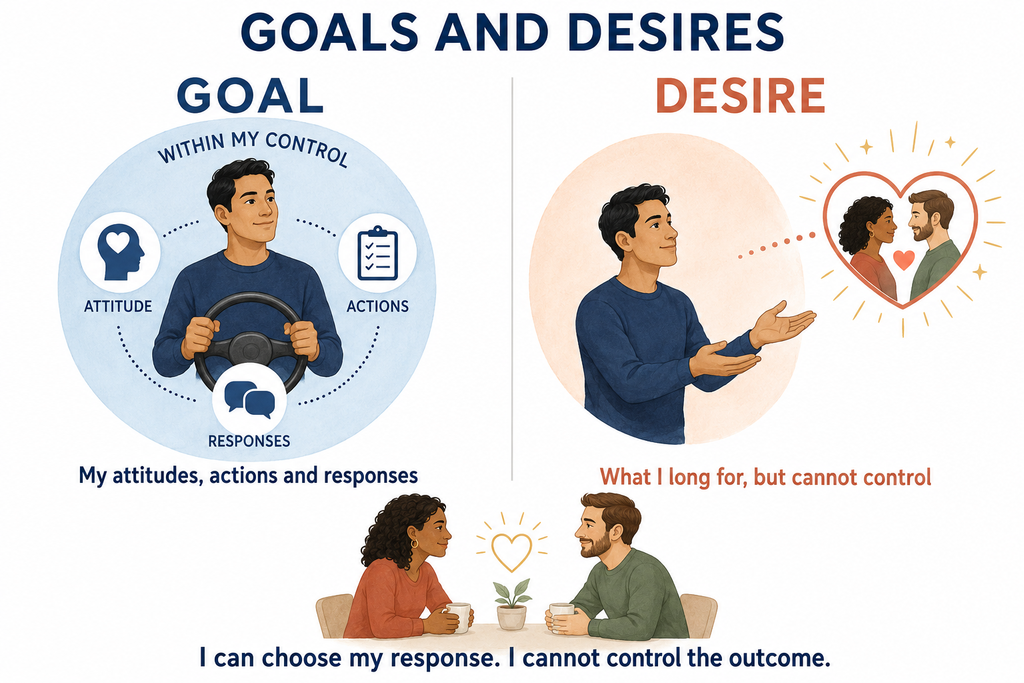
Goals vs. Desires
A major source of stress in relationships is confusing goals with desires. A goal is something we can control, our own attitudes, actions, and responses. A desire, on the other hand, is something we long for, but can’t control the outcome.
For example, if my goal is to make my child grow up kind and confident, I’ll likely put pressure on both them and me. But if kindness and confidence are my desires for them, I can bring those longings to God in prayer, model those values myself, and entrust the outcome to Him. That shift can spare us a lot of unnecessary tension and heartache.
Questions to Ask Before Expressing a Difficult Emotion
When considering whether to share a hard feeling, it can help to reflect on questions like:
- Have I brought this to God and asked for His guidance?
- Am I speaking to heal the relationship, or just to unload?
- Is my commitment to this person shaping how I express myself?
- Can the other person receive this right now, and will it help them?
- If nothing changes, will I still remain committed to them?
- If expressing my feelings won’t help, what else can I do to process them?
Learning to handle emotions wisely takes time, especially if we grew up in environments where feelings were dismissed, minimised, or treated as problems. But as we grow in emotional maturity, we become more present in our relationships, more attuned to both love and pain, and better able to express our emotions in ways that bring healing instead of harm.
Closing Thoughts
Understanding the difference between primary and secondary emotions is key to true intimacy, the kind where we feel deeply known and seen by the people we love. Think of emotions like a volcano. On the surface, we see the explosion, the anger, frustration, withdrawal, but underneath, there’s something deeper fuelling it. When we recognise a “hit,” our brain reacts instantly, triggering old survival patterns. That’s when we end up overreacting or feeling blindsided by emotions that seem way bigger than the situation calls for.
Primary emotions take us to the heart of things, our deeper fears, longings, and wounds. They’re harder to share because they make us feel exposed, but when we take that risk, we open the door to real connection. Being willing to express feelings in a way that builds rather than destroys requires vulnerability, honesty, and a commitment to relationship over self-protection. True intimacy happens when we allow ourselves to be fully seen, not just in our strongest moments, but in our most fragile ones too.
Learning to handle emotions wisely takes time, especially if we grew up in environments where feelings were dismissed, minimised, or treated as problems. But as we grow in emotional maturity, we become more present in our relationships, more attuned to both love and pain, and better able to express our emotions in ways that bring healing instead of harm.
But what happens when someone else’s emotions spill out in ways that feel overwhelming, confusing, or even hurtful? What if their intensity masks a deeper vulnerability? If we truly want our relationships to grow, we must learn not only how to express our own emotions wisely, but also how to hold space for the emotions of others. This requires something deeper than skill, it calls for the creation of a climate of safety, where the hurt beneath the heat can surface and be met with compassion rather than judgment. This will be the the topic of the next blog post.
Declarations
I declare that I will start paying closer attention to my feelings, especially the ones I tend to see as negative. I will see them as signposts, guiding me to uncover the deep beliefs and values shaping my life.
I declare that when I experience strong emotions I don’t fully understand, I will surrender my need for answers and choose to trust You wholeheartedly.
I declare that You dwell at the centre of my heart, always seeking my good. Even in life’s hardest moments, You desire to fill me with peace and joy.
Prayer
Lord,
You said, “There is a time for everything… a time to weep and a time to laugh, a time to mourn and a time to dance” (Ecclesiastes 3:1,4). You call me to give thanks in all things and remind me that You have treasures hidden in dark places, waiting to be discovered by those who seek You. I take this to heart and choose to search for You. Take my hand and lead me into Your presence, for You alone are my treasure, my heart’s deepest desire.
You created me with emotions and a longing for connection. Don’t let me retreat into a false sense of safety. Rescue me from my own ideas of security and remind me that true safety is found only in Your embrace. Help me to let go of self-protection in my relationships, so that I can embrace vulnerability and authenticity, allowing others to come close, share their hearts, and experience true intimacy.
Give me the grace to see my emotions as signposts along the road of life, rather than something to ignore or suppress. Help me to acknowledge what I feel, even when it’s difficult. Grant me the strength to navigate hard emotions with wisdom and grace. Cover my heart with Your compassion when it aches, for You have said that those who mourn are blessed. And even in pain, fill me with Your joy, so that I may become a source of safety and comfort for others, blessing them where they hurt. In Jesus’ name, Amen.
Reflection Questions
- What primary emotion am I really feeling beneath my surface reaction?
- When did I first learn to respond with this secondary emotion instead of the deeper one?
- How do my secondary emotions (anger, withdrawal, sarcasm, etc.) protect me from feeling my primary emotions?
- In what situations or relationships am I most likely to default to these secondary reactions?
- What would it look and feel like to express my primary emotion instead, what might change in me or in my relationship?
About the Author

Dr Paula Davis has spent the last three decades of her life sitting with people in some of their darkest moments, and somehow still believes deeply in hope. A clinical counsellor, supervisor, educator, and self-confessed lifelong student of trauma, Paula has taught, researched, and worked alongside counsellors and communities across Australia and overseas. Her doctoral research explored how Western trauma approaches can be adapted for collective cultures, a passion that continues to shape everything she writes and teaches.
Together with her husband Barry (of over five decades), she has travelled the world helping couples strengthen their relationships and co-authored A Safe Place: A Marriage Enrichment Resource Manual. She is also the author of Eating Water, Drinking Soup: Finding Nourishment in the Deepest Pain, Exploring the Roots of Heartache: The Stories Our Pain Is Trying to Tell, and After the Breaking: Psychological Trauma and Collective Healing.
These days, Paula is officially “retired,” although nobody seems to have told her calendar. She still writes, teaches, mentors, and is forever collecting stories, books, and ideas that help people heal. When she’s not immersed in trauma theory or rewriting chapters for the twentieth time, you’ll probably find her walking along the beach near her home on the east coast of Australia, swimming in the surf, sharing coffee with Barry, or plotting her next overseas adventure. She firmly believes that good conversations, beautiful sunsets, and God’s grace have remarkable healing properties.