“So it’s not gonna be easy. It’s going to be really hard; we’re gonna have to work at this everyday, but I want to do that because I want you. I want all of you, forever, everyday. You and me… everyday.” ― Nicholas Sparks, The Notebook
“To be fully seen by somebody, then, and be loved anyhow – this is a human offering that can border on miraculous.” ― Elizabeth Gilbert, Committed: A Skeptic Makes Peace with Marriage
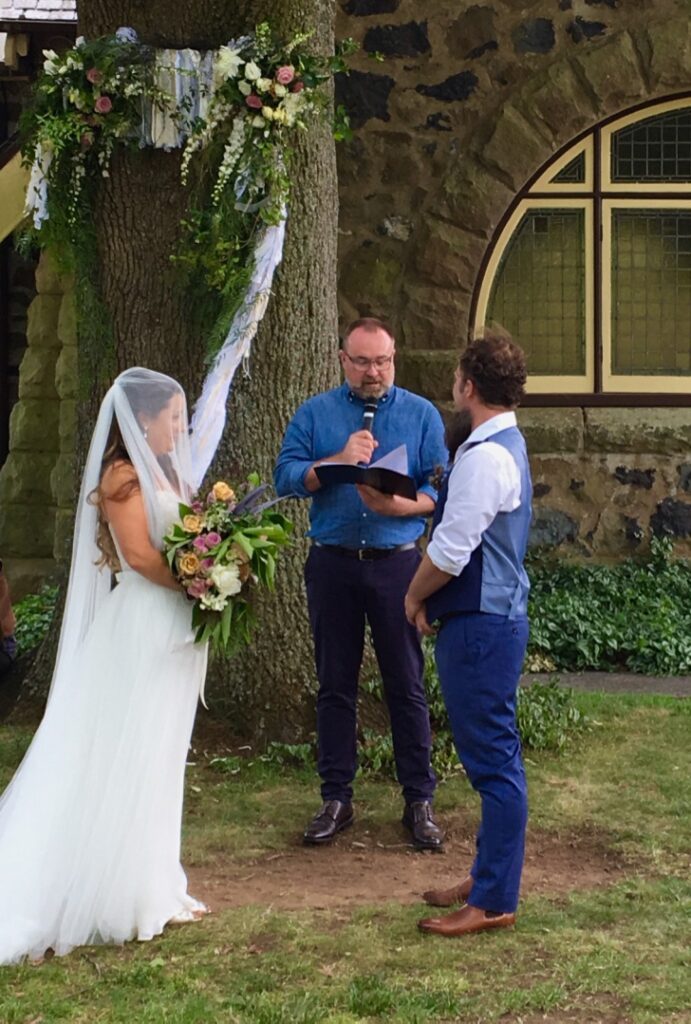
Unveiling the Past: Embracing Healing and Grace in Marriage
Marriage can be one of the most beautiful and painful places in our lives. It touches our deepest longings, to be seen, known, chosen, and safe. Yet these very longings often carry the residue of our earliest wounds. And when they are touched, misunderstood, dismissed, or unmet, we may find ourselves reacting not just to the moment, but to the ache of our history.
I didn’t fully understand how much of my past I had carried into my marriage until I felt the sting of shame in the eyes of someone I loved most. It was a moment that caught me off guard, exposing layers of hurt I thought I’d already dealt with. But healing is rarely linear. The soul unfolds its pain in layers, inviting us, again and again, into deeper surrender, deeper truth, and deeper love.
This chapter isn’t a manual for fixing your marriage. It’s a gentle invitation to explore how love and wounding often coexist in the same sacred space, and how the Spirit of God meets us right there. We’ll look at how shame distorts our sense of self, how old patterns play out in present relationships, and how God’s transforming love can turn even our failures into foundations for grace.
Broken Love

Photo by Daniel Tafjord on Unsplash
Love can bind us with invisible cords, tender, tensile, holy. But even sacred ties can fray and snap under the weight of unspoken grief, unmet needs, and unhealed wounds. The ache I felt in childhood wasn’t just about shame, it was about rupture: a splitting between parts of myself, between me and those I loved, between what I longed for and what actually was.
In marriage, longing and brokenness often sit side by side. Two people, under one roof, each carrying wounds and dreams that feel just out of reach. Despite our best intentions, we eventually face a heartbreaking truth: we are not enough for each other.
The haunting lyrics of Break in the Cup by David Wilcox (n.d.) capture this so poignantly:
I try so hard to please you
To be the love that fills you up
I try to pour on sweet affection,
But I think you got a broken cup.
Because you can’t believe I love you
I try to tell you that there is no doubt,
But as soon as I fill you with all I’ve got
That little break will let it run right out.
I cannot make you happy.
I’m learning love and money never do
But I can pour myself out ’til I’m empty
Trying to be just who you’d want me to.
But I cannot make you happy
Even though our love is true
For there’s a break in the cup that holds love
Inside of you.
We cannot trade empty for empty
We must go to the waterfall
For there’s a break in the cup that holds love…
Inside us all.
And yet, precisely in that pain, God longs to work. Marriage can become the sacred ground where love is refined, self-giving is learned, and Christ is formed in us.
The Spiritual Chord
Beyond emotional connection, marriage creates a spiritual tie, a profound soul bond. Scripture speaks of such bonds in many metaphors:
- Yoke – representing partnership or submission (Genesis 27:40; 2 Corinthians 6:14)
- Bondage – signifying entrapment or captivity (Ezekiel 2:23)
- Knitting together – denoting intimacy and unity (1 Samuel 18:1; Colossians 2:2)
- Joining – reflecting marital and spiritual union (Genesis 2:24; Matthew 19:5–6)
- Bound by fear – exposing emotional entanglement (Genesis 44:22, 30)
When grounded in trust and love, these cords are life-giving. But when rooted in fear, control, or trauma, they become chains, binding us in ways we don’t fully see. As 1 John 4:18 (MSG) reminds us: “There is no room in love for fear. Well-formed love banishes fear.”
For every married couple, a searching question arises: What spiritual ties bind us in love, and what might still hold us captive?
When Bonds Become Chains

Photo by Rahime Gül: https://www.pexels.com/photo/rusty-chains-with-ocean-waves-background-33567560/
Not all spiritual ties are holy. Some are forged in trauma or sin: coercion, sexual violation, fear-based parenting, guilt, emotional dependency. These are not merely psychological trauma bonds; they are spiritual entanglements. We make unspoken agreements, internalise lies, and carry the impact deep into our relationships.
Fear and domination often masquerade as love: “I did it for you.” “I can’t live without you.”
But God has given us the dignity of free will (Deuteronomy 30:19–20). He does not call us to live under spiritual oppression but to walk in the freedom Christ offers.
For years, I lived under the weight of an unhealthy spiritual tie to my mother, long after her death. Her voice echoed in my thoughts, shaped my reactions, even affected my physical health. Only when I renounced the internalised lies and grieved the mother, I never truly had did I begin to experience release. The heaviness that had pressed into my body began to lift.
God doesn’t call us to be yoked to pain. He calls us to be yoked to Christ, whose burden is light and whose yoke brings rest (Matthew 11:30).
Breaking Unhealthy Spiritual Chords
Freedom is both a spiritual and emotional process. Breaking unhealthy ties is not a moment but a journey, a sacred pilgrimage into wholeness. This is how I walked it:
- Acknowledge the Chord
I invited the Holy Spirit to reveal how this connection with my mother was still affecting my life and relationships. - Seek Forgiveness and Healing
I chose to forgive, not to excuse, but to be free:
“Father, I choose to forgive my mother. I release the bitterness. Heal my heart.” - Repent and Renounce the Tie
“Lord, I repent of the inner vows and false agreements I’ve made. I renounce them in Jesus’ name.” - Break the Chord in Jesus’ Name
“By the authority of Christ (Luke 10:19), I break this spiritual tie. It has no power over me.” - Invite God’s Healing
I asked God to fill the broken places with His love (Psalm 147:3). - Renounce the Effects
I identified the shame, trauma, and patterns that flowed from that tie, and renounced them. - Reclaim My Identity in Christ
“I am a new creation. My past no longer defines me. Christ does.” (2 Corinthians 5:17) - Guard My Heart
I asked for discernment and established healthy boundaries (Proverbs 4:23). - Fill the Space with God’s Presence
Through worship, Scripture, and prayer, I anchored myself in God’s love (Romans 8:37–39). - Seek Support
I reached out for counselling and prayer, because healing often happens in community.
A Prayer for Breaking the Chord
Dear Heavenly Father,
I come with a humble heart, asking for Your help in breaking every unhealthy soul tie or spiritual connection I’ve had with [name]. I recognize that this tie has harmed me, and I choose to release it in Jesus’ name. I forgive [name] and ask for Your healing to fill my heart. I renounce every negative impact from this relationship. I break all ungodly ties and declare my freedom. My identity is in You alone. Thank You for restoring me and filling me with Your peace. In Jesus’ name, Amen.

Photo by cottonbro studio: https://www.pexels.com/photo/close-up-of-hands-pulling-a-silver-chain-from-both-sides-7678456/
What is a Healthy Bond?
A healthy relationship bond begins with Christ. He is the gentle lover of our soul, pursuing us with grace and truth. As the head of the church, He nurtures and cherishes with sacrificial love. When His design is reflected in marriage, something beautiful happens. As Paul writes in Ephesians 5:31–33 (MSG): “No longer two, they become ‘one flesh.’… Christ’s love makes the church whole… That is how husbands ought to love their wives… and how each wife is to honour her husband.”
As we reflect this love, we begin to undo the curse of the Fall. The man becomes a minister of God’s love, strong, tender, present. The woman responds with honour and delight, revealing God’s beauty and dignity through her presence.
But since Eden, roles have been distorted. The woman may grasp for control. The man, fearing failure, may retreat into silence. The result is disconnection.
Yet the bravest gift a man can give is his presence, fully offered. Ephesians 5:25–28 (MSG) says: “Go all out in your love for your wives… A love marked by giving, not getting… His words evoke her beauty.” In Christ, the breaks in our cup can be mended, not through striving, but through surrender. We must go to the waterfall. There, in the presence of Living Water, love is poured in, over and over, until the cracks are sealed, and the heart is made whole.
Mending My Cracked Cup
I remember the moment I broke down in the kitchen, not because of a grand crisis, but over something small. A tone in my husband’s voice. A look I misread. It opened a wound I didn’t know was still raw. I snapped back, then shut down. We moved around each other in silence for hours, each of us feeling misunderstood, unseen.
That night, lying in bed, the space between us felt vast. Not physically, but emotionally. I could feel my heart folding in on itself, that familiar reflex of retreating. Shame whispered its old lines: You’re too much. Not enough. Unlovable when messy.
But then something unexpected happened. My husband reached for my hand. No words. Just presence. The warmth of his skin against mine cracked the icy distance. And in that simple gesture, I felt the Spirit nudge: This is the kind of love that binds.
Not control. Not perfect agreement. Not performance. But a love that chooses to stay, to reach, to hold, even in tension. Especially in tension.
It reminded me of Paul’s words: “Above all, clothe yourselves with love, which binds everything together in perfect harmony” (Colossians 3:14). That night, harmony didn’t mean there was no conflict. It meant the deeper truth of love held us together when our emotions pulled us apart. God’s love was the thread, sometimes barely visible, that kept us stitched to one another.
Over time, I’ve come to see that this love, the love that binds, is not a human invention. It’s the love of God, poured out through Christ, that binds hearts and redeems wounds. It’s covenant love, not earned by good behaviour, not broken by failure, but sustained by grace. Love that doesn’t demand that I erase my wounds. It invites me to bring them into the light. And it holds, gently but firmly, even when the old reflexes kick in, when shame resurfaces, or fear whispers its lies.
That night, as we eventually whispered words of apology and comfort, I realized this kind of love isn’t fragile. It’s fierce. It binds, not by chaining us, but by freeing us to be real and still remain, together, in Him.
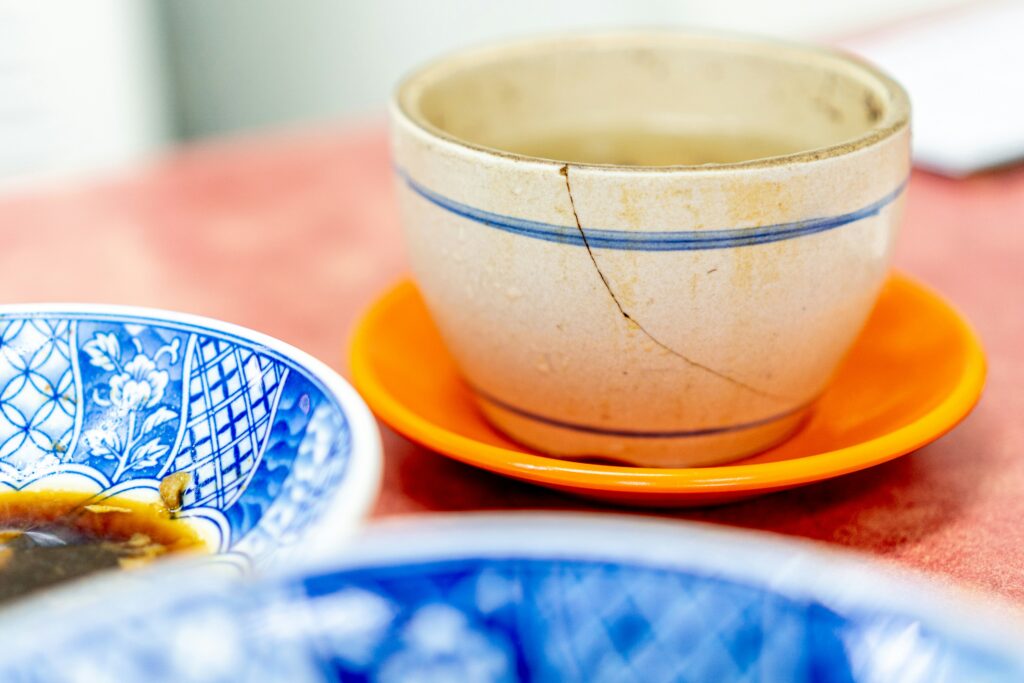
Photo by Winston Chen on Unsplash
Biblical Binding Love
The truth is that love was never meant to be a battlefield of expectations, shame, and silence. And yet, for many of us, our earliest experiences of love formed in the trenches, marked more by survival than safety. We learned to protect, to perform, to please. But biblical love, the kind that heals and holds, is entirely different.
As Paul writes in Colossians 3:14, “Above all, clothe yourselves with love, which binds everything together in perfect harmony.” This binding love is not sentimental or fragile. It’s tensile and strong. It does not unravel in the face of our brokenness; it wraps around it. This is the covenantal love of God: not contractual, where failure breaks the deal, but covenantal, where love covers the breach while still calling for truth, repair, and restoration.
I’ve come to see that for love to truly bind in a Biblical way, it must first be anchored in God’s love. Because when we are yoked to Christ, we are no longer held captive by fear or shame. As 1 John 4:18 reminds us, “There is no fear in love. But perfect love drives out fear.” This kind of love enables us to love from fullness rather than lack, from the overflow of being known, forgiven, and cherished.
In our marriage, love has become a crucible for healing, not because it always feels good, but because it surfaces what still needs grace. It reveals the broken places we’ve managed to conceal, the shame we’ve carried, and the parts of us that still long for approval or control. And yet, if we allow it, love can become the very place where God meets us, not with condemnation, but with the invitation to be remade.
This is the mystery, love that binds does not entrap, it frees. It calls us deeper, not only into one another, but into God. When both partners choose to be bound first to Christ, then to each other in His love, something holy emerges. Not perfection, but union. Not erasure of wounds, but the joining of them in grace.
I’m still learning this. Still learning to trust the binding power of love, not as something I must earn, but as something I can receive. And in receiving it, offer it more freely. Biblical love doesn’t look like gripping harder. It looks like surrender, again and again, to the One who holds us both.
Closing Thoughts
Love was never meant to pour endlessly from a broken cup. Yet many of us have tried, exhausting ourselves, hoping our efforts would be enough to fill another, or to silence our own emptiness. But marriage, like all human relationships, was never meant to replace the love that only God can give. It is not a solution to our brokenness, but a sacred space where our brokenness is revealed, and redeemed.
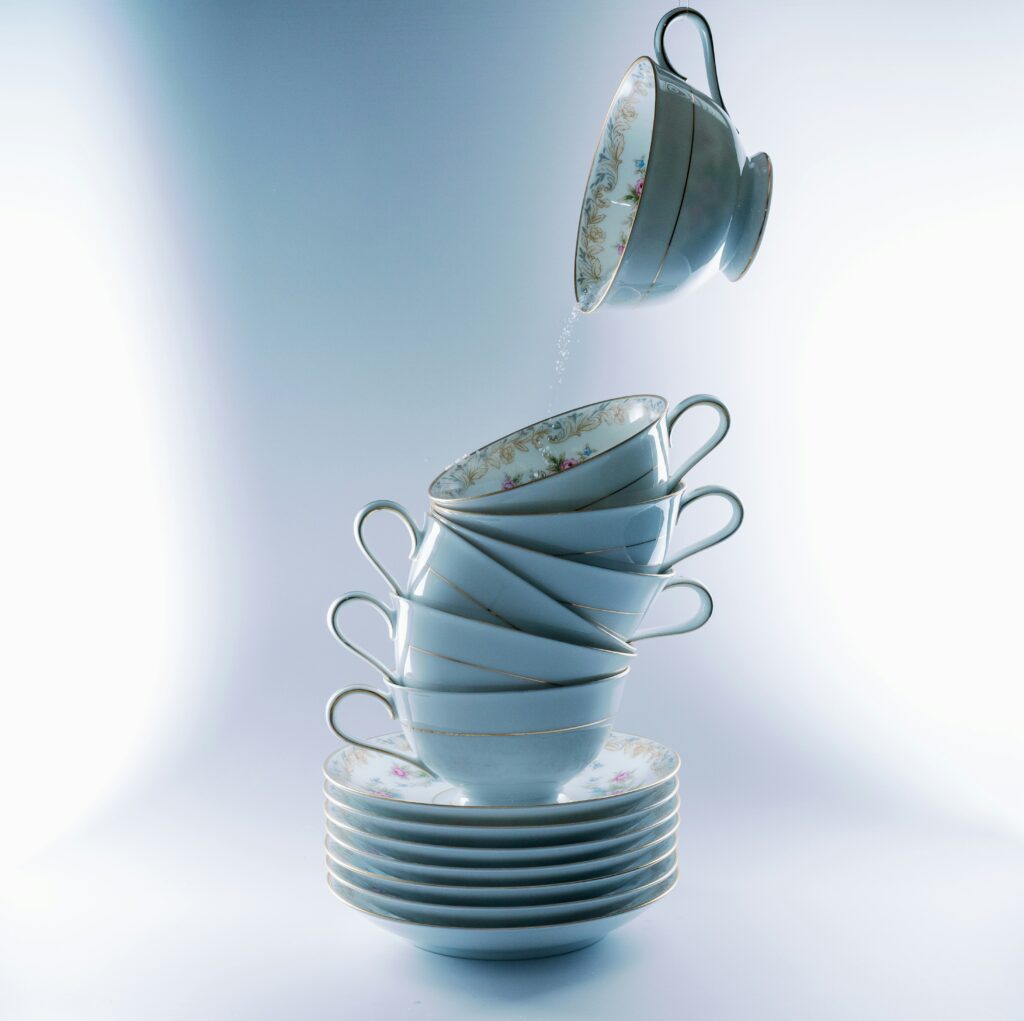
Photo by Karl Moore on Unsplash
God meets us in the cracks. He doesn’t discard the cup. He mends it. In Japanese kintsugi, a broken bowl is repaired with gold, making the fracture lines more visible, not less. The vessel becomes more beautiful because of its brokenness, not in spite of it. This is the mystery and grace of marriage: when offered to God, the very places of rupture can become places of radiance. Pain, when surrendered, becomes the opening through which His love flows.
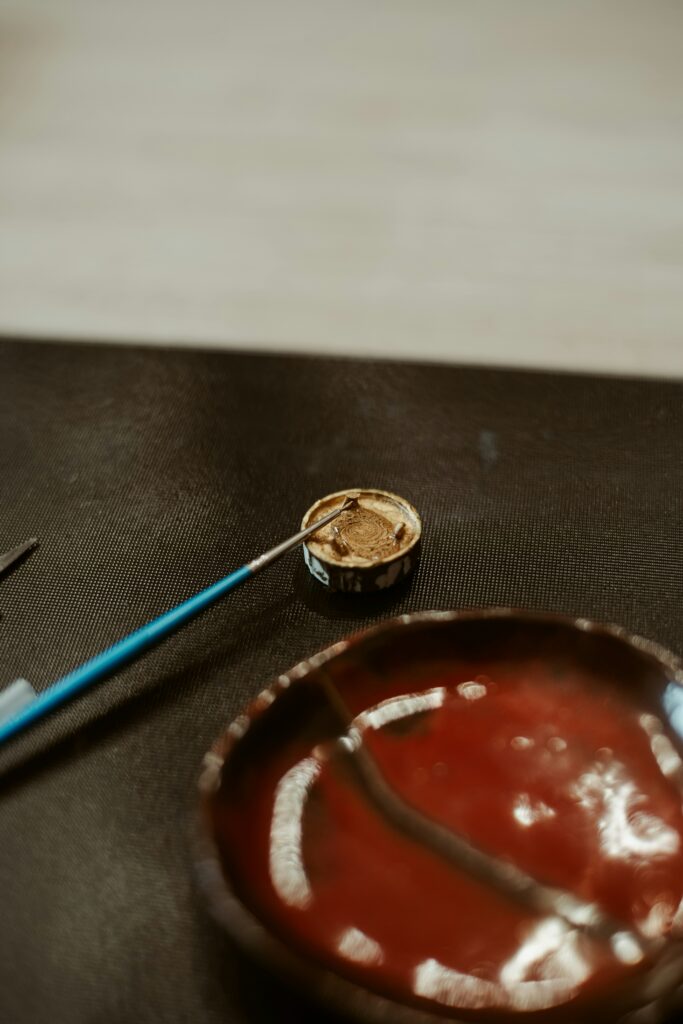
Photo by Martin Baron on Unsplash
To live in a healthy marriage, or to grieve the one we hoped for, requires courage, honesty, and the continual turning of our hearts toward Christ. It means naming the breaks, releasing unhealthy bonds, and allowing God to reshape our hearts with His truth. It means refusing to bind our hearts to fear or shame and choosing instead to be tethered to grace.
The journey of healing is not about having a flawless relationship. It’s about learning how to love as Christ loves, in the mess, in the mystery, and in the mending. So, if we find ourselves holding a cracked cup today, take heart. God is the restorer of broken things. Let Him begin with us.
As we journey deeper into God’s transforming love, we inevitably encounter the difficult terrain of submission, not as blind obedience or oppressive silence, but as a sacred invitation to mutual yielding, trust, and Christlike humility. In the next chapter, we step into this thorny ground, where misunderstandings abound, and triggers lie just beneath the surface. What does it mean to submit when you’ve been wounded? How do we discern between surrender that brings life and submission that reopens trauma? With honesty and grace, we begin to explore.
Declarations
- I declare that God’s love is the unbreakable bond that holds me secure, even when I feel unworthy or undone. “I am convinced that nothing can ever separate us from God’s love…” (Romans 8:38–39).
- I declare that I am clothed in Christ’s love, which binds all things together in perfect unity and makes room for grace in my relationships. “Above all, clothe yourselves with love, which binds us all together in perfect harmony.” (Colossians 3:14)
- I declare that shame no longer has the final word over my story, God’s covenant love rewrites my identity in mercy and truth. “Those who look to Him are radiant; their faces are never covered with shame.” (Psalm 34:5)
- I declare that love is stronger than fear, and in Christ, I am being made whole through the healing power of His steadfast love. “Perfect love casts out fear…” (1 John 4:18)
- I declare that even when I stumble, God’s faithful love binds me to Him, and His Spirit restores, renews, and anchors me in hope. “Let us hold unswervingly to the hope we profess, for He who promised is faithful.” (Hebrews 10:23)
Prayer
Lord,
Our hearts bear the cracks of love strained and trust broken.
Meet us in the fragile places.
Mend what’s been wounded between us.
Pour Your healing grace into the sacred space we share,
that we may love again, not perfectly, but faithfully.
Amen.
Reflection Questions
- Where have I experienced love as a binding force that held me together in seasons of brokenness or shame? (Reflect on how divine or human love sustained you when you felt emotionally fragmented.)
- What messages about love, either spoken or unspoken, did I internalize in childhood, and how have they shaped my capacity to receive or give love today? (Consider family, church, or cultural influences.)
- In what ways has God’s covenant love challenged or redefined my understanding of worth, belonging, or forgiveness? (How has divine love rewritten your story?)
- Are there places in my soul where I still fear abandonment or rejection? How might I invite God’s binding love into those vulnerable spaces? (This may open up healing and deeper spiritual trust.)
- How can I practice embodying love that binds in my closest relationships, especially when old wounds are stirred? (Think about patience, compassion, and boundaries rooted in God’s love.)
About the Author
Dr Paula Davis is a retired clinical counsellor, supervisor, and educator specialising in psychological trauma. She has lectured and supervised counselling students in university higher-degree programs in Australia and overseas. Her doctoral research explored the application of Western trauma models in collective societies, informing her work in Uganda, Kenya, India, and Sri Lanka.
Together with her husband Barry, she co-authored A Safe Place: A Marriage Enrichment Resource Manual (2021) and has delivered marriage programs internationally. She is also the author of Eating Water, Drinking Soup: Finding Nourishment in the Deepest Pain and Exploring the Roots of Heartache: The Stories Our Pain Is Trying to Tell. Her forthcoming book, After the Breaking: Psychological Trauma and Collective Healing, continues her work of integrating trauma theory with culturally responsive approaches to recovery.
Paula’s work is marked by cultural sensitivity, relational depth, and a compassionate commitment to healing. She also delights in life’s simple pleasures, sharing coffee with her husband, swimming in the surf near her home, and spending time outdoors.