At 3:30 a.m., I wake and step outside into the warm tropical darkness. A thunderstorm sweeps across the sky, its distant thunder rolling through the night. I sit quietly, listening to the fan hum as it keeps the mozzies at bay. As lightning flickers beyond the palms, it feels as though God Himself is weeping beside me.
As we flew out of Sri Lanka, I felt as though I had been torn away before I was ready. There had been no proper goodbye and no sense of closure. As the plane lifted over the palm trees and lush green landscape, a message arrived from a dear friend. “In a few moments you will be off the shores of Sri Lanka. Thank you, my friends, for the investment in our lives. Only heaven will tell you the impact you’ve had.” The words landed in a heart that was already bruised and a body that was broken. They touched the fault line between physical pain and emotional exhaustion, and suddenly the tears would not stop. I felt seen.
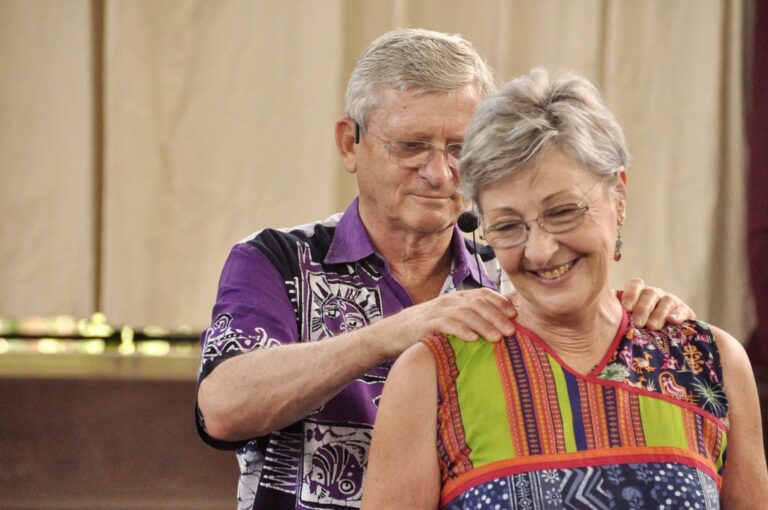
Sitting in a row of three, with an empty seat between us, I looked across at Barry and saw the familiar tenderness in his eyes. I could not stop crying. The tears came in waves, as though my body was carrying a grief too deep for words. I picked up my phone and sent him a message: “It’s been so costly. I just want to know if it was worth it.”
When the Tears Become Prayers
Tears still come unexpectedly, even embarrassingly over breakfast. The lovely Indonesian waitress, Erika, quietly brings me exquisite treats as an expression of her compassion. So many of us feel helpless in the presence of tears, yet her small kindness touches a tender place.
What surprises me is that the grief feels bigger than the accident itself. Beneath it all lies a deep exhaustion, a sense that everything is catching up with me, as though my batteries have finally run flat.
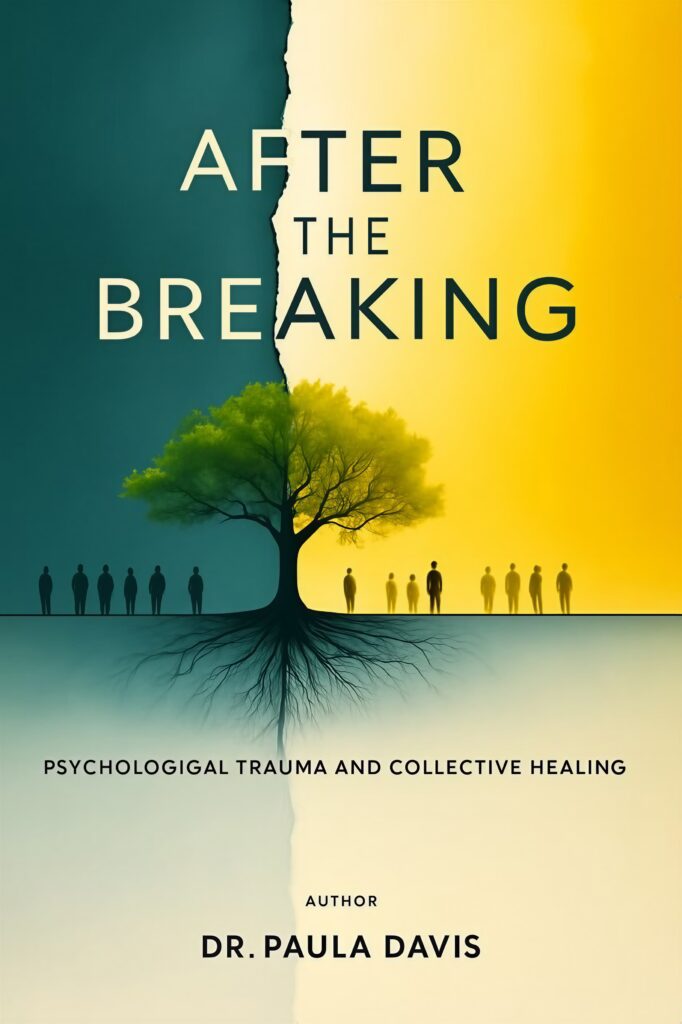
This morning my editor emailed to say that my new textbook, After the Breaking: Psychological Trauma and Collective Healing, is almost formatted and ready for publication. There is an irony in that. I have spent years writing about trauma, teaching about trauma, and helping others navigate trauma. Now I find myself on the receiving end.
For weeks I had been carrying the stories, needs, concerns, and emotions of others. I had listened to accounts of trauma, suffering, loss, betrayal, resilience, faith, and hope. I had taught, encouraged, comforted, prayed, and held space for pain. It was a privilege. It was also costly.
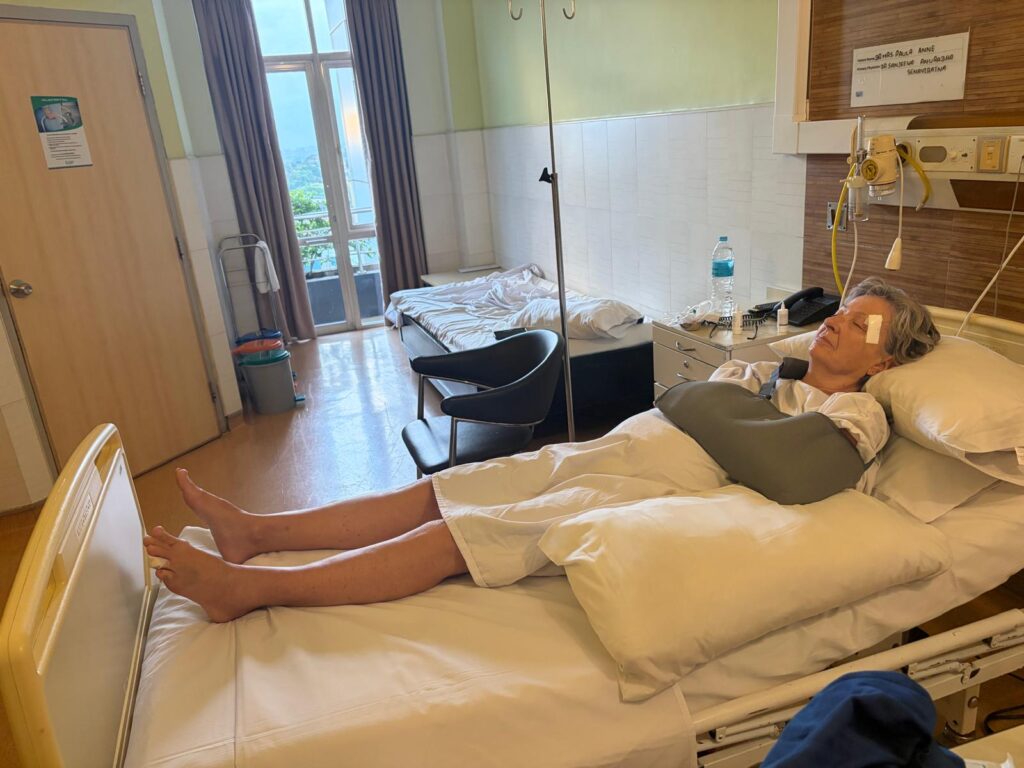
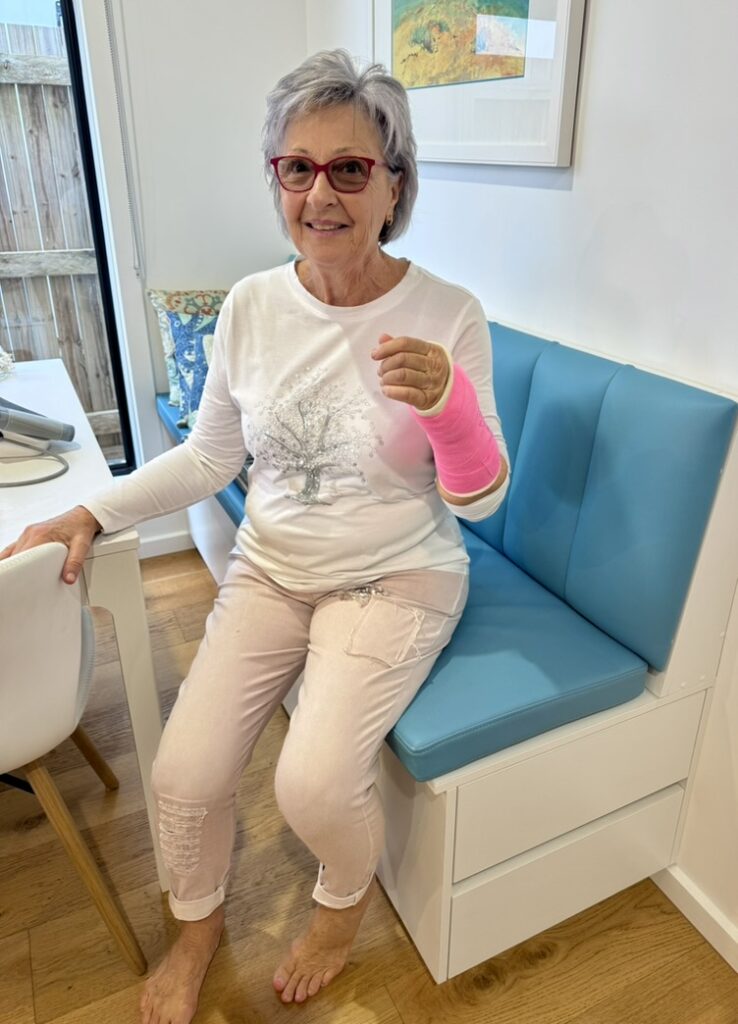
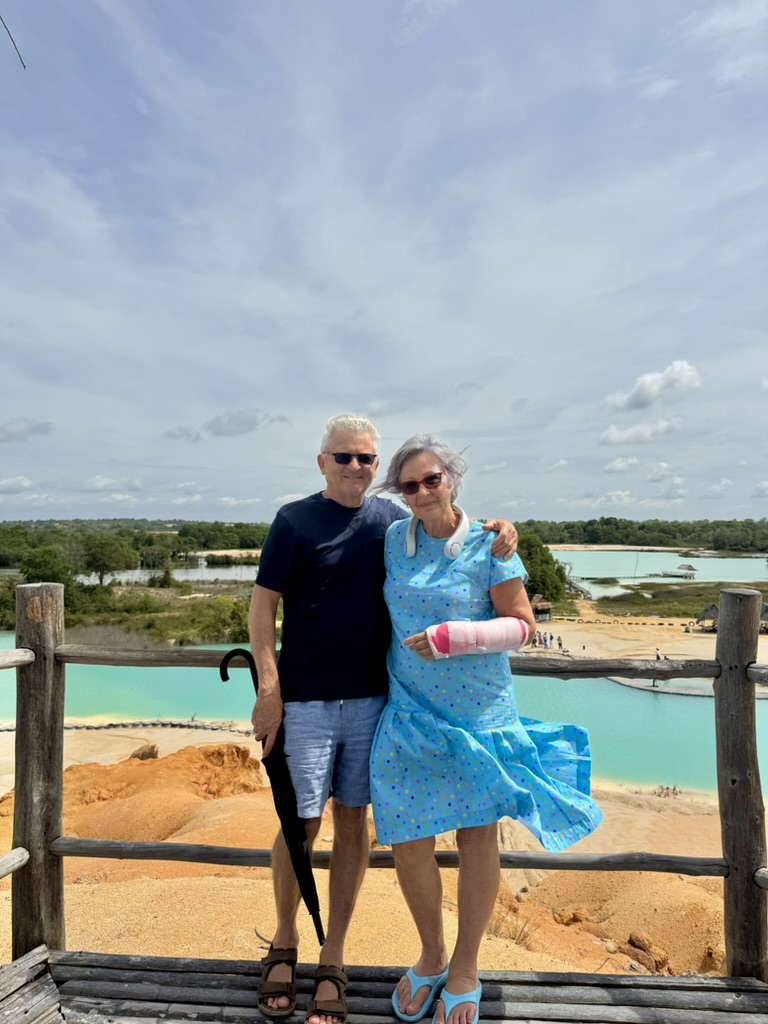
Then came the fall. One moment I was walking. The next I was on the ground. A fractured arm, a fractured toe, deep cut above my eye requiring plastic surgery. There were blood, shock, pain, medical procedures, and uncertainty. For a while there was no time to think. Survival took over. Medical decisions had to be made. Flights had to be rearranged. Daily tasks suddenly became difficult. My world narrowed to getting through the next hour and then the next day.
Broken Bones and Bruised Hearts
What I know from years of trauma work is that the nervous system does not experience emotional exhaustion and physical injury as separate events. It does not place one in a box marked emotional and the other in a box marked physical. It experiences them as one story. The fall activated my body’s survival response. Suddenly there was danger, and the need to continually assess whether I was safe. My brain shifted immediately into survival mode.
Part of me has become alert and watchful. I find myself scanning for hazards, noticing uneven ground, stairs, and situations associated with the accident. My body seems determined to prevent another injury. It remembers what my mind is trying to move past. There is muscle tension, increased pain sensitivity, fatigue disproportionate to activity, and a heightened awareness of bodily sensations. Intrusive memories of the fall still surface. Images of the injury and hospitalisation return uninvited.
One memory in particular lingers. The anaesthetist tried eleven times to find a vein in the thin skin of my thumb and fingers so she could administer the anaesthetic. Each attempt involved moving my broken wrist. The pain was excruciating. I cried and begged for relief, but she continued searching while explaining to the theatre staff that she could not find a vein. I suspect she felt incompetent. All I remember is the pain.
The injury has also challenged deeply held beliefs about worth, strength, and independence. Accustomed to caring for others, I am struggling to suddenly become the one needing help. My mind whispers familiar messages.
“I should be coping better.”
“I don’t want to be a burden.”
“I can’t do what I normally do.”
My injuries have created feelings of helplessness, fear of relying on others, frustration at physical limitations, shame about needing assistance, and sometimes anger at the unfairness of one more thing.
When Home Is More Than a Place
Yet there is another layer. This happened while I was away from home in a developing country. Home is more than a place. It is a nervous system resource. Home represents familiarity, predictability, trusted medical systems, familiar faces, established routines, and a sense of control. Although the care I received was excellent, my nervous system still knows the difference between being cared for at home and being cared for in an unfamiliar environment.
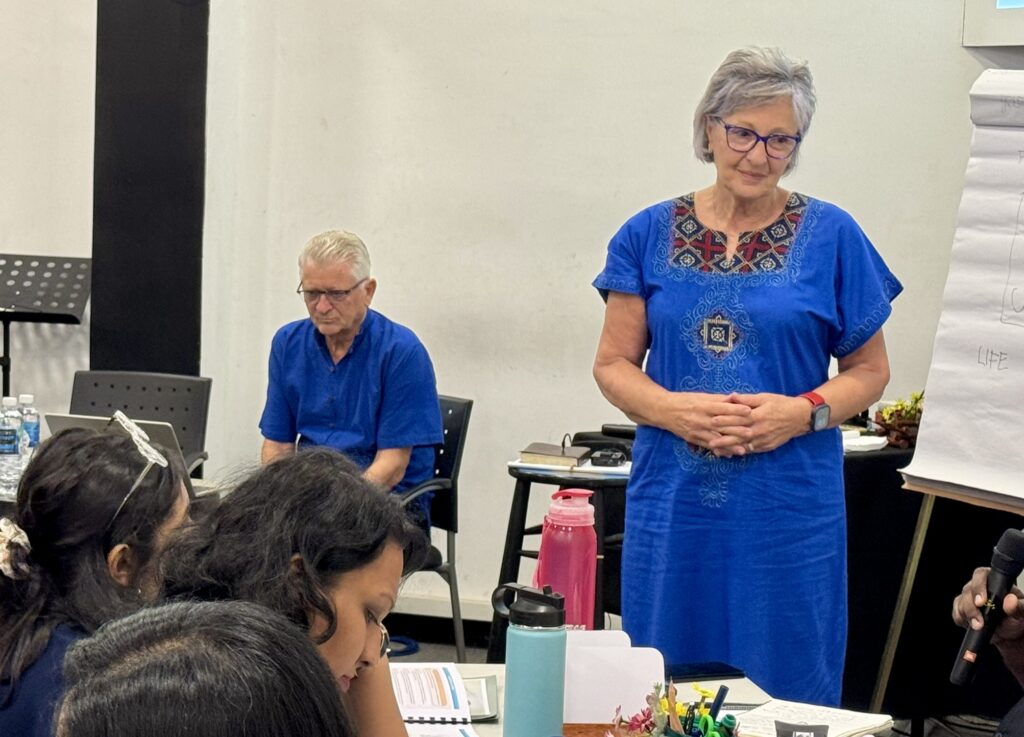
If it had not been for Dharshan and Deepikah, who so faithfully stayed by my side, I do not think I would have coped nearly so well. They translated words I could not understand, gently directed the medical staff when I was too overwhelmed to think or speak, and offered comfort when the pain and uncertainty threatened to undo me. In a foreign place, far from home and with my body already broken, their quiet, steadfast presence became a lifeline.
In those difficult hours, they carried so much of the burden for me. When my own strength had run out, they became the hands and feet of God’s care, surrounding me with a grace and kindness I will never forget. Their faithful presence steadied me, and I know that without them, those long and frightening hours would have been so much harder to bear.
But now I find myself longing so deeply for safety. More than a bed, I long for rest. More than familiar surroundings, I long for the sense that I no longer need to be vigilant. When I think about the overnight flight home, I notice something important. My body says, I’m not sure I can do that.
Most of the time I am able to push through. Like many caregivers, counsellors, and helpers, I have often ignored my own needs while attending to the needs of others. But trauma has taught me that there is wisdom in listening to the body. The body often knows what the mind has not yet admitted. This is not weakness, not a lack of resilience, but an exhausted nervous system asking for kindness.
“I’m Done”
Just before the accident I remember saying to Barry, “I’m done.” At the time I meant I had reached my limit. I could not have known how literally my body was about to reinforce the message. My tears are not simply about a fall. They are about the accumulated weight of the past month. The emotional responsibility. The goodbyes. The stories. The losses. The constant holding of other people’s pain, some of whom I love deeply.
There is grief for lost independence, disrupted plans, physical pain, and the simple things I can no longer do easily. There is grief for the final days we had hoped to enjoy.
Yet beneath those losses lies another grief that is harder to name. It is the grief that comes when a season ends before I am ready. The grief of leaving people I have come to love. The grief of unfinished conversations. The grief of stories that now travel home with me. The grief of knowing that some remain in difficult circumstances while I return to the safety of Australia.
Right now, I am still managing injuries, appointments, medications, travel plans, and the practical realities of recovery. The nervous system often postpones deeper processing until safety returns. I would not be surprised if the tears continue when I arrive home. I would not be surprised if more grief surfaces or if the exhaustion deepens before it lifts. None of this would mean that I am falling apart. It may simply mean that my nervous system has finally concluded that the emergency is over.
For decades I have sat with people whose lives have been shattered by loss, trauma, illness, betrayal, violence, and grief. I have encouraged them to treat themselves with compassion. I have reminded them that healing takes time. I have urged them to listen to their bodies, honour their limits, and receive care from others. Perhaps now it is my turn. Perhaps the invitation hidden within this accident is not to be stronger but to receive; to receive help, kindness, rest, compassion. To allow others to carry me for a while.
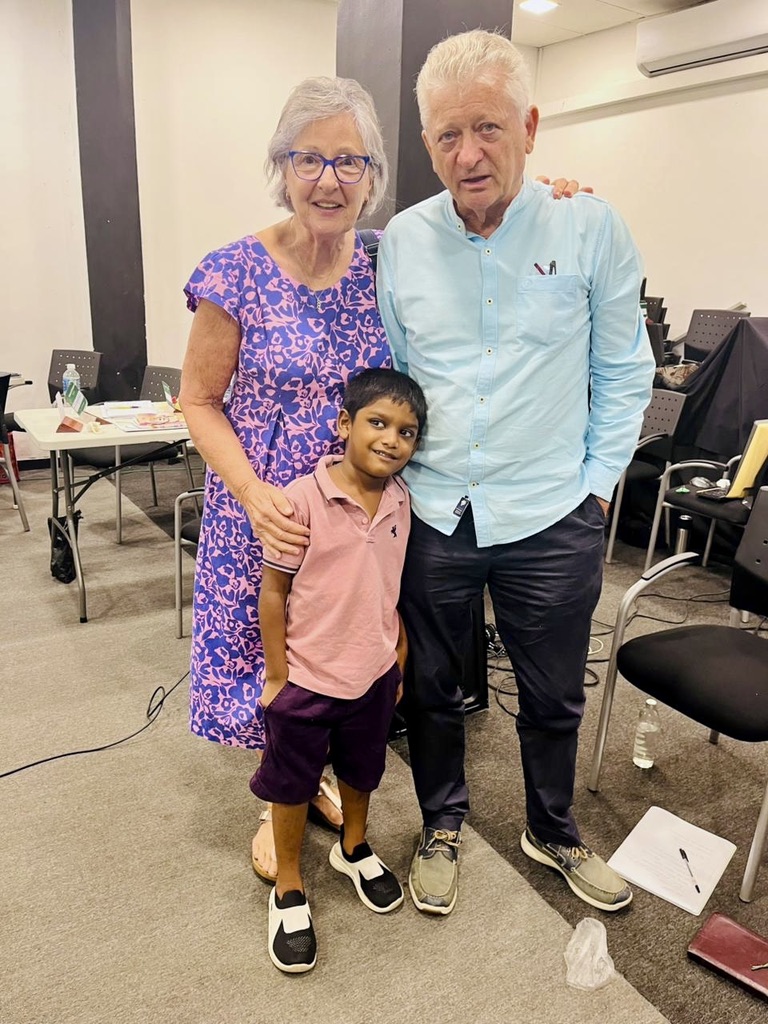
The Quiet Courage of Yielding
As I watch the gentle sunrise spread across the tropical sky, I am reminded that yielding is sometimes its own act of courage. Listening to my Bible app this morning, these words settled deeply into my spirit:
“In my distress I cried out to the LORD; yes, I prayed to my God for help. He heard me from his sanctuary; my cry to him reached his ears… He led me to a place of safety; he rescued me because he delights in me.” (Psalm 18:6,19)
Jesus, I want to be so alive in You that my response is always obedience, even when the path is difficult or uncertain. You are worthy of my costly obedience.
Wild God, I choose to say yes to whatever You call me to do, whether it feels safe and stable or requires entirely new levels of courage. I choose yes.
“The LORD himself goes before you and will be with you; he will never leave you nor forsake you. Do not be afraid; do not be discouraged.” (Deuteronomy 31:8)
Maybe that is what healing looks like for me right now; simply allowing myself to be held, by God, by Barry, by friends. Held by the grace that has carried me through so many storms before. And trusting that, in time, both my body and my spirit will find their way home.
Angels in Unexpected Places
Finally, we are home in our safe place. The place where my body can finally let go and realise it is safe. It is only now, looking back, that I can see how, all along the journey, God was sending little reminders that He had not left us. He sent angels in ordinary clothes.
There was Ashan, a friend of Dharshan’s and the orthopaedic surgeon who stepped in when I needed him most. He saved me from having to undergo a general anaesthetic and carefully wired my shattered wrist, stabilising it enough to make the long journey home possible. In the middle of all the uncertainty, his skill and quiet confidence gave me a sense of safety.
And then there was the plastic surgeon, who had trained in Adelaide. As he carefully stitched and patched the wound above my eye, he talked with me the entire time, gently distracting me from what was happening. In the background, 80s hits played softly, creating the most unexpected soundtrack to a moment I had dreaded. Somehow, between his kindness, the familiar Australian connection, and those old songs drifting through the room, what could have been frightening became strangely human and comforting.
There was Darren, the taxi driver we first met on our arrival in Singapore. That now feels a lifetime ago. Yet on both of our visits to Singapore he was there, just a phone call away. He dropped our bags at the hotel, waited patiently while we checked in, and then drove us straight to the hospital. He could easily have taken advantage of two exhausted, anxious travellers who had no idea where they were going, but he never did. His fares were fair, his kindness was genuine, and he cared for us as though we were old friends rather than passing strangers. We arrived in Singapore not knowing a soul, but somehow left feeling we had made a friend.
And then there was Erika, the lovely waitress at Bintan. Every morning I seemed to find myself in tears over breakfast, the grief and exhaustion spilling over in ways I could not control. Erika never hurried me or looked uncomfortable. She simply stood beside me, and often she cried too. Her gentle presence and small kindnesses touched me more deeply than she will probably ever know.
The dear man who cleaned our room carried the same quiet spirit. Nothing was too much trouble. Every request was met with warmth and a smile that said, “You are not a burden.”
The ferry staff saw my broken body before I had to explain it. They cleared a path, slowed the crowds, and gently helped us make our way onto the boat. In a world that can so often feel hurried and indifferent, these small acts of care felt sacred.
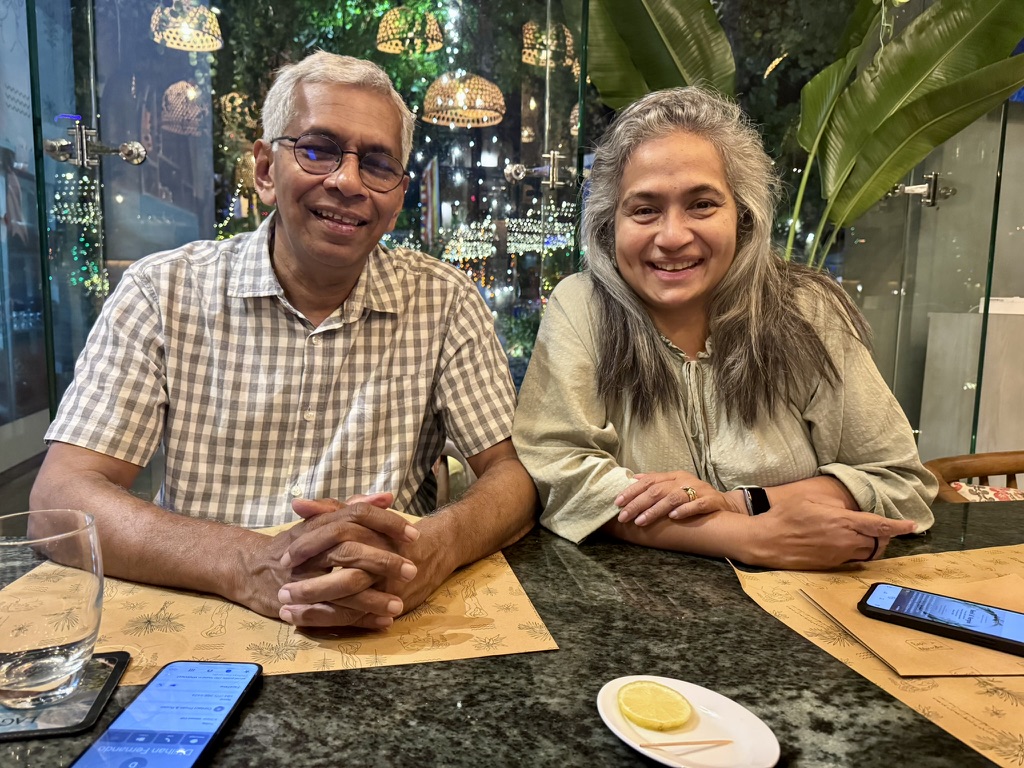
Our Sri Lankan friends have overwhelmed us with their empathy and gratitude, thanking us for being part of their healing journey, when the truth is that they have become part of ours. And if it were not for Robert, Dharshan and Deepikah, who faithfully stayed by our side, translated, comforted, advocated, directed the medical staff, and simply loved us well, I do not think I would have coped nearly so well. Their kindness carried us when we had little strength of our own.
There was the doctor at the Singapore General Hospital. Even after a five-hour wait in a crowded emergency department, he never rushed. He took the time and care to change my cast, treating me not as another patient in a queue, but as a person who was frightened, exhausted, and far from home.
The next day, after that long night and only a few hours of sleep, we wandered down to lunch feeling utterly depleted. One of the staff members must have seen it written all over our faces. Without a word, he quietly went out and bought a proper sling for my arm. He presented it to us with a little card from the staff, and then, without telling us, he paid our lunch bill as well. We discovered it only later. Such a small act perhaps, but it reached a place in me that had become very tender.
There was Michael, our travel agent, who somehow managed to reorganise our flights while he was himself on a flight home. Against all odds, he secured the one remaining seat. Without that, we would have been stranded overseas even longer. At a time when everything felt uncertain, his calm kindness became a lifeline.
Then there was home waiting for us. Dear Liz was at the door almost immediately with chicken soup and homemade sourdough. Our son-in-law, Luke, cooked us lunch on the day we returned and quietly filled our freezer with meals to lighten the load in the days ahead. Love often arrives not in grand gestures, but in soup, bread, and a stocked freezer.
And finally, there has been all of you. So many of you have faithfully carried us in prayer throughout this entire journey. We have felt held by your words, your messages, your tears, and your quiet faithfulness. There were moments when I felt too exhausted, too frightened, or too heartbroken to pray for myself, and I have no doubt that others were carrying us before the throne of grace.
Now that we are safely home, I can see what I could not always see in the middle of the storm: that God was there all along. Not necessarily in the way I would have chosen, and not by taking away the pain, but by placing people in our path who embodied His presence. Ordinary people. Taxi drivers, doctors, hotel staff, waitresses, dear friends, family, and a praying community. Little glimpses of heaven that whispered, again and again, “You are not alone. I am with you, always.”
About the Author
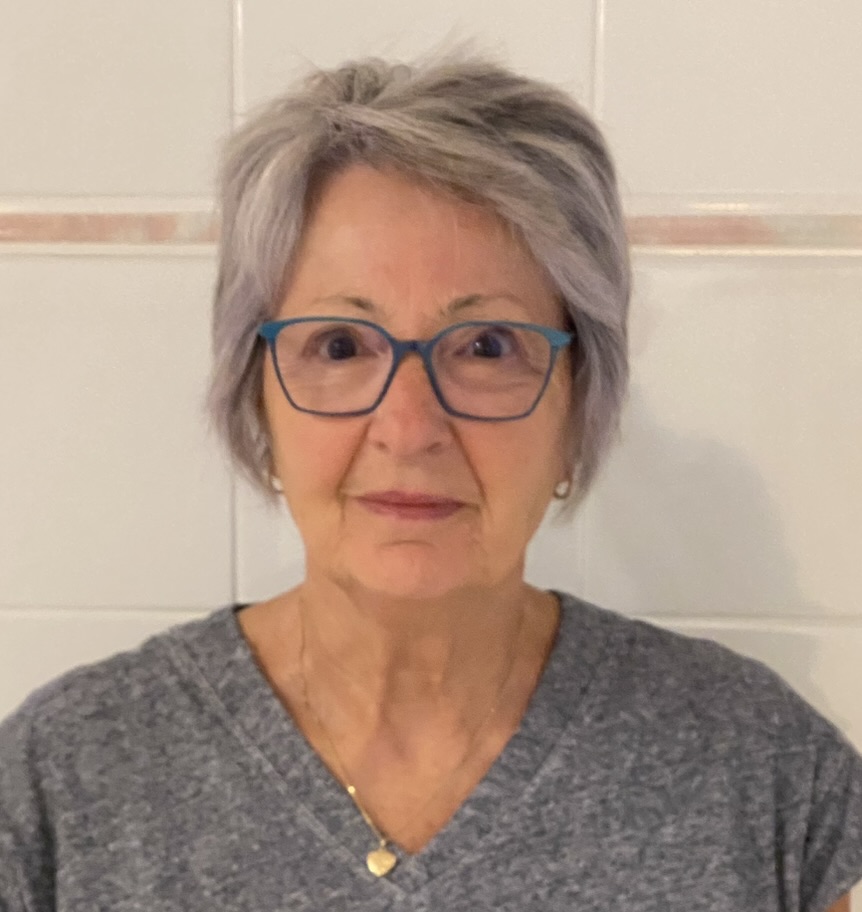
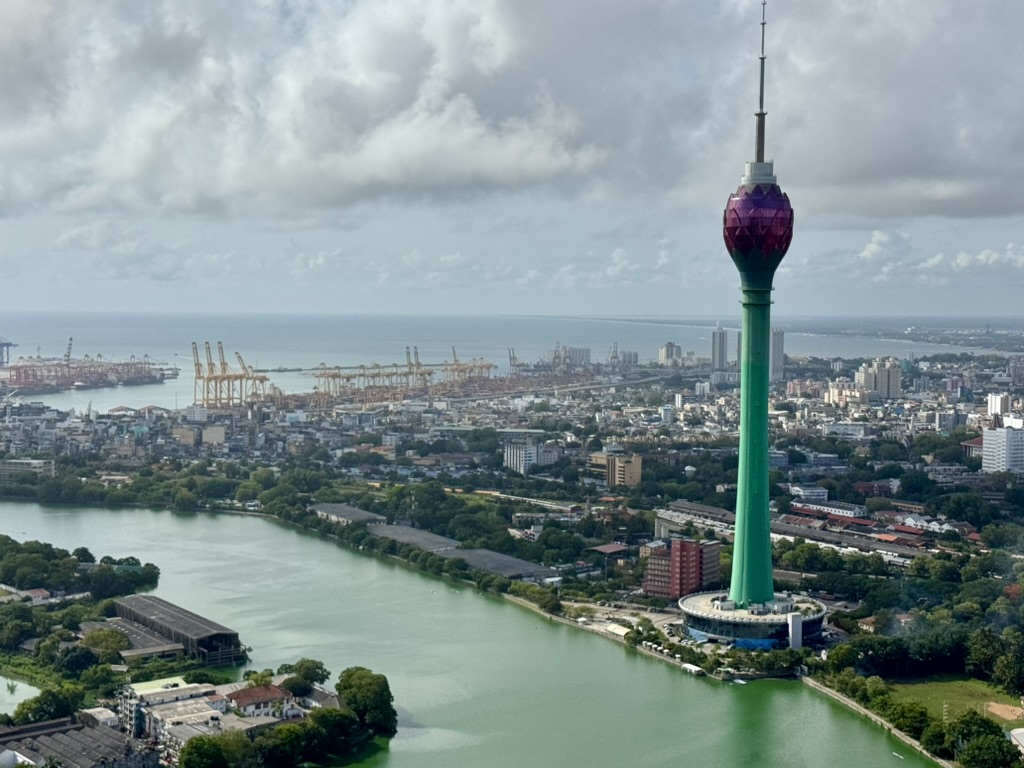
Dr Paula Davis has spent much of her life sitting with people in some of their darkest moments, and somehow still believes deeply in hope. A clinical counsellor, supervisor, educator, and self-confessed lifelong student of trauma, Paula has taught, researched, and worked alongside counsellors and communities across Australia and overseas. Her doctoral research explored how Western trauma approaches can be adapted for collective cultures, a passion that continues to shape everything she writes and teaches.
Together with her husband Barry (of over five decades), she has travelled the world helping couples strengthen their relationships and co-authored A Safe Place: A Marriage Enrichment Resource Manual. She is also the author of Eating Water, Drinking Soup: Finding Nourishment in the Deepest Pain, Exploring the Roots of Heartache: The Stories Our Pain Is Trying to Tell, and After the Breaking: Psychological Trauma and Collective Healing.
These days, Paula is officially “retired,” although nobody seems to have told her calendar. She still writes, teaches, mentors, and is forever collecting stories, books, and ideas that help people heal. When she’s not immersed in trauma theory or rewriting chapters for the twentieth time, you’ll probably find her walking along the beach near her home on the east coast of Australia, swimming in the surf, sharing coffee with Barry, or plotting her next overseas adventure. She firmly believes that good conversations, beautiful sunsets, and God’s grace have remarkable healing properties.