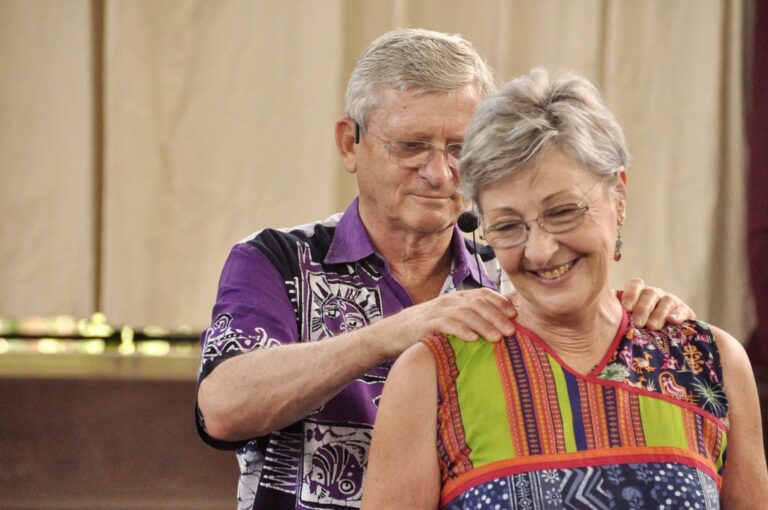

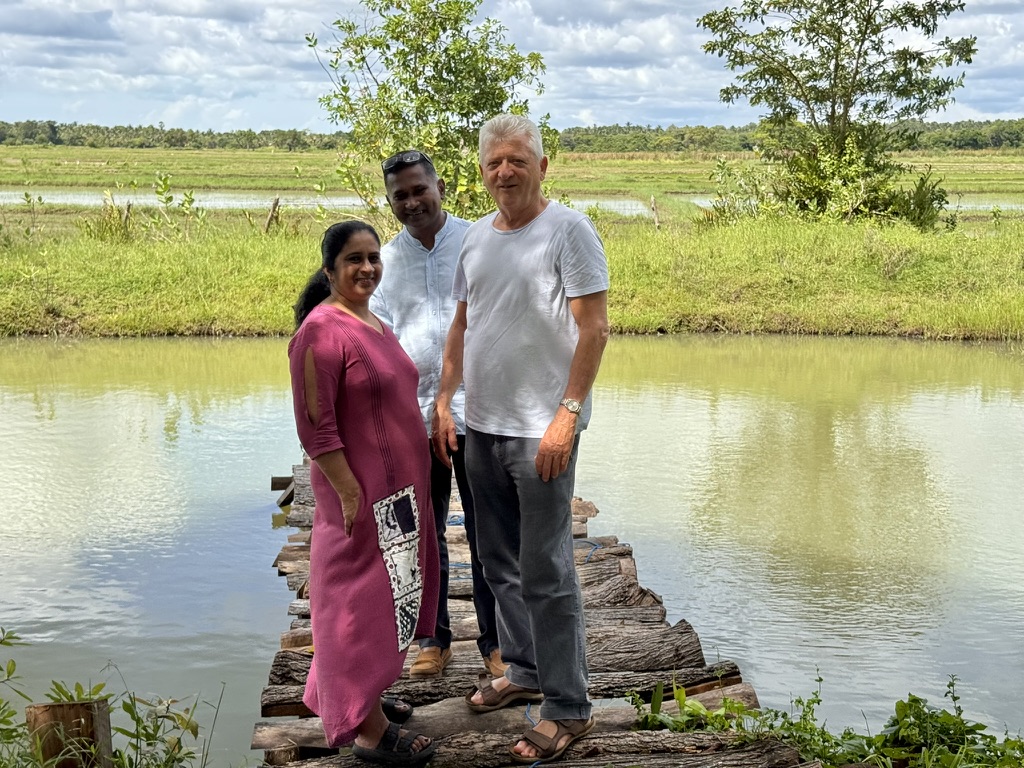
For weeks after returning home from Sri Lanka, one question keeps surfacing. “Lord… was it worth it?” It isn’t really about my fractured wrist, or the surgery, or the panic, or the sleepless nights. Those were simply the final chapter of a much longer story.
For years Barry and I have had the privilege of walking alongside people whose lives have been shattered by trauma. We have listened to stories of war, abuse, betrayal, grief and loss. We have celebrated marriages restored, watched survivors rediscover hope, and wept with those whose pain seemed unbearable.
I have often said that counselling is a privilege and it is. But if I’m honest, somewhere along the way I also began carrying more than God ever intended me to carry. When my body finally broke, something inside me broke as well.
When the Emergency Was Over
After arriving home, my nervous system slowly began to settle. The four questions it had been asking for weeks finally began receiving a different answer.
Am I safe?
Am I alone?
Will this pain ever end?
Can I stop carrying everyone else for a while?
Barry’s quiet presence, excellent medical care, and an emergency EMDR session all became part of God’s kindness towards me. During the second counselling session something shifted. For the first time, my body realised what my mind already knew: the emergency was over. The tears changed because I was finally safe enough to feel what had been postponed while simply surviving.
God Didn’t Give Me an Explanation
As I wept, I expected God to answer my question. Instead, He showed me faces. One after another they appeared in my mind. The Acholi people in Gulu, Uganda, the traumatised people of Sri Lanka, couples in Australia, pastors, missionaries, men and women whose stories Barry and I have been privileged to enter over many years.
The tears changed into tears of gratitude. Then God showed me another reality – the Apostle Paul. I have read his words countless times, but this time they felt intensely personal. His life was marked by suffering.
“From the Jews five times I received forty stripes minus one. Three times I was beaten with rods; once I was stoned; three times I was shipwrecked; a night and a day I have been in the deep; in journeys often, in perils of waters, in perils of robbers, in perils of my own countrymen, in perils of the Gentiles, in perils in the city, in perils in the wilderness, in perils in the sea, in perils among false brethren; in weariness and toil, in sleeplessness often, in hunger and thirst, in fastings often, in cold and nakedness, besides the other things, what comes upon me daily: my deep concern for all the churches” (2 Corinthians 11:24–28, NKJV).
Paul’s suffering was not meaningless. Much of it came because he chose to follow Christ and faithfully proclaim the gospel. His beatings, imprisonments, shipwrecks and relentless hardships were the cost of obedience. This is a difficult pill to swallow.
What amazes me most is not simply what Paul endured, but how he interpreted it. He did not see suffering as evidence that God had abandoned him, or that his ministry had failed, or that he was not protected. Instead, he viewed it as part of sharing in the life and mission of Christ. Again and again, he encouraged believers not to lose heart but to rejoice, knowing that God was at work even in the midst of suffering. He writes, “Not only that, but we rejoice in our sufferings, knowing that suffering produces endurance…” (Romans 5:3, ESV)
How counterintuitive those words seem. Everything within me wants suffering to end as quickly as possible. I naturally pray for relief, healing and deliverance. Yet Paul invites me to look beyond the pain itself and to trust that God can accomplish something deeper through it.
That doesn’t mean suffering is good. It means that suffering is not wasted. As I reflect on Paul’s life, I find myself asking a different question. If Paul could endure so much for the sake of Christ and still speak of rejoicing, what had enabled him to keep going? I think the answer is not that Paul loved suffering, but that He loved Christ more.
Perhaps that is why, despite my own questions, I find myself coming back to the same place. I would never have chosen the accident, the trauma or the months that followed. I would never have chosen many of the difficult seasons of my life and marriage. But I also cannot deny the ways God has met me within them, deepened my dependence on Him, and reminded me that no act of love offered in His name is ever in vain.
When God Doesn’t Give Us the Map
One of the hardest parts of following God is that He rarely hands us the whole map. I long to know where my path is leading. I want reassurance that my pain has a purpose, that my waiting is not in vain, and that the detours I never chose will somehow make sense. Yet God often reveals only enough for the next step, asking me to trust His character when I cannot understand His plan.
Looking back, I can often see how God was quietly at work through circumstances that once seemed confusing, painful, or even devastating. Scripture is filled with ordinary people whose lives took unexpected turns. None of them could see the ending while they were living the story. Yet each discovered that what appeared to be delay, disappointment, or suffering became part of God’s greater purpose. I know that is true for me as well.
Abraham could not imagine where the map would lead. Sarah could not imagine that decades of barrenness would become the backdrop for a miracle. Joseph could not imagine that the pit and the prison were preparing him for the palace. Moses could not imagine that forty years in the wilderness were training, not punishment. David could not imagine that caves would shape a king. Naomi could not imagine that loss would become redemption. Esther could not imagine that being an orphan in a foreign palace would save a nation. Jeremiah could not imagine that tears would become part of his calling. Paul could not imagine that prison walls would become the place from which letters would change the world. And no one standing at the foot of the cross could imagine that the darkest Friday in history would become the doorway to Easter morning.
The consistent pattern throughout Scripture is that God rarely reveals the whole map. He asks me to trust Him one step at a time, often discovering only in hindsight that what looked like interruption was actually preparation, and what felt like suffering became part of His redemptive purpose.
Years ago, after facilitating marriage workshops for missionary couples in Kenya and Uganda who spoke of this book, we watched the accompanying documentary, The Insanity of God. It tells the true story of missionaries Nik Ripken and Ruth Ripken. After the devastating death of their son on the mission field, they chose to travel throughout some of the world’s most hostile places for Christians, asking persecuted believers one profound question: “Is Jesus worth it?”
I remember watching it and wondering: Who would willingly choose that kind of life? Who would knowingly place themselves and their family in the path of such suffering? They and the believers they interviewed had every reason to walk away. Many had lost family members. Some had been imprisoned, tortured or forced to flee their homes. Yet again and again they gave essentially the same answer. Jesus is most definitely worth it.
At the time, I admired their faith. Today, after my own much smaller experience of suffering, I understand their question differently. Sooner or later every follower of Christ asks it, not only missionaries but anyone who has buried a dream, anyone living with chronic pain, anyone faithfully caring for others, and anyone who continues to serve Jesus when the cost becomes greater than they imagined. Sooner or later, we all whisper, “Lord… is it worth it?”
Perhaps that is why the New Testament keeps returning to the theme of rejoicing in suffering. Not because suffering is enjoyable or something to pursue, but because suffering for Christ is never meaningless. It forms us and deepens our dependence upon Him. It loosens our grip on the longing that this world will come through and fixes our hope more firmly on the One who has already walked the road of suffering before us.

The Mystery of Rejoicing in Suffering
I don’t know why I never made it personal before, but one of the most challenging themes in the New Testament is its repeated call to rejoice in suffering. Perhaps I simply wasn’t ready to see it, or to acknowledge what it might mean for my own life. Peter says:
“Beloved, do not be surprised at the fiery ordeal among you, which comes upon you for your testing, as though some strange thing were happening to you; but to the degree that you share the sufferings of Christ, keep on rejoicing” (1 Peter 4:12–13).
For years I read those verses but now I was living them. Suffering has a way of stripping away easy answers and exposes what we truly believe about God. Pain asks questions that theology alone cannot answer.
But one truth has become increasingly precious to me: God never wastes the sorrows of His children. Paul reminds us:
“Blessed be the God and Father of our Lord Jesus Christ, the Father of compassion and the God of all comfort, who comforts us in all our troubles, so that we can comfort those in any trouble with the comfort we ourselves have received from God” (2 Corinthians 1:3–4).
Looking back over forty years of ministry, I can honestly say that the places where God has most used me have usually been the places where He has first broken me.
Jesus Asked Too
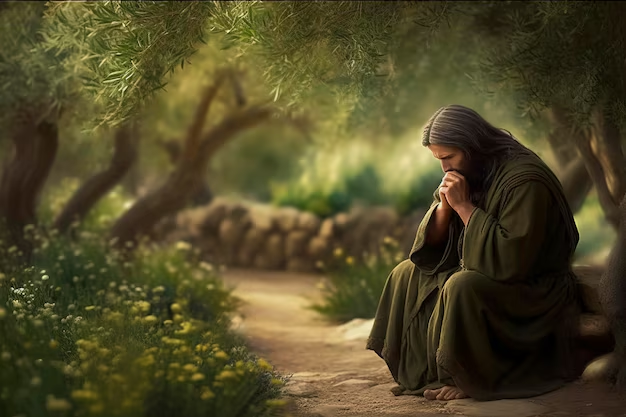
Perhaps that is why Gethsemane has become so precious. Jesus Himself prayed,
“Abba, Father, all things are possible for You…” (Mark 14:36). Hebrews tells us He prayed, “…with loud cries and tears to Him who was able to save Him from death” (Hebrews 5:7). Three times Jesus asked His Father if there could be another way. Three times He surrendered, “Yet not what I will, but what You will” (Mark 14:36).
That comforts me deeply. It reminds me that unanswered prayer is not evidence of weak faith. Jesus prayed perfectly. The Father heard every prayer, yet Jesus still walked the road to the cross. When God said no to His request to avoid suffering, He was saying yes to you and me. The cross assures me that God can always be trusted, even when His answers are not the ones I long for.
https://hotcore.info/babki/jesus-christ-praying-in-the-garden.htm
Was It Worth It?
As I reflect on all God had shown me, I realise He never really answered my question, at least, not directly. He hasn’t explained my suffering, but He reminds me of His faithfulness. He reminds me of people, of changed lives, of restored marriages, of trauma survivors who discovered hope again and of His presence in every nation He has called us to serve.
Paul also reminds me:
“We are pressed on every side by troubles, but we are not crushed. We are perplexed but not driven to despair. We are hunted down but never abandoned by God. We get knocked down, but we are not destroyed. Through suffering, our bodies continue to share in the death of Jesus so that the life of Jesus may also be seen in our bodies…
That is why we never give up. Though our bodies are dying, our spirits are[c] being renewed every day. For our present troubles are small and won’t last very long. Yet they produce for us a glory that vastly outweighs them and will last forever! So we don’t look at the troubles we can see now; rather, we fix our gaze on things that cannot be seen. For the things we see now will soon be gone, but the things we cannot see will last forever.
I realise that although I’ve been asking, “Was it worth it?”, God is quietly inviting me to ask a different question. “Am I willing to trust Him, even when I don’t have all the answers?” Suffering has a way of stripping life back to what really matters. It exposes the things I have built my security upon. It reveals the limits of my own strength. It reminds me that I am not as self-sufficient as I sometimes imagine. It also deepens my dependence on Christ.

Suffering Will Not Have the Final Word
One of the greatest comforts for me has been remembering that the Christian story does not end with suffering. It ends with hope. Paul reminds me that my present suffering, as real and painful as it is, is not the end of the story. He writes that my “light and momentary affliction is producing for us an eternal glory that is far beyond comparison. So, we fix our eyes not on what is seen, but on what is unseen. For what is seen is temporary, but what is unseen is eternal” (2 Corinthians 4:17–18).
When I first read those words after returning home, I smiled at Paul’s description of suffering as “light and momentary.” His own life had been marked by beatings, imprisonment, shipwrecks, rejection and relentless hardship because of his faithful service to Christ. He was not minimising suffering. He was comparing it with the overwhelming glory that awaits those who belong to Christ.
That perspective changes everything. It reminds me that while pain is real, it is not ultimate. Trauma does not have the final word, anxiety does not have the final word., grief does not have the final word, even death does not have the final word. God has promised a day when “He will wipe away every tear from their eyes, and there will be no more death or mourning or crying or pain, for the former things have passed away” (Revelation 21:4).
Until that day, suffering remains a difficult teacher. I would never choose it. I would never tell someone to simply rejoice in it. But I can say, with greater conviction than ever before, that God meets me in it. He uses it to loosen my grip on the things that cannot ultimately satisfy. He gently draws me back to Himself and forms Christlike character in ways comfort rarely can. And somehow, in His mysterious grace, He redeems even the experiences I would never have chosen.
Looking back over more than forty years of ministry, I can honestly say that the places where I have seen God at work most profoundly have rarely been the easiest seasons. They have often been the seasons marked by disappointment, weakness, unanswered questions and circumstances I would never have chosen. I would never suggest that suffering is something to seek. Pain is painful and loss is loss. Trauma leaves its mark on both body and soul.
Yet I have also discovered that God has a remarkable way of meeting me in those places I would never willingly enter. He often does His deepest work beneath the surface, long before I can see any fruit from it.
I still don’t understand everything that happened over those weeks. There are questions that may never be answered this side of eternity. But I have come home with a deeper assurance that God has not wasted any part of the journey – not the ministry, the tears, the waiting, not even the brokenness. Perhaps that is one of the gentle gifts sufferings can bring. It loosens my grip on certainty and invites me to hold more tightly to the One who walks with me through it.
The question that haunted me on the flight home was, “Was it worth it?” Today, my answer is quieter, humbler and perhaps wiser. I don’t know the full story yet, but I know the Author of the story. For now, that is enough.
About the Author
Dr Paula Davis has spent much of her life sitting with people in some of their darkest moments, and somehow still believes deeply in hope. A clinical counsellor, supervisor, educator, and self-confessed lifelong student of trauma, Paula has taught, researched, and worked alongside counsellors and communities across Australia and overseas. Her doctoral research explored how Western trauma approaches can be adapted for collective cultures, a passion that continues to shape everything she writes and teaches.

Together with her husband Barry (of over five decades), she has travelled the world helping couples strengthen their relationships and co-authored A Safe Place: A Marriage Enrichment Resource Manual. She is also the author of Eating Water, Drinking Soup: Finding Nourishment in the Deepest Pain, Exploring the Roots of Heartache: The Stories Our Pain Is Trying to Tell, and After the Breaking: Psychological Trauma and Collective Healing.
These days, Paula is officially “retired,” although nobody seems to have told her calendar. She still writes, teaches, mentors, and is forever collecting stories, books, and ideas that help people heal. When she’s not immersed in trauma theory or rewriting chapters for the twentieth time, you’ll probably find her walking along the beach near her home on the east coast of Australia, swimming in the surf, sharing coffee with Barry, or plotting her next overseas adventure. She firmly believes that good conversations, beautiful sunsets, and God’s grace have remarkable healing properties.